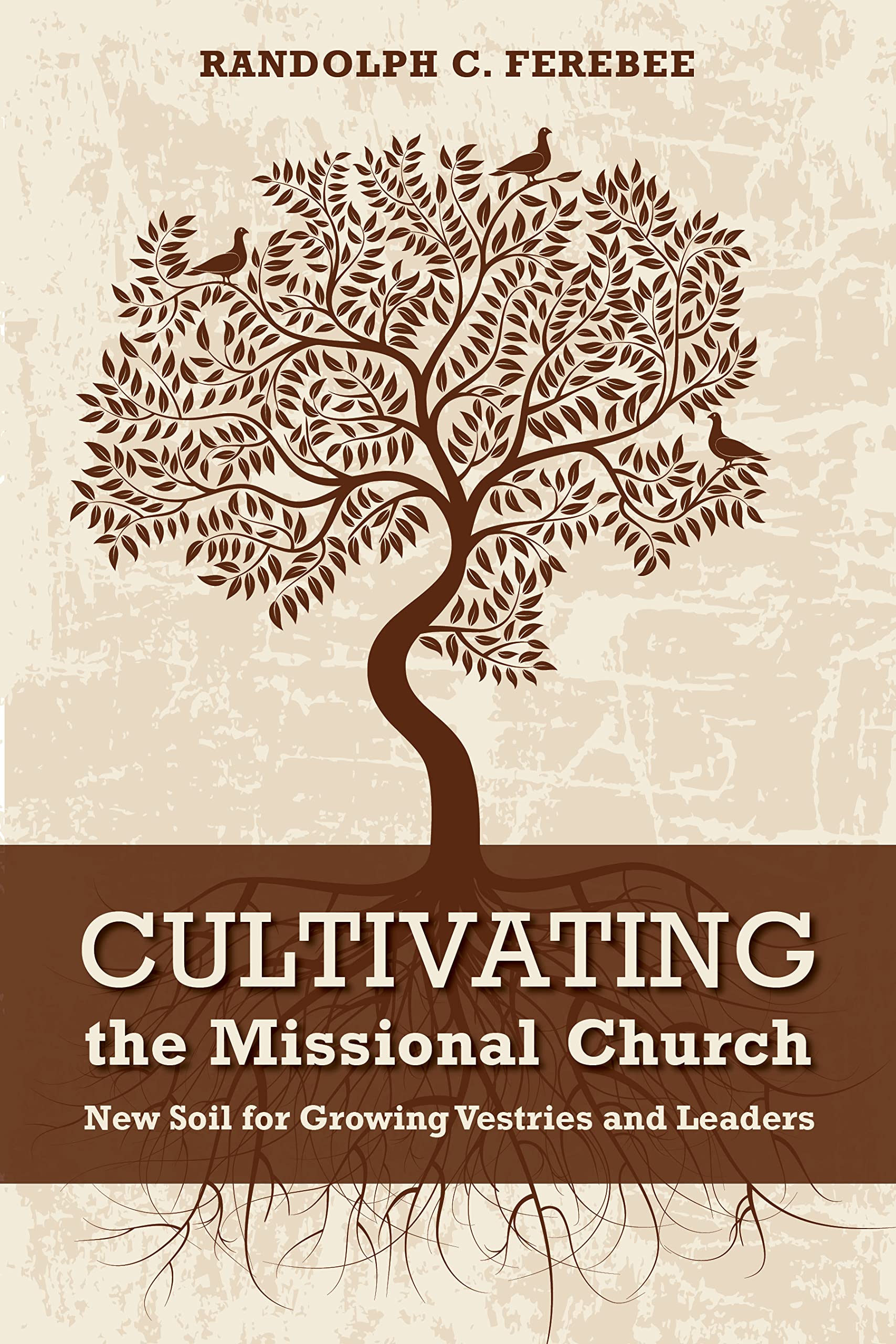
Cultivating the Missional Church: New Soil for Growing Vestries and Leaders
$14.45
by Randolph C. Ferebee



Written from a post-Christendom/emergent worldview, this books was born of a singular question asked in hundreds of ways: "What do we do to be faithful in this changed and changing reality?" Whether shaped by anxiety, a foretaste of coming changes, excitement, or energy at the prospects of witness and service the future holds, the question remains the same and the answers elusive. Part one addresses church functions under categories of governance, modeling, collaboration, champion, catalyst, mission, covenant, disciple, change and leadership. Part two offers further explication of the functions, including books recommended for in-depth study, application ideas, and further exploration of themes. “In Cultivating the Missional Church , Randy Ferebee has offered the church an invaluable gift. Vestries and other leadership teams will find here a remarkably concise, rich, and accessible compendium of wisdom and practice for guiding the church toward faithful participation in God's mission in a changing world.” ―The Rev. Dwight Zscheile, Ph.D., Assistant Professor of Congregational Mission and Leadership, Luther Seminary and author of People of the Way: Renewing Episcopal Identity “Randy Ferebee has given us a great gift in Cultivating the Missional Church . The prologue alone is worth the price of the book. But keep reading! Randy’s synthesis of challenges and suggestions for moving forward provide church leaders exactly what they desperately need: hope and a plan.” ―Reggie McNeal, Missional Leadership Specialist, Leadership Network and author, The Present Future and Missional Renaissance “ Cultivating the Missional Church is a resource the reader will return to again and again for guidance. It provides a clear and compelling theological and societal context for why a new way of preparing leaders in the Church is needed if it is to accomplish its mission. The author’s thoughtful integration of scripture, spiritual wisdom, and practical resources promotes a discipline of leadership development and practice that will inspire significant change.” ―Katherine Tyler Scott, Managing Partner, Ki ThoughtBridge LLC Randolph Ferebee retired in 2009 after 36 years as rector of St. Alban's in Hickory, NC. He co-founded Epiphany Institute + Consulting to create environments for leadership development and to assist congregations with entering this new missional era. CULTIVATING the Missional Church New Soil for Growing Vestries and Leaders By RANDOLPH C. FEREBEE Morehouse Publishing Copyright © 2012 Randolph C. Ferebee All right reserved. ISBN: 978-0-8192-2823-9 Contents Chapter One A Reordered Path of GOVERNANCE In 2011, the Presiding Bishop of the Episcopal Church, Katharine Jefferts Schori, used a stark phrase when speaking to the church's Executive Council. She said we were in danger of committing "suicide by governance." Later in her remarks, Jefferts Schori said, "We need a system that is more nimble, that is more able to respond to change," calling for "a more responsive and adaptable and less rigid set of systems." As the church evolved, it took on more and more of the marks of an institution. Structures and rules were put in place to govern the behavior of those who banded together in congregations. This evolution was often marked with a movement from simplicity to greater and greater complexity. In Acts 6 we have the story the church uses to support the ordination of deacons. There was a need and in short order the apostles set apart seven men to minister to the need. Today the path to ordination as a deacon, be it a vocational deacon or a deacon who is preparing for ordination to the priesthood, is complex and elaborate. Take any process that the local, diocesan, or national expression of church engages over time and the normal track is that the processes move more and more in the direction of complexity and regulation. In the governance function of the vestry, it is helpful that all process be as nimble, responsible, and as useful as possible. Remember the axiom "keep it simple"? The best approach is often the most straightforward and simple path. Some, perhaps much, of the vestry's encounter with inherited governing processes might not be, as yet, nimble and responsive. It is necessary to consider what the church's laws, called canons , expect and how vestries honor their responsibility. Leadership bodies who are rerooting themselves to be effective in this new age are finding ways to honor the important truth conveyed in the law by returning to or discovering ways that are more straightforward and less cumbersome. Keeping on the simple path in canonical responsibilities will become a trait with transferable usefulness in general vestry discussions. Though there may be local or diocesan variances in governing law, vestries are "selected," according to the national canons, to tend to the temporal (or worldly) affairs of the church alongside the clergy who are to t