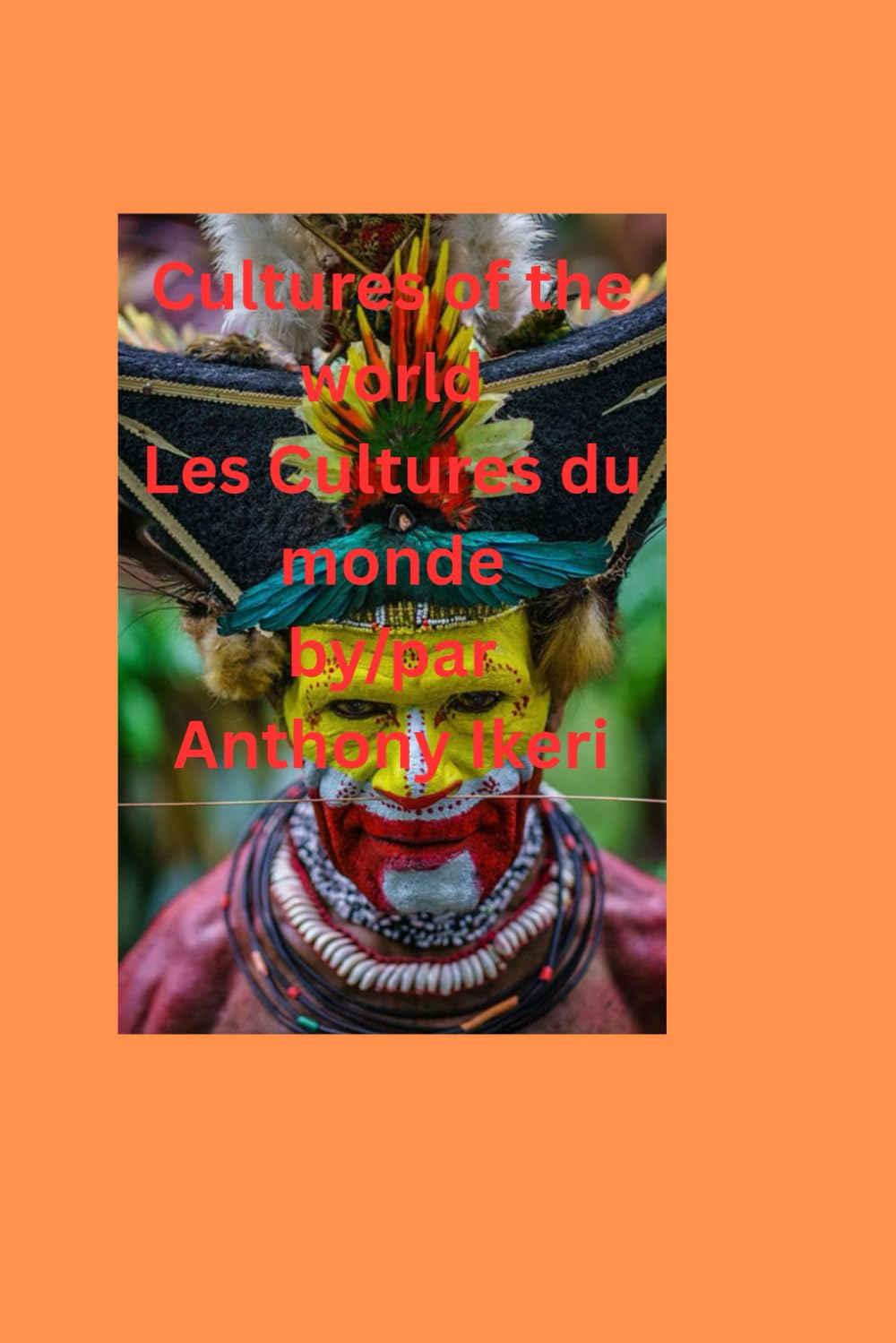



Humanity is woven together through the threads of traditions, languages, and identities. Across oceans, forests, and savannas, every community carries its own story of survival, beauty, and pride. In this bilingual English and French edition of Cultures of the World, we explore four extraordinary cultures: the Bijagó of Guinea-Bissau, the Huli of Papua New Guinea, the Wolof of Senegal, and the vibrant Surinamese people of South America. Living across the scattered islands of the Bijagós Archipelago, the Bijagó people maintain a unique way of life closely tied to nature and the sea. Their society is matriarchal, with women playing central roles in agriculture, family, and decision-making. Known for their elaborate initiation ceremonies, sacred dances, and striking masks, the Bijagó culture celebrates the harmony between human beings, ancestors, and the spirit world. Their rituals are not mere performances, they are gateways to understanding the cycles of life and the power of community. High in the rugged highlands of Papua New Guinea live the Huli, famous for their dazzling wigs made of human hair and brightly painted faces. The Huli see themselves as “masters of the land,” cultivating rich gardens and practicing traditions that blend nature and spirituality. Their spectacular “sing-sings,” where tribes gather in full ceremonial dress, express both identity and unity. With colors, feathers, and chants, the Huli remind us that cultural expression is as alive as the forest that surrounds them. The Wolof people are one of West Africa’s most influential cultures, shaping the history, politics, and art of Senegal. Known for their eloquent griots, poets, musicians, and storytellers, the Wolof embody a culture of rhythm and word. Their music, from the beats of the sabar drum to the melodies of mbalax, resonates far beyond Africa, inspiring global sounds. The Wolof language is not just a means of communication but a vessel of wisdom, carrying proverbs and philosophies that guide daily life. Hospitality, honor, and community remain central values in Wolof society. On the northern coast of South America lies Suriname, a country where cultures from Africa, Asia, Europe, and Indigenous America converge. The Surinamese people are a living example of multicultural harmony, blending traditions from Maroon communities, Hindustani, Javanese, Creole, and Indigenous heritage. Festivals like Holi Phagwa, Javanese Wayang, and Afro-Surinamese Winti rituals paint the streets with color, song, and spirit. Surinamese cuisine, with dishes like heri heri and pom, tells the story of migration, resilience, and unity through food. Here, identity is celebrated as a shared mosaic of worlds. Cultures of the World / Les Cultures du Monde goes beyond description, it is a bilingual tribute to humanity’s diversity. Written in English and French, this book serves as: An educational resource for schools and libraries. A travel companion for explorers seeking authentic cultural encounters. A celebration of heritage for readers passionate about anthropology, history, and global traditions. Rich narratives of rituals, traditions, and daily life, the spiritual and social values of unique communities. A bilingual format that opens doors for English and French learners. A meaningful journey through islands, highlands, deserts, and rivers. From the remote islands of Guinea-Bissau to the mountains of Papua New Guinea, from the bustling streets of Senegal to the multicultural heart of Suriname, this book brings cultures to life in vivid detail. Cultures of the World , Les Cultures du Monde invites readers of all ages to celebrate humanity’s richness, honor ancestral traditions, and embrace the diversity that unites us. Perfect for students, educators, travelers, cultural enthusiasts, and anyone who believes that understanding cultures is the key to understanding ourselves. This book is not just about reading, it is about experiencing true cultures...