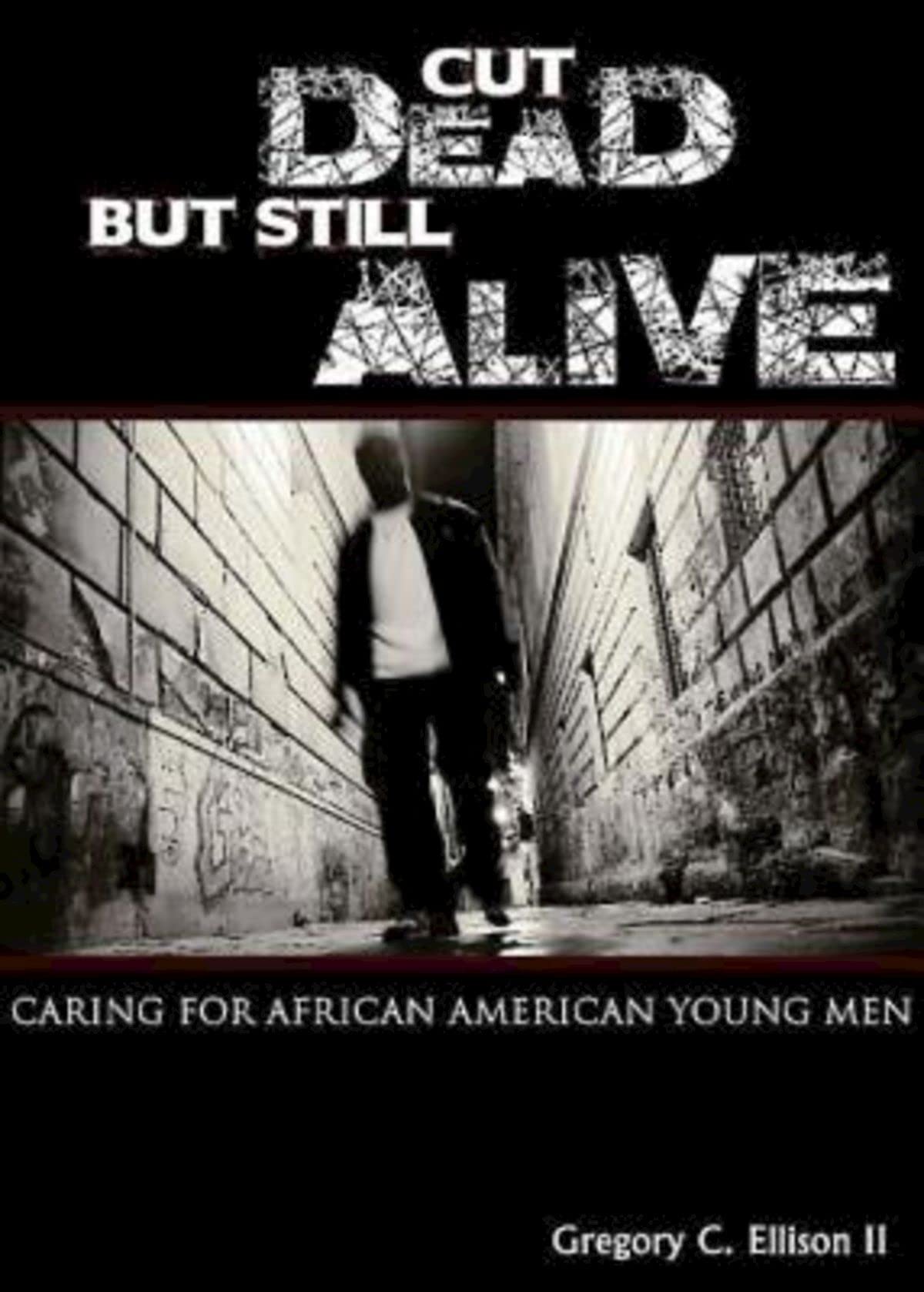
Cut Dead But Still Alive: Caring for African American Young Men
$11.14
by Gregory C. Ellison II



To cut dead means to refuse to acknowledge another with the intent to punish. Gregory Ellison says that this is the plight of African American young men. They are stigmatized with limited opportunity for education and disproportionate incarceration. At the same time, they are often resistant to help from social institutions including the church. They are mute and invisible to society but also in their inward being. Their voice and physical selves are not acknowledged, leaving them ripe for hopelessness and volatility. If the need is so great yet the desire for help wanes, where is the remedy? Healing can begin by reframing the problem. While cutting someone dead is destructive, it can also serve to prune and repot a disfigured being―giving new possibilities for life. In this provocative book, Ellison shows how caregivers can sow seeds of life, and nurture with guidance, admonition, training, and support in order to help create a community of reliable others serve as extended family. There is hope beyond the “strange and bitter cup” of African American manhood. Gregory Ellison II is Assistant Professor of Pastoral Care and Counseling at Candler School of Theology, Emory University in Atlanta, Georgia. Cut Dead But Still Alive CARING FOR AFRICAN AMERICAN YOUNG MEN By Gregory C. Ellison II Abingdon Press Copyright © 2013 Abingdon Press All rights reserved. ISBN: 978-1-4267-0304-1 Contents Acknowledgments............................................................viiIntroduction...............................................................xi1. Cut Dead................................................................12. From Golden Days to Ivy Greens: Caring with Marginalized Populations....293. The DEATH of Control and the BIRTH of Fearless Dialogue.................494. The DEATH of Self-Esteem and the SEED of an Interrupting Hope...........735. The DEATH of Meaningful Existence and the BIRTH of Miraculous Solutions..................................................................1076. The DEATH of Belonging and the Life-Giving COMMUNITY of Reliable Others.....................................................................137Notes......................................................................161Index......................................................................179 CHAPTER 1 CUT DEAD Spared from the gallows of emptiness and impotent despair, the fortunatehuman soul finds life and the potential to flourish when noticed favorablyby others. However, some living souls endure the woe of being passedover with no account. Like phantoms, they ache to be seen and heard. But,persistent unacknowledgment takes a toll on their psyches. With shadow-castfaces, they teeter from explosive rage to implosive depression. Locked in anunending nightmare, their future hopes diminish, and the daily existence offacelessness becomes a cruel and fiendish torture. Herein lie the stories of thefaceless phantoms, tramping through city streets, suburban corridors, andcollege campuses, screaming from the shadows to be seen and heard. They arethe cut dead but still alive. Cut dead is a nineteenth-century idiom meaning to be ignored deliberatelyor snubbed completely. In 1896, the noted American psychologistWilliam James employed this phrase in the tenth chapter of The Principlesof Psychology . James argued that humans are social with an innate desire tobe noticed, and noticed favorably, by others. Conversely, going unnoticed orbeing cut dead is torturous: No more fiendish punishment could be devised, were such a thingphysically possible, than that one should be turned loose in society andremain absolutely unnoticed by all the members thereof. If no one turnedaround when we entered, answered when we spoke, or minded what wedid, but if every person we met "cut us dead," and acted as if we were nonexistentthings, a kind of rage and impotent despair would before long wellup in us, from which the cruelest bodily torture would be a relief. James's description of being cut dead expresses the inner torment, indignation,and potential social threat of persons who feel categorically unseen andunheard. Decades after James's account on the torment of being cut dead, theAfrican American mystical theologian Howard Thurman echoed a similarsentiment. A grandson of slaves, Thurman knew well the anguish of utter disregard.In a meditation entitled "A Strange Freedom," his words reflect the unyieldingpsychological duress of going unnoticed: It is better to be the complete victim of an anger unrestrained and a wrathwhich knows no bounds, to be torn asunder without mercy or battered toa pulp by angry violence, than to be passed over as if one were not. Hereat least one is dealt with, encountered, vanquished, or overwhelmed—butnot ignored. It is a strange freedom to go nameless up and down the streetsof other minds where no salutation greets and no sign is given to mark theplace one calls one's own. Like James'