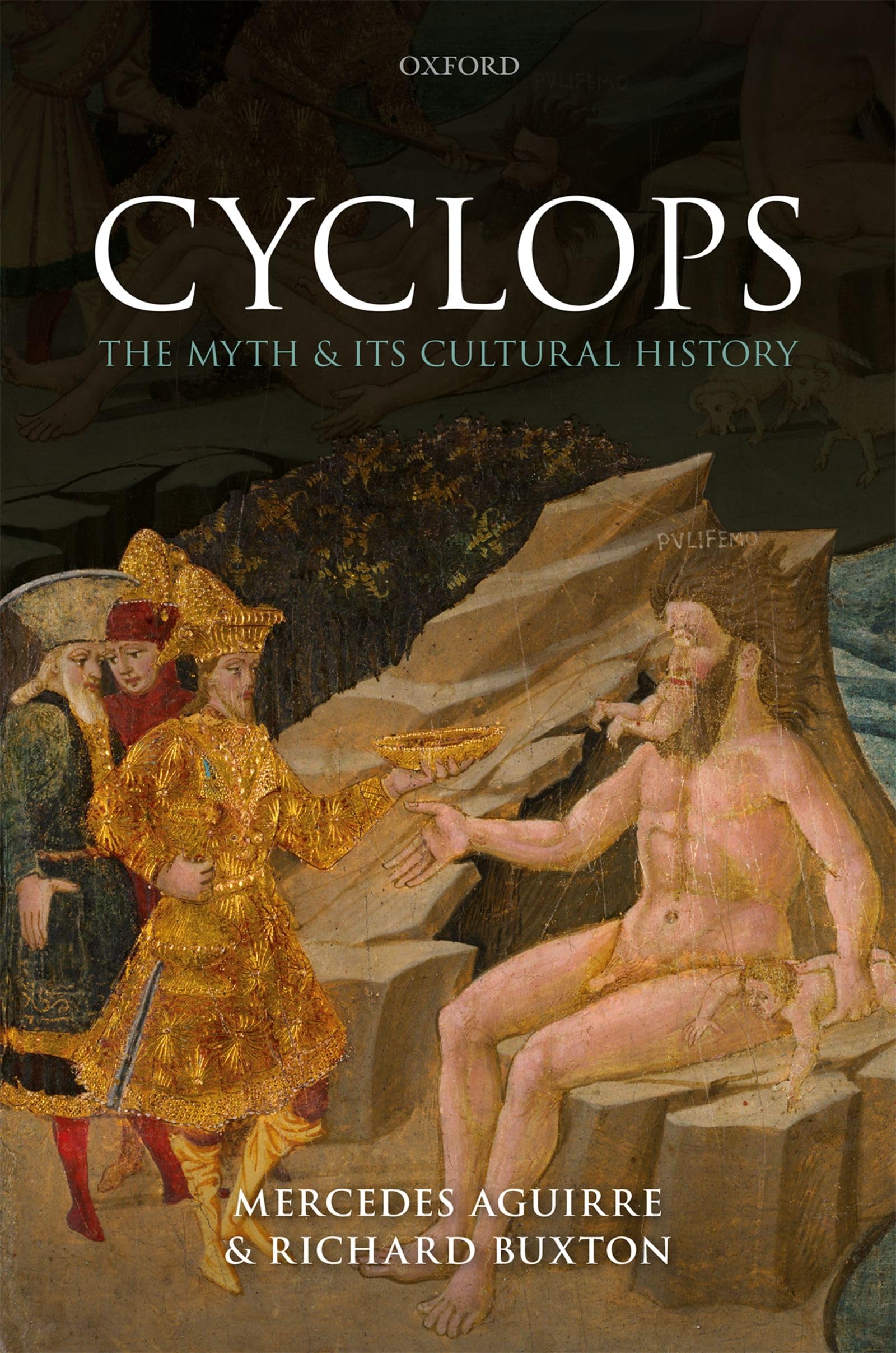



A Cyclops is popularly assumed to be nothing more than a flesh-eating, one-eyed monster. In an accessible, stylish, and academically authoritative investigation, this book seeks to demonstrate that there is far more to it than that - quite apart from the fact that in myths the Cyclopes are not always one-eyed! This book provides a detailed, innovative, and richly illustrated study of the myths relating to the Cyclopes from classical antiquity until the present day. The first part is organised thematically: after discussing various competing scholarly approaches to the myths, the authors analyse ancient accounts and images of the Cyclopes in relation to landscape, physique (especially eyes, monstrosity, and hairiness), lifestyle, gods, names, love, and song. While the man-eating Cyclops Polyphemus, famous already in the Odyssey, plays a major part, so also do the Cyclopes who did monumental building work, as well as those who toiled as blacksmiths. The second part of the book concentrates on the post-classical reception of the myths, including medieval allegory, Renaissance grottoes, poetry, drama, the visual arts, contemporary painting and sculpture, film, and even a circus performance. This book aims to explore not just the perennial appeal of the Cyclopes as fearsome monsters, but the depth and subtlety of their mythology which raises complex issues of thought and emotion. "beautifully written" -- Paul Cartledge, Argo " Cyclops is a meticulously researched, richly illustrated, and superbly readable analysis of the figure of the Cyclops in ancient Greece and Rome, and its reception from the medieval period to the modern age ... The first half of the book provides a 360-degree evaluation of Cyclopes in ancient literature and material culture." -- Ivana Petrovic, Greece & Rome "Highly Recommended." -- P.E. Ojennus, Whiteworth University, CHOICE "It richly illustrates the argument of the classical anthropologist Walter Burkert that the substance of a myth lies in its preservation and transmission rather than its origin or creation ... As a primer for understanding how to get to grips with Greek myth and the relationship between literary and visual cultures, the book is a clear success (and abundantly illustrated throughout)." -- Roy Gibson, Times Literary Supplement "This far-ranging book succeeds admirably in providing readers with a survey of the representation of the Cyclopes in art and literature from antiquity to the present." -- Scott Bruce, Fordham University, Bryn Mawr Classical Review "... charming ..." -- George W. M. Harrison, The Classical Review Mercedes Aguirre, Profesora Contratada Doctora, Universidad Complutense ,Richard Buxton, Emeritus Professor of Greek Language and Literature, University of Bristol Mercedes Aguirre holds the post of Profesora Contratada Doctora at the Department of Classical Philology in the Universidad Complutense in Madrid. She is also currently a Visiting Fellow in the University of Bristol, and has been elected a Life Member at Clare Hall at the University of Cambridge. Her areas of research are Greek literature, Greek mythology and iconography, and the reception of Greek mythology in the modern and contemporary world. Richard Buxton is Emeritus Professor of Greek Language and Literature at the University of Bristol, specialising in the study of ancient Greek mythology, literature, and religion. He is committed to bringing his enthusiasm for classical antiquity, especially its mythology, to as wide an audience as possible. By using accessible and jargon-free language in all his writings he aims to bring home to modern readers the creative power and imaginative influence of ancient myths.