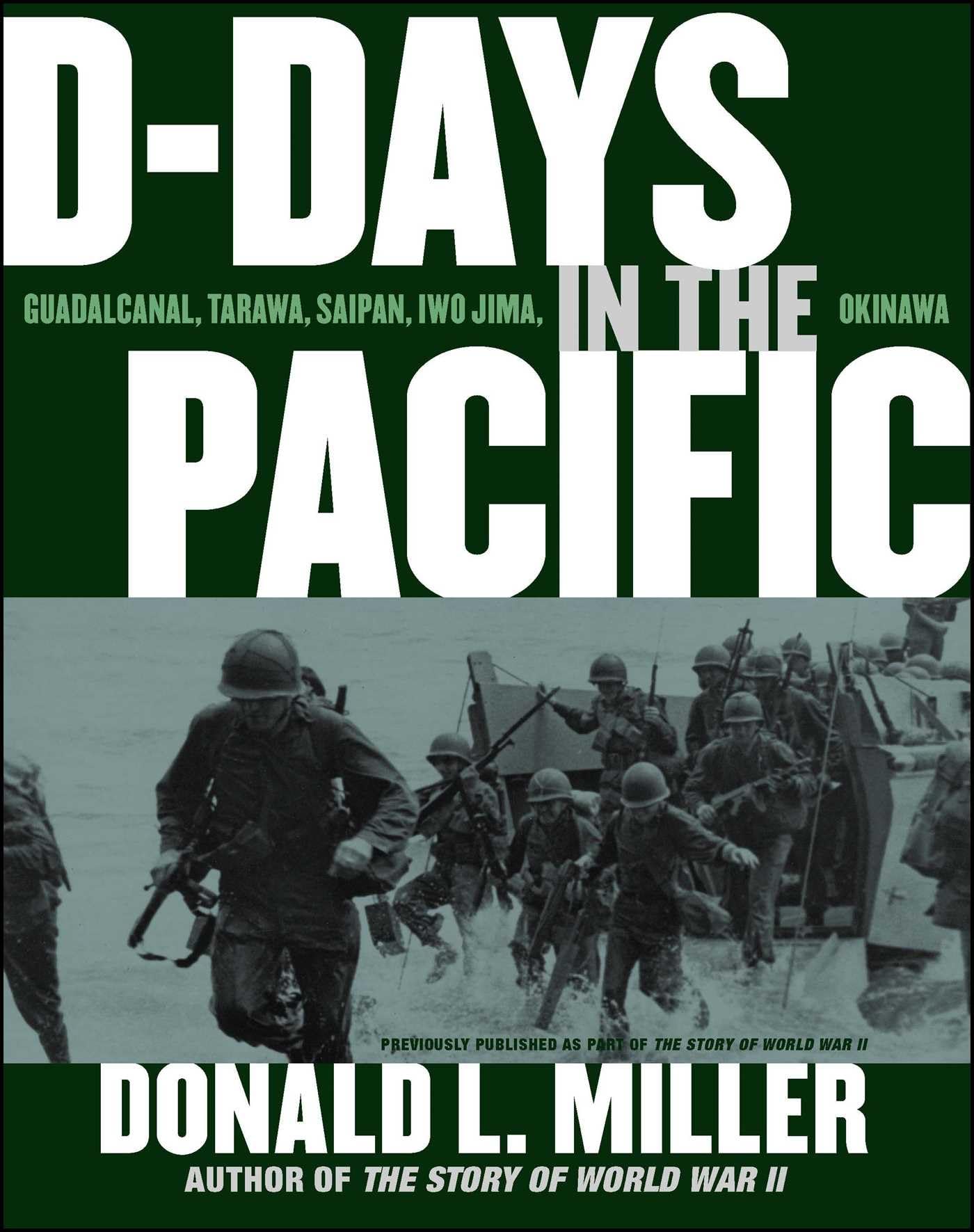



Although most people associate the term D-Day with the Normandy invasion on June 6, 1944, it is military code for the beginning of any offensive operation. In the Pacific theater during World War II there were more than one hundred D-Days. The largest—and last—was the invasion of Okinawa on April 1, 1945, which brought together the biggest invasion fleet ever assembled, far larger than that engaged in the Normandy invasion. D-Days in the Pacific tells the epic story of the campaign waged by American forces to win back the Pacific islands from Japan. Based on eyewitness accounts by the combatants, it covers the entire Pacific struggle from the attack on Pearl Harbor to the dropping of atomic bombs on Hiroshima and Nagasaki. The Pacific war was largely a seaborne offensive fought over immense distances. Many of the amphibious assaults on Japanese-held islands were among the most savagely fought battles in American history: Guadalcanal, Tarawa, Saipan, New Guinea, Peleliu, Leyte Gulf, Iwo Jima, Okinawa. Generously illustrated with photographs and maps, D-Days in the Pacific is the finest one-volume account of this titanic struggle. Miller's very readable account of the offensives in the Pacific, from the turning of the tide at Guadalcanal to VJ-day, portrays a series of amphibious landings, many of them bloodily and tenaciously contested. He skillfully uses official records and the remembrances of frontline survivors to depict the savagery and stresses of the close-quarters combat usually encountered in amphibious warfare. He also discusses the strained relationship between General Douglas MacArthur and Admiral Chester W. Nimitz, respectively the army and navy commanders in the Pacific, provoking one to wonder whether both sometimes forgot whom they were supposed to be fighting. Accounts of Iwo Jima and Okinawa, with their high casualty rates, introduce Miller's consideration of the decision to drop the atomic bomb. After those island campaigns, everyone from the president to the private believed something big should shorten the war and reduce American casualties. Excellent narrative history and first-class illustrations eventuate in superior historiography. Roland Green Copyright © American Library Association. All rights reserved "With his superb narrative flair, masterful eye for detail and perfect blend of colorful anecdote with historical context, Donald Miller has given vibrant new life to a valued work." Donald L. Miller is the John Henry MacCracken Professor of History Emeritus at Lafayette College and author of ten books, including Vicksburg , and Masters of the Air , currently being made into a television series by Tom Hanks. He has hosted, coproduced, or served as historical consultant for more than thirty television documentaries and has written for The New York Times , The Washington Post , and other publications.