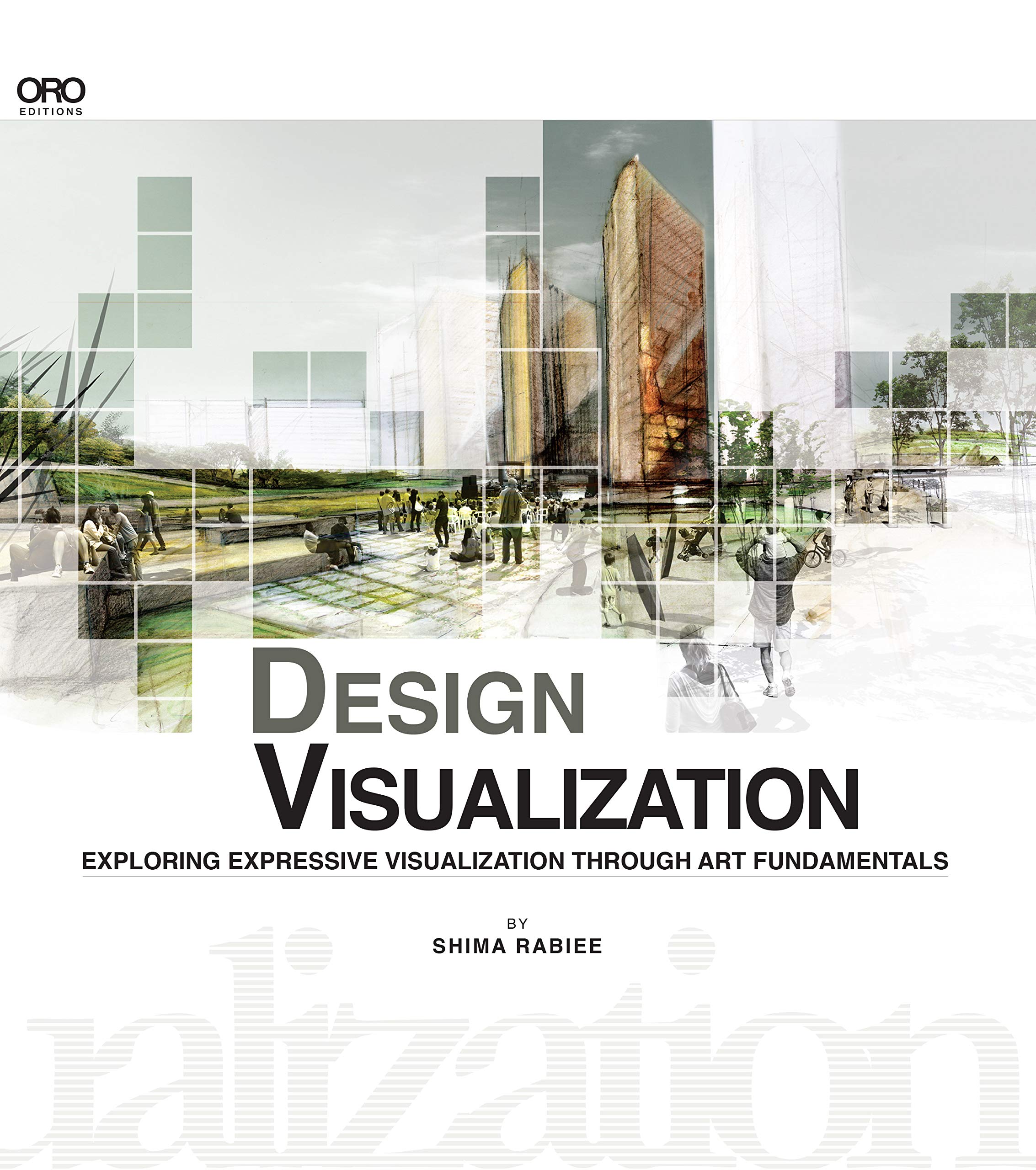
DESIGN VISUALIZATION: Exploring Expressive Visualization Through Art Fundamentals
$18.72
by Shima Rabiee



Artistic principles of presentation are the most influential factors in forming an observer’s interpretation of a certain object. Artists use these principles to enhance the communication of their ideas to their audience. This book aims to teach and emphasize the importance of these principles to designers so that they too, like artists, can present their ideas more expressively and communicate more easily with their audience. This book intends to enhance the artistic knowledge and perceptions of designers, which will be realized through observation of the work of masters of art and analysis of the masters’ presentation methods, followed by offering ways of effectively applying these methods to the visualization and representation of design ideas. The book also describes the application of these principles to visualization and rendering, providing step-by-step examples. These examples include both digital and freehand drawing techniques as well as their combinations. The book offers simple steps for the visualization, each of which is taught analytically and illustratively. "This guide, which is gorgeous and always encourage in its advice mode, will take beginners and accomplished renderers alike back over the basics of what makes a picture compelling--line, tone, form, frame, scale, energy, contrast." --Landscape Architecture Magazine “Design Visualization is an invaluable resource for designers of built environments. Through the lens of art fundamentals, Shima Rabiee has taken great strides to bridge the knowledge gap between visual experience and spatial representation. Drawing on her professional expertise as an artist and landscape architect, Rabiee makes ingenious analogies between historical masterworks of drawing and painting and contemporary approaches to making and representing physical space. She clearly defines the common vocabulary of design with analytical diagrams and illustrations, and outlines ef-fective tips and practices for readers to improve their visual literacy and communication skills. With this book, Shima Rabiee has made a significant and critical contribution to the field of environmen-tal design.” Elizabeth Boults, ASLA Landscape Architect and Educator, University of California, Davis Author of Illustrated History of Landscape Design Shima Rabiee is both a fine artist and creative designer. She has practiced as a designer at collaborative design and planning firms in New York City, San Francisco, Boston, and Houston. As well as her design practice, she has been succeeding as a professional artist and abstract-realism painter, due to her unique style of capturing the essence of forms, and incorporating it into the mood and dynamics of her artworks. She earned her Master’s degree in landscape architecture from the University of Pennsylvania. Prior to that, she earned a Bachelor degree in Architecture. Parallel to teaching at the Academy of Art University in San Francisco and leading the students with innovative and critical discussions in design studios, she has participated in a number of conferences and has published international papers. Her interest is engaging art as a fundamental element in design and representation process and making a conclusive discussion through it, that is functional, inspiring and necessary in design studios.