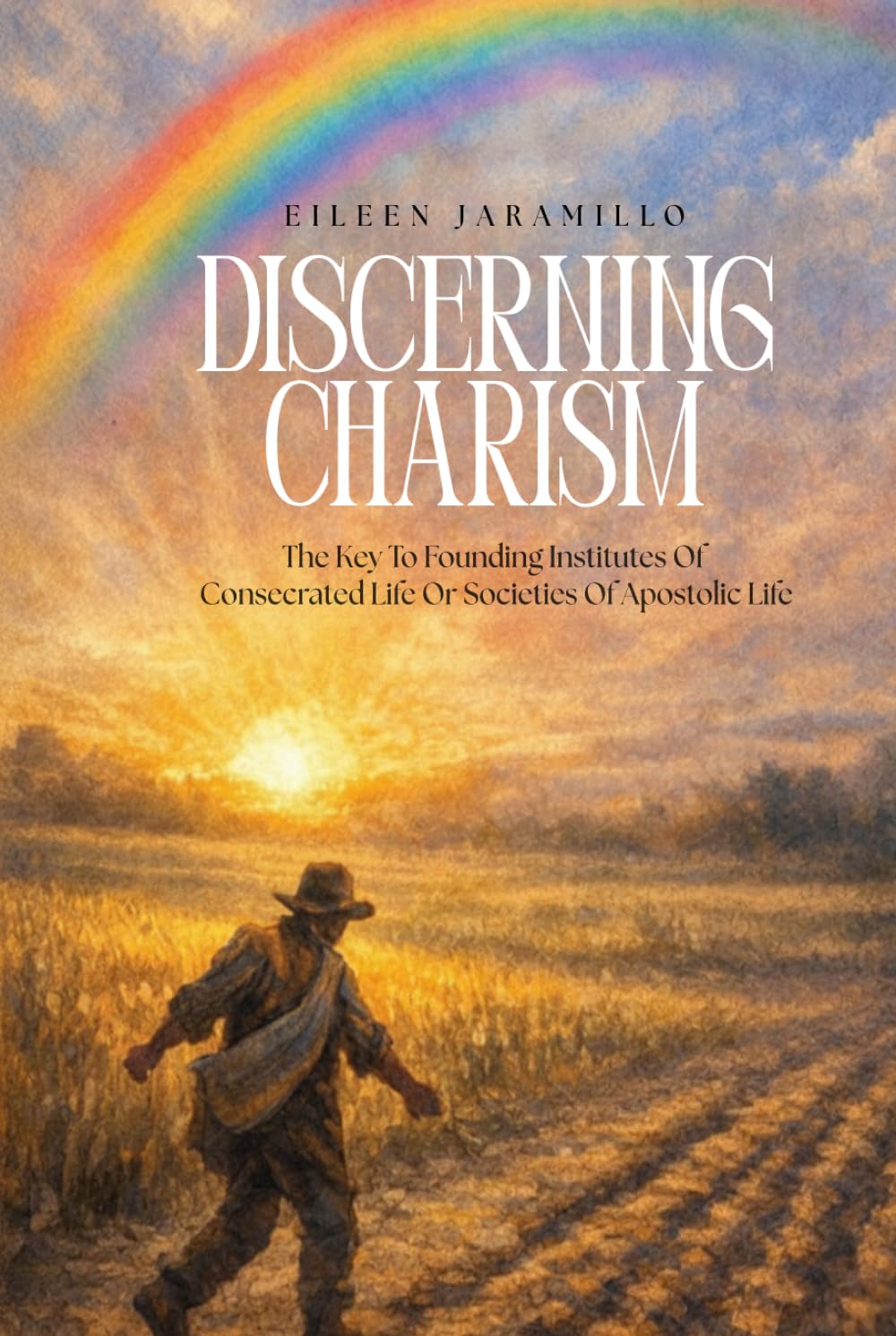
DISCERNING CHARISM: The Key to Founding New Institutes of Consecrated Life or Societies of Apostolic Life
$34.99
by Eileen C Jaramillo



Chapter 1 provides a foundational exploration of the term charism within the New Testament context, distinguishing it from the universal graces of faith, hope, and charity. It is framed as a specific spiritual gift available to any member of the Christian faithful and essential to the Church’s mission. The chapter also highlights Vatican II’s significant emphasis on the charismatic nature of the Church. Subsequent discussion addresses concerns regarding the authenticity of charisms , especially amid the rise of new movements and developments in institutes of consecrated life and societies of apostolic life. Chapter 2 examines the discernment process from the perspective of papal teaching, beginning with John XXIII's vision of engaging the modern world as the way to understand the movement of the Holy Spirit and continuing through Paul VI's approach to reconciling freedom and authority in discernment. John Paul II emphasizes discernment of the Code of Canon Law (CIC) by balancing governance with spiritual growth, while Benedict XVI regards discernment as a prayerful art focused on transformation. Keeping in mind his Jesuit background, Pope Francis frames discernment as active listening to the Holy Spirit, prioritizing vigilance and spiritual conversation. This chapter concludes by examining discernment as written in the doctoral research of Rev. Robert Prevost OSA—now known as Leo XIV—his ongoing emphasis on St. Augustine in his role as Pope, his insistence that discernment is a part of everyone’s life and his recent endorsements of Francis’s approach. Chapter 3 builds upon the groundwork set in previous chapters by analyzing the distinctions between institutes of consecrated life and societies of apostolic life. Both religious and secular institutes are classified as communal forms of consecrated life, though each possesses unique characteristics. Societies of apostolic life share certain features with institutes of consecrated life; however, their members typically do not profess all three evangelical counsels. In Chapter 4, the text details the discernment stages, beginning with canons related to Associations of the Christian Faithful. This section of the book differentiates these associations from formally recognized institutes and societies. It also outlines the way such canons are applied to communities who are in the process of discerning whether they will be established as institutes or societies. The progression of such communities consists of: de facto private association, a private association recommended by ecclesiastical authority, formal establishment as a public association, erection as an institute or society, recognition as an institute or society of pontifical right if warranted, and aggregation where applicable. Chapter 5 presents data on US communities currently discerning their status as institutes or societies, utilizing the directory from the Center for Applied Research in the Apostolate (CARA). It includes criteria for inclusion in its directory, statistics on discernment stage, lifestyle, apostolate focus, and affiliation intentions, followed by CARA's analytical conclusions. The Author then draws various conclusions.A comprehensive bibliography is provided for further study. Detailed notes, appendices, a glossary and abbreviations offer supporting material referenced throughout the book.