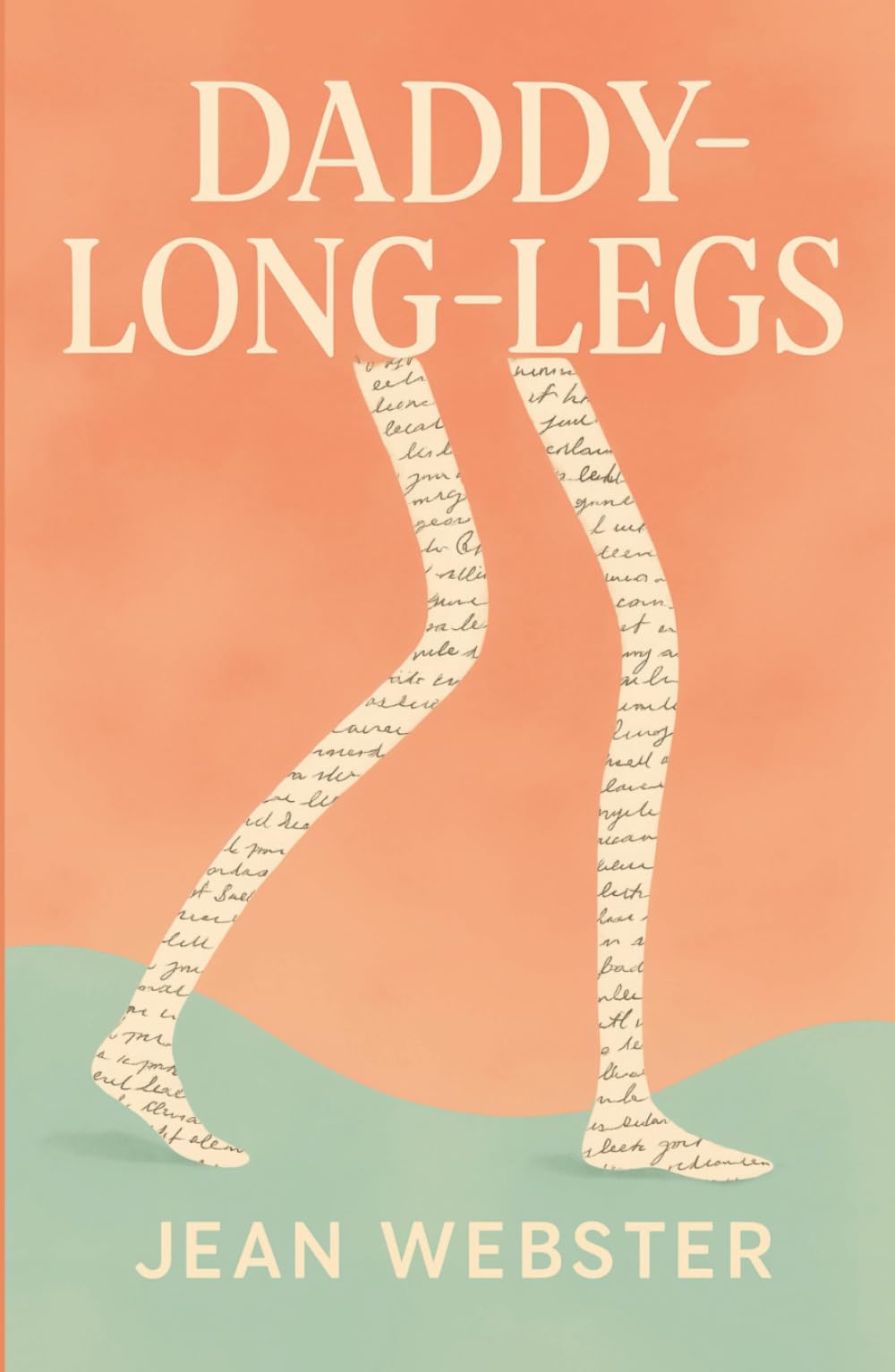



Daddy-Long-Legs Jerusha Abbott is about to be sent out of the orphanage she has lived all her life for she has been overage for the asylum for two years. But having kept a sunny soul and an imaginative mind full of poems and fresh tongue even inside the gloomy orphanage, she is selected to be sent to college by a rich trustee of the asylum to be made into an author: the only rule to abide by is to post a letter once a month to this trustee who she decides to call "daddy-long-legs" because the glimpse of his shadow only showed his long legs, resembling the insect, and as he has not revealed his real name to her. Strangely, he never replies to any of her letters directly, not ever even when she writes angrily about the absence of any means of reply from him. Jerusha changes her name to Judy, always having disliked her name, and spends four delighted years at the college. She makes many friends, studies hard, trains to become a great writer, and even meets the Daddy-Long-Legs unknowingly; but never forgets to send her letters once a month. These lovely collection of four years' amount of her letters includes realistic descriptions Judy's life and the slight hints at who the mysterious Daddy-Long-Legs can be hidden in her handwritten messages; a light, lively novel with a successful experiments at a peculiar point of view, this wonderful classic is a joyful read for any person. Jean Webster is the author of the young, summer-like novel, Daddy-Long-Legs. It is made of a beautiful collection of letters containing realistic descriptions of life at college from the lovely heroine, Judy Abbott. The author's actual name was Alice Jane Chandler Webster, although the pseudonym is better known. Her father a publisher and her mother a niece of Mark Twain's, her life had been full of literature from early days. Born into a strong society of women, her novels feature smart, lively young women coming to age. Her best-known works are Daddy-Long-Legs and Dear Enemy, in which the latter is narrated from Judy's friend, Sally. The thing in common with these novels are that they are narrated from letters; this fresh, experimental attempt at the narrating point of view has succeeded to win the hearts of many readers all over the world. - Description written by Ruhilee -