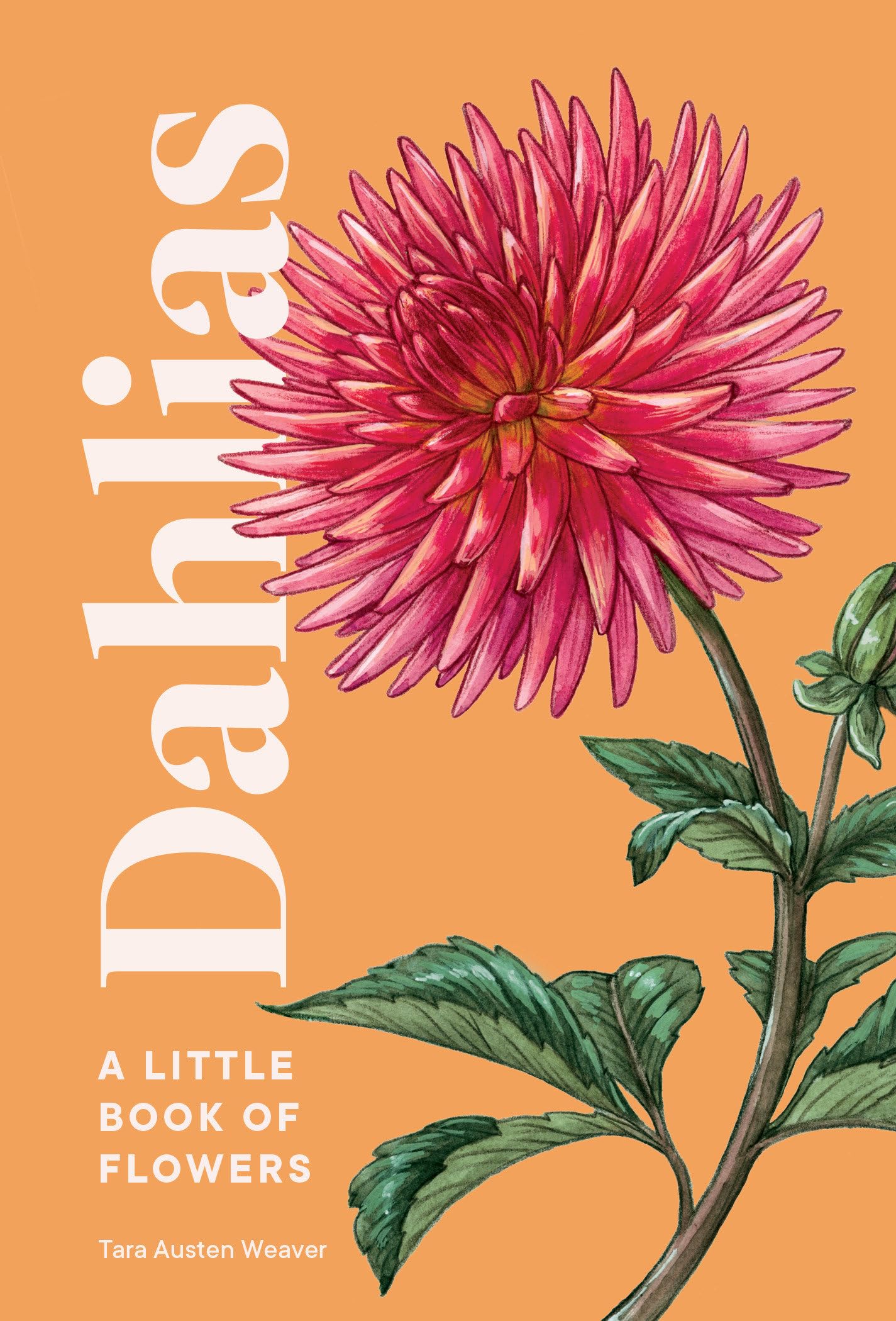
Dahlias: A Little Book of Flowers (Little Book of Natural Wonders)
$8.69
by Tara Austen Weaver



This delightful celebration of the dahlia reads like a “very smart love letter to cultivating beauty” and features 60+ vintage-inspired full-color botanical illustrations ( Seattle Times ). “Next time you are lucky enough to be someone’s houseguest, consider arriving with a bouquet of either one of the Little Book of Flowers.”— The New York Times Dahlias are the showboats of the flower world—colorful, flamboyant, and spectacular. They're also one of the most satisfying flowers to grow, with a long season, plentiful blooms, and are adaptable to most climates with proper care. They're very easy to propagate, and can be hybridized. There are numerous dahlia flower forms and more than 50,000 recognized cultivars! This charming little hardcover book includes: 60+ full-color botanical illustrations - basic botany and history - everything you need to know to grow gorgeous blooms in the garden (including dividing tubers to propagate more flowers) - tips for creating beautiful arrangements and preserving flowers - quotes, lore, and notable gardens and growers Like a bouquet of dahlias, this book is an affordable little luxury for gardeners and flower lovers—the perfect hostess gift or Mother's Day present. It’s part of the collectible mini gift book series Little Book of Natural Wonders. "Next time you are lucky enough to be someone’s houseguest, consider arriving with a bouquet of either one of the Little Book of Flowers. . . Each book includes snappy discussions of the origins of the species, cultivation techniques and suggestions for display. The charm lies in Poole’s art. . . there’s a distinctly retro appeal to the watercolors here, which slow you down to linger over crinkled petals and bombshell flower heads. These books don’t pretend to be encyclopedic; rather, Weaver is discerning in her choices." — New York Times "In 'A Little Book of Flowers,' a new series of single bloom titles, author Tara Austen Weaver weaves together basic botany and culture. Each posey-size volume reads like a very smart love letter to cultivating beauty. . . Charming illustrations by Emily Poole and numerous quotes tug at our horticultural heartstrings, while a serviceable glossary and resource section at the back of each book indulge our yearning to grow more flowers and deepen our knowledge of the natural world." —Seattle Times, Pacific NW Magazine "If the words "hidden gem" make you sit up and pay attention, this just may be the perfect book for the nature lover on your list!...It’s a must for flower fans. If you wanted to give a lavish gift, pair this with a fresh flower subscription." — Modern Mrs. Darcy TARA AUSTEN WEAVER is a freelance writer, editor, and author of The Butcher & The Vegetarian and Orchard House: How a Neglected Garden Taught One Family to Grow . Tara's food blog, Tea & Cookies , established in 2006, was selected as one of the top 50 food sites in the world by both the Times of London and The Independent and has been featured on The Food Network, Saveur, Oprah.com, Apartment Therapy, The Kitchn, Reddit, and Bonappetit.com. She is a trained Master Gardener, Permaculture Designer, and Master Composter/Soil Builder. Emily Poole is a freelance illustrator, born and raised in the mountain town of Jackson Hole, Wyoming. She graduated from Rhode Island School of Design with a BFA in Illustration and is currently located in Eugene, Oregon. She has created work for the Teton Raptor Center, World Wildlife Fund Guyana, and the National Museum of Wildlife Art. Origin of the Species “There’s probably no plant in the flower kingdom that gives the gardener more spectacular reward than the dahlia.” —RAY ALLEN Dahlias are the showgirls of the flower world—extravagantly beautiful, they sashay into the summer garden and demand all our attention. But like any stage performer, their beauty is deceptive. Dahlias are hard workers and strong, putting out bloom after bloom from midsummer right into autumn. The show finally ends with the first hard frost, which brings down the curtain on their dazzling performance. Few flowers produce for so long, with such diversity of color, size, shape, and cutting potential. If ever there was a bloom that earned its keep, it’s the dahlia. The modern dahlia traces its roots to Mexico and Central America, where they were cultivated and gathered wild by the Aztecs and other indigenous people, prized more for their edible roots and hollow stems that were used to carry water than for the flowers themselves. The name for dahlias in the Nahuatl language spoken by the Aztecs is acocoxochitl, which translates as “water tube flower.” Dahlias root tubers were also used for their curative properties—to treat ailments such as epilepsy, fevers, urinary tract disorders, and colic. The petals were known to soothe rashes, insect bites, and dry skin. When European explorers arrived from Spain in the late 1500s, they were intrigued by the flowers they saw growing wild on sunny