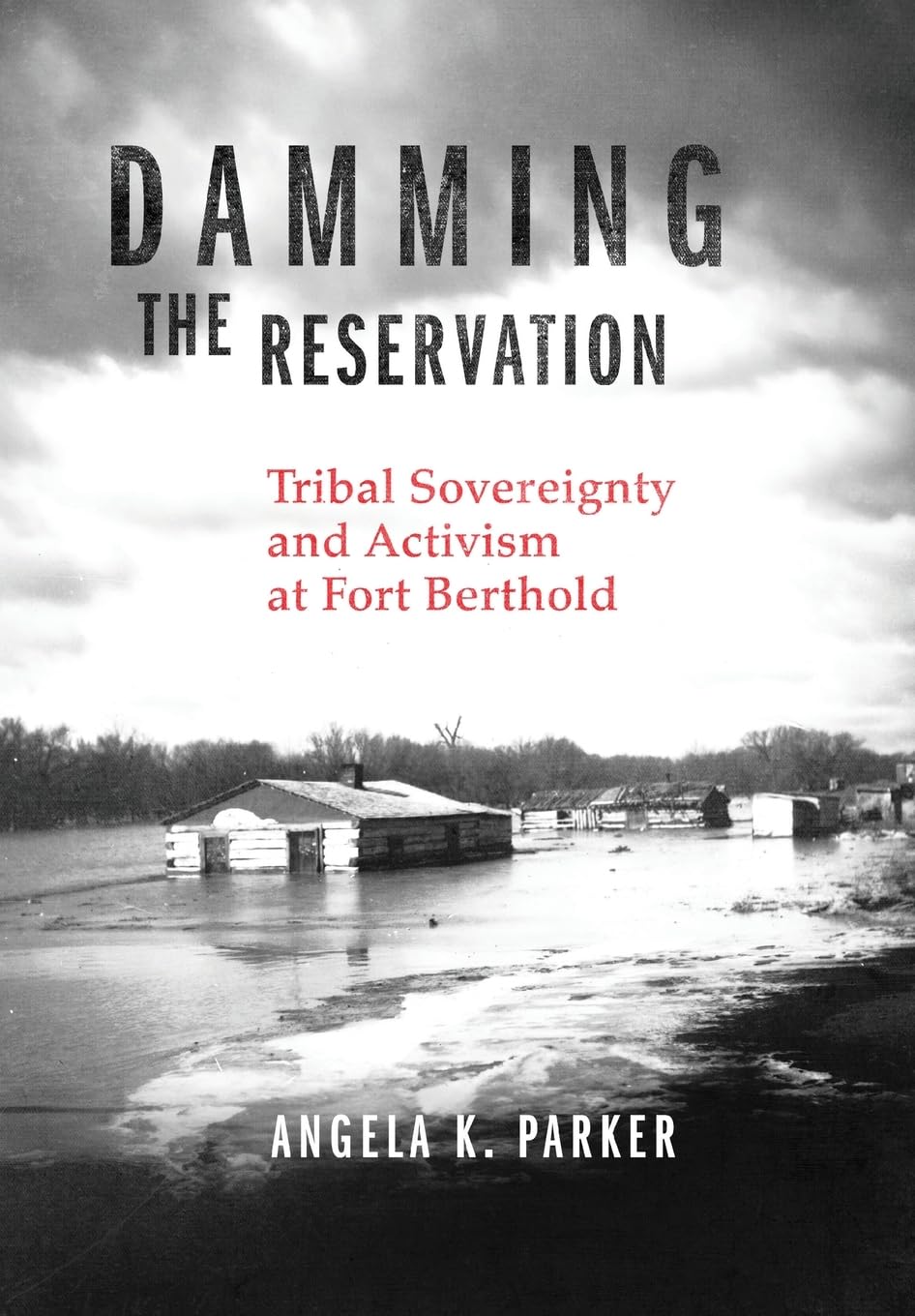
Damming the Reservation: Tribal Sovereignty and Activism at Fort Berthold (Volume 23) (New Directions in Native American Studies Series)
$38.20
by Angela K. Parker



“The single most destructive act ever perpetrated on any tribe by the United States,” Vine Deloria Jr. called it. For the Mandan, Hidatsa, and Arikara communities living on the Fort Berthold Indian Reservation in North Dakota, the construction of the Garrison Dam as part of the New Deal–era Pick-Sloan Missouri Basin Program meant the flooding of a third of their land, including their most fertile agricultural acreage, the loss of their homes, and wrenching relocation. In Damming the Reservation , Angela K. Parker, an enrolled member of the Three Affiliated Tribes, offers a deeply researched, unflinching history of the tribes’ fight to preserve and rebuild their culture, shared history, common stories, sense of place, and sovereignty. With the richly informed and deeply personal perspective of a historian and descendant of those who survived these events, Parker tracks the riverine communities from 1920 to 1960, in the years before, during, and after the Army Corps of Engineers did its devastating work. By studying the inextricable link between on-the-ground conditions and national policy, she builds a cohesive narrative for twentieth-century Native American history that hinges on the assertion of Indigenous sovereignties. These battles over land, water, and resources that constitute the “territory” required to maintain a working sovereign body are at the very heart of the Native American past, present, and future. The author shows how Indigenous resistance to the Garrison Dam created a new generation of activists, including Tillie Walker, the focus of the book’s epilogue. Damming the Reservation documents what can happen when a settler colonial nation tramples tribal rights while exerting control over rural hinterlands: in this case, the reservation community developed a praxis of self-determination and tribal sovereignty that trickled up to the national level so that tribal meanings came to saturate federal Indian policy. This is a history whose lessons echo through today’s most pressing environmental justice crises. “At long last, here is a book that brings the reader to a total understanding of how and why the Three Tribes were removed from their sacred bottomlands along the Missouri River.”— Gerard Barker, former Assistant Director, American Indian Relations, National Park Service, Washington, DC “Beginning with the remarkable Sitting Rabbit map, Angela K. Parker charts the extraordinary world of a tribal nation whose people are known as masterful thinkers, dedicated athletes, extraordinary agriculturalists, and much more. From the ecological crime and massive dispossession by the Army Corps of Engineers with the Garrison Diversion Project, to the brutal Termination and Relocation era, the Three Affiliated Tribes ingeniously managed to survive as a people with heart, empathy, humor, strategic intelligence, and a stubborn insistence on being Mandan, Hidatsa, Arikara.”— Louise Erdrich (Turtle Mountain Band of Chippewa), Winner of the Pulitzer Prize for The Nighwatchman “Taken Lands beautifully unpacks how the Mandan, Hidatsa, and Arikara have asserted a modern sovereignty while engaging with the settler state even as it sought to destroy their national identity. Parker deftly examines the environmental, historical, and political trajectory of Fort Berthold. Within her account, the voices of the people are centered and made heard with an eye on the importance of Indigenous futures.”— Mishuana Goeman (Tonawanda Band of Seneca), author of Settler Aesthetics : The Spectacle of Originary Moments in the New World Angela K. Parker (Mandan, Hidatsa, Cree) is Assistant Professor of History at the University of Denver.