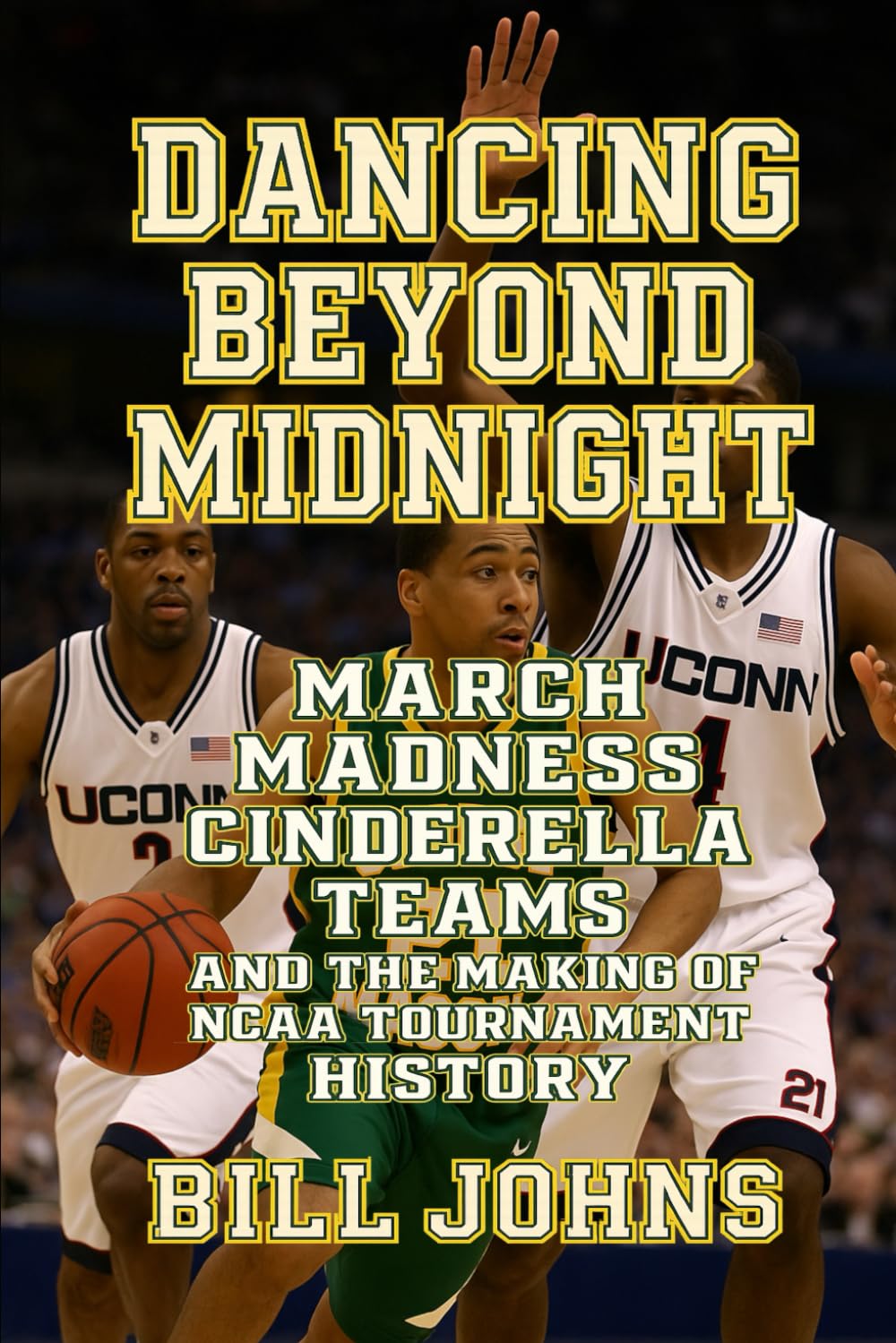
Dancing Beyond Midnight: March Madness Cinderella Teams and the Making of NCAA Tournament History (Above the Rim)
$19.99
by Bill Johns



Every spring, March Madness captures the nation, but it is the Cinderella teams—the underdogs who defy the odds—that define its soul. From George Mason and Butler to UMBC and Saint Peter’s, these unforgettable runs remind fans why the NCAA basketball tournament is more than a championship chase. It is a national ritual of belief, hope, and improbable triumphs, where the dream of toppling giants becomes reality for one shining moment. Dancing Beyond Midnight: March Madness Cinderella Teams and the Making of NCAA Tournament History is a narrative history tracing the cultural and historical significance of NCAA tournament underdogs. It explores how bracket busters became more than sporting surprises. They turned into cultural touchstones, civic legends, and enduring myths in the American imagination. The book begins with Villanova’s 1985 miracle against Georgetown, then moves through the iconic runs that followed: Princeton’s near-shock of UCLA in 1996, Gonzaga’s 1999 debut, George Mason’s improbable 2006 Final Four, Butler’s back-to-back national championship appearances, Florida Gulf Coast’s “Dunk City,” Loyola Chicago’s faith-driven journey in 2018, and UMBC’s history-making defeat of Virginia as the first 16-seed to topple a No. 1. Each story is told not only as an upset but as a mirror of American values—discipline, chance, resilience, and the belief that the impossible can be made real. Drawing from NCAA archives, sports journalism, coaching memoirs, and cultural studies, Dancing Beyond Midnight weaves game detail with broader meaning. It shows how Cinderella victories were not accidents but intersections of preparation and luck. The slipper always fits, but only because players and communities were ready to seize the moment. The book examines how Gonzaga transformed from darling into dynasty, how Butler’s “Butler Way” became both philosophy and brand, and how Wichita State carried the weight of proving itself again after perfection turned into pressure. The impact of these upsets extended beyond the court. George Mason redefined a commuter campus as a national name. Loyola Chicago linked basketball to faith and viral fame. UMBC turned a small Maryland program into a global headline, forever remembered each time brackets are filled. Florida Gulf Coast put Fort Myers on the map with high-flying dunks, while Saint Peter’s became a symbol of grit and joy for Jersey City. These teams transformed the places they represented, proving that the improbable can become civic faith. In an era when basketball is dominated by powerhouse conferences and recruiting empires, Cinderella stories endure because they restore surprise to a sport threatened by predictability. They also reflect something deeper in the American character. To cheer for the underdog is to reaffirm faith in upward mobility, in the possibility that circumstance need not dictate destiny. As Howard Cosell said, “Americans will always cheer the underdog, because in some way we all believe we are one.” At its heart, Dancing Beyond Midnight is not only a history of games but a meditation on memory. It asks why these fleeting upsets linger so powerfully, why the slipper never shatters even when its wearers fade. Evocative and deeply researched, this is a book for anyone who has ever filled out a bracket, circled a long shot, and believed. To read it is to remember why March Madness matters—not only for the champions it crowns, but for the dreams it awakens. Dancing Beyond Midnight invites readers to cheer again for the improbable and to consider what our love of Cinderellas reveals about who we are, what we value, and why hope still endures when the clock strikes twelve.