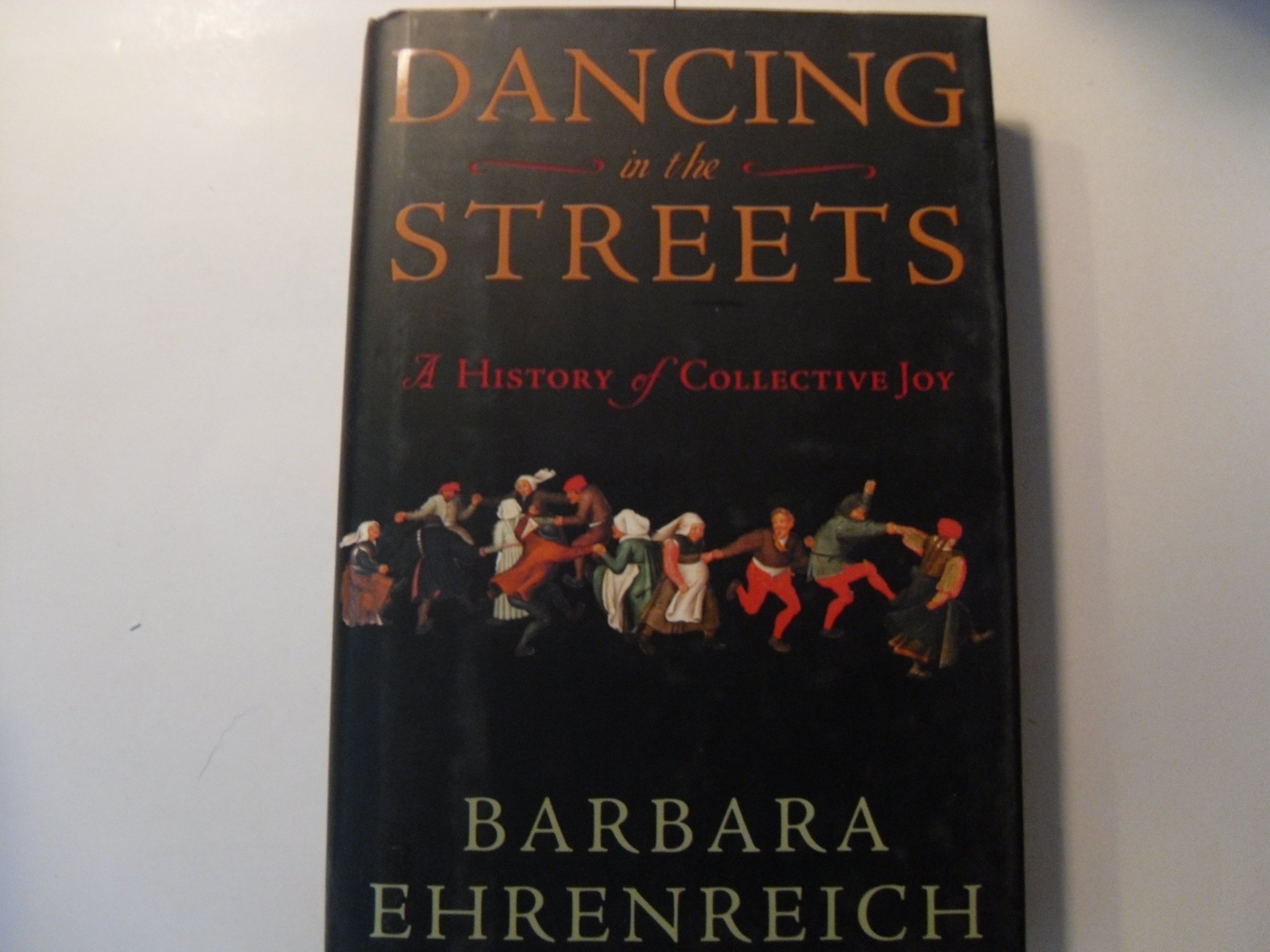



From the bestselling social commentator and cultural historian, a fascinating exploration of one of humanity's oldest traditions: the celebration of communal joy In the acclaimed Blood Rites , Barbara Ehrenreich delved into the origins of our species' attraction to war. Here, she explores the opposite impulse, one that has been so effectively suppressed that we lack even a term for it: the desire for collective joy, historically expressed in ecstatic revels of feasting, costuming, and dancing. Ehrenreich uncovers the origins of communal celebration in human biology and culture. Although sixteenth-century Europeans viewed mass festivities as foreign and "savage," Ehrenreich shows that they were indigenous to the West, from the ancient Greeks' worship of Dionysus to the medieval practice of Christianity as a "danced religion." Ultimately, church officials drove the festivities into the streets, the prelude to widespread reformation: Protestants criminalized carnival, Wahhabist Muslims battled ecstatic Sufism, European colonizers wiped out native dance rites. The elites' fear that such gatherings would undermine social hierarchies was justified: the festive tradition inspired French revolutionary crowds and uprisings from the Caribbean to the American plains. Yet outbreaks of group revelry persist, as Ehrenreich shows, pointing to the 1960s rock-and-roll rebellion and the more recent "carnivalization" of sports. Original, exhilarating, and deeply optimistic, Dancing in the Streets concludes that we are innately social beings, impelled to share our joy and therefore able to envision, even create, a more peaceable future. At a time when social scientists are lamenting the loss of a sense of community, Ehrenreich offers an absorbing look at the joy of life expressed in communal rituals of dance and celebration. From cave drawings through the celebrations of weddings, religious rites, healing, and war preparations of various cultures to modern "carnivalization" of sports celebrations, she traces the appeal of synchronizing individual movements to a group. Western culture, with little understanding of the ecstasy of love expressed in group celebrations, has looked on such celebrations as primitive hysterics and banned them among African slaves, Native Americans, and other cultures. But Ehrenreich details a long history of such celebrations in European cultures, from the festivals of Dionysus to those of medieval Christians. She also explores other cultures' reactions to dance celebrations they viewed as somehow socially or spiritually subversive, whether it's Protestants banning carnivals or Wahhabist Muslims frowning on ecstatic Sufism. Given the social nature of humans, Ehrenreich is optimistic that the drive to "civilize" will never fully eliminate the impulse for group celebration. Vanessa Bush Copyright © American Library Association. All rights reserved "A fabulous book on carnival and ecstasy, skillfully arranged and brilliantly explained."--Robert Farris Thompson, author of Tango: The Art History of Love "Barbara Ehrenreich shows how and why people celebrate together, and equally what causes us to fear celebration. Here is the other side of ritual, whose dark side she explored in Blood Rites . She ranges in time from the earliest festivals drawn on cave walls to modern football crowds; she finds that festivities and ecstatic rituals have been a way to address personal ills like melancholy and shame, social ills as extreme as those faced by American slaves. Dancing in the Streets is itself a celebration of language -- clear, funny, unpredictable. This is a truly original book."--Richard Sennett, author of The Culture of the New Capitalism "A fabulous book on carnival and ecstasy, skillfully arranged and brilliantly explained."--Robert Farris Thompson, author of Tango: The Art History of Love Barbara Ehrenreich is the author of fourteen books, including Blood Rites and the New York Times bestsellers Nickel and Dimed and Bait and Switch . A frequent contributor to Harper's and The Nation, she has been a columnist at The New York Times and Time magazine. She lives in Virginia. According to Dancing in the Streets, we are the only animals who come together to make music and then move in harmony with it. Most of us understand this pleasure. We even wish to dance ecstatically in large groups. In fact, we seem to like this most of all. What's more, argues Barbara Ehrenreich, the urge to do so is innate: In one form or another, the practice seems to occur worldwide and in most if not all cultures, including those of the Paleolithic peoples who depicted their dances in caves. Typically, such dancing involves music or drumming and perhaps also masks -- sometimes to create new identities for the dancers, sometimes merely to hide their true identities, thus erasing social inequality. When the dance is over, its pleasure continues as an afterglow. Group unity is achieved, social bonds are strengt