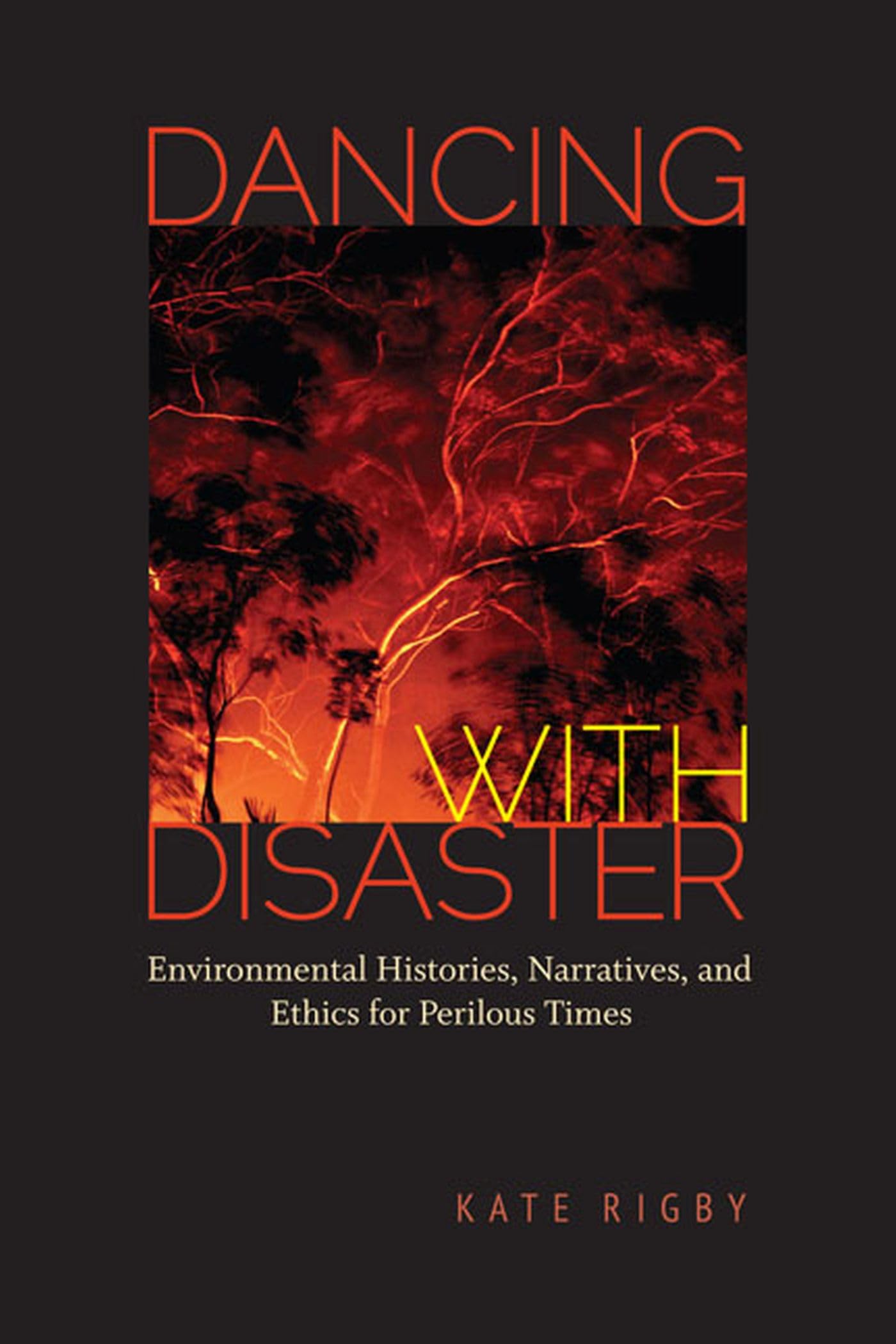
Dancing with Disaster: Environmental Histories, Narratives, and Ethics for Perilous Times (Under the Sign of Nature: Explorations in Environmental
$68.50
by Kate Rigby



The calamitous impacts of climate change that are beginning to be felt around the world today expose the inextricability of human and natural histories. Arguing for a more complex account of such calamities, Kate Rigby examines a variety of past disasters, from the Black Death of the Middle Ages to the mega-hurricanes of the twenty-first century, revealing the dynamic interaction of diverse human and nonhuman factors in their causation, unfolding, and aftermath. Focusing on the link between the ways disasters are framed by the stories told about them and how people tend to respond to them in practice, Rigby also shows how works of narrative fiction invite ethical reflection on human relations with one another, with our often unruly earthly environs, and with other species in the face of eco-catastrophe. In its investigation of an array of authors from the Romantic period to the present―including Heinrich von Kleist, Mary Shelley, Theodor Storm, Colin Thiele, and Alexis Wright― Dancing with Disaster demonstrates the importance of the environmental humanities in the development of more creative, compassionate, ecologically oriented, and socially just responses to the perils and possibilities of the Anthropocene. Under the Sign of Nature: Explorations in Ecocriticism Dancing with Disaster operates within what is, I believe, the most productive vein of contemporary environmental-theoretical thought and mines that vein significantly further in both theoretical and practical ways. It affiliates itself meaningfully with recent turns toward active matter, material feminist, and material ecocritical theory, and interprets a series of texts through a natural-cultural lens that not only yields a series of excellent close readings of diverse texts but also makes those readings innovative and instructive in a number of ways. ― Frederick Buell, CUNY Queens, author of From Apocalypse to Way of Life: Environmental Crisis in the American Century Rigby provides a compelling portrait of our evolving relationship with our material environs. Lucid, thoughtful, and eloquently written, Dancing with Disaster will be of interest to scholars across the environmental humanities, cultural studies, and literature from Romanticism to the present day. ― Journal of American Studies [S]howcase[s] the capaciousness of current environmental humanities practice and thegrowth of ecocriticism from its origins examining Anglo-American nature writing.... Rigby draws out the "material-discursive" nature of disaster through the structure of her book, the careful literary analyses she performs, and her insistence on interrogating how lexical shifts from "disaster" to "natural disaster" to "eco-catastrophe" (her preferredterm) structure human-nonhuman relations. ― American LIterary History Methodologically, Rigby's book is a mature example of ecocriticism: it draws from several theoretical traditions without feeling scattered. It historicizes its texts without reducing itself to mere historicism. It situates its authorial self in the subject matter but reads as neither too personal nor too dispassionate. . . In the end the book 'dances' across cultural stages as capably as it dances with the question that informs its title: to mitigate or to adapt in the face of proliferating disasters? Employing a number of carefully selected, illuminating texts in that effort, the book offers a worthwhile argument for the kinds of steps we might consider.― Western American Literature Dancing with Disaster operates within what is, I believe, the most productive vein of contemporary environmental-theoretical thought and mines that vein significantly further in both theoretical and practical ways. It affiliates itself meaningfully with recent turns toward active matter, material feminist, and material ecocritical theory, and interprets a series of texts through a natural-cultural lens that not only yields a series of excellent close readings of diverse texts but also makes those readings innovative and instructive in a number of ways. Rigby provides a compelling portrait of our evolving relationship with our material environs. Lucid, thoughtful, and eloquently written, Dancing with Disaster will be of interest to scholars across the environmental humanities, cultural studies, and literature from Romanticism to the present day. [S]howcase[s] the capaciousness of current environmental humanities practice and the growth of ecocriticism from its origins examining Anglo-American nature writing.... Rigby draws out the "material-discursive" nature of disaster through the structure of her book, the careful literary analyses she performs, and her insistence on interrogating how lexical shifts from "disaster" to "natural disaster" to "eco-catastrophe" (her preferred term) structure human-nonhuman relations. Kate Rigby, author of Topographies of the Sacred: The Poetics of Place in European Romanticism (Virginia), is Professor of Environmental Humanities