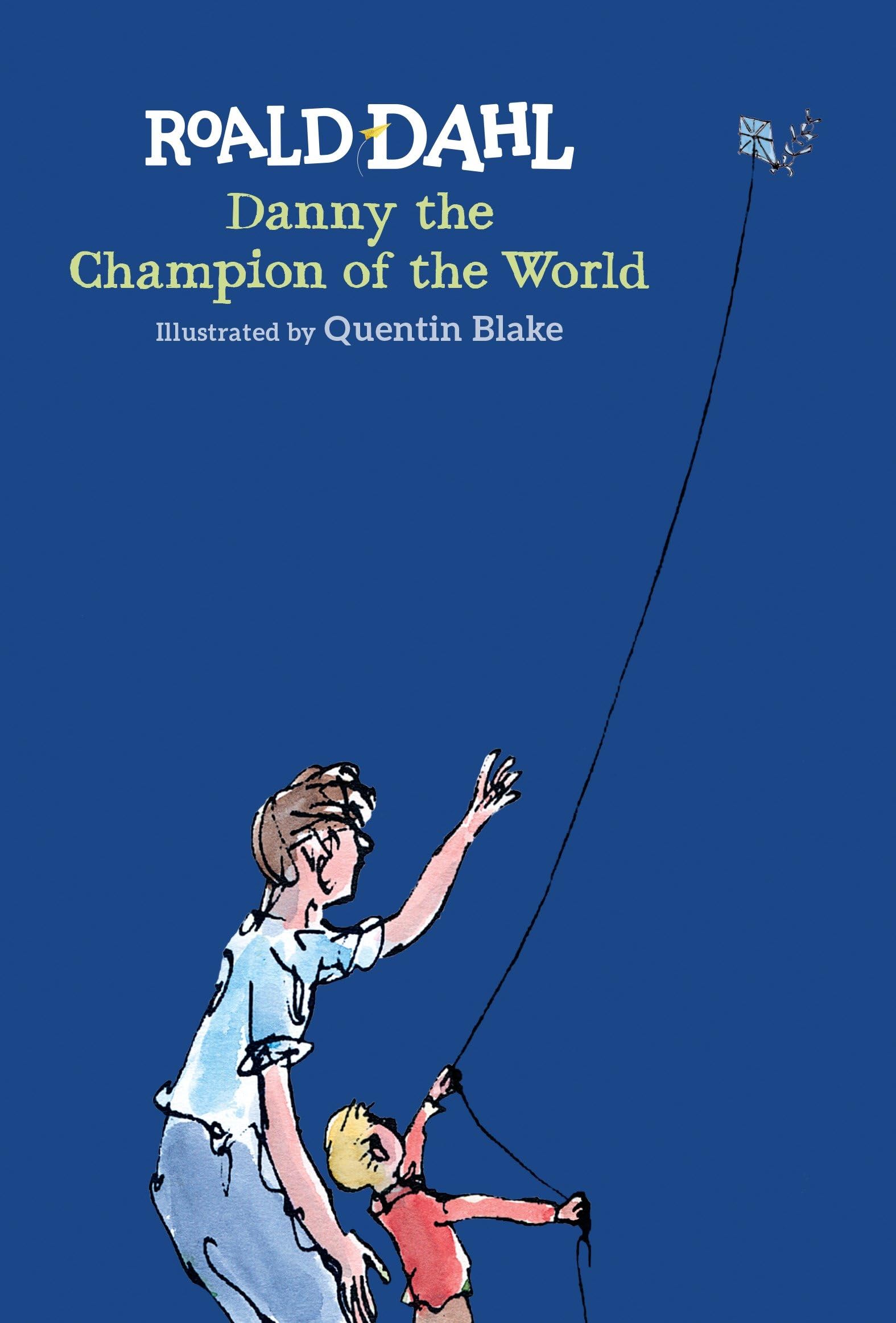



This collectable hardcover edition will feature a beautiful cover and deluxe packaging, including color interior text and illustrations! From the bestselling author of Charlie and the Chocolate Factory and Matilda comes the story of a boy, his dad, and a daring expedition. Just as important, it’s the story of the love between a father and his son. Danny has a life that any boy would love—his home is a caravan, he’s the youngest car mechanic around, and his best friend is his dad, who never runs out of wonderful stories to tell. But one night Danny discovers a shocking secret that his father has kept hidden for years. Soon Danny finds himself the mastermind behind the most incredible plot ever attempted against nasty Victor Hazell, a wealthy landowner with a bad attitude. Can they pull it off? If so, Danny will truly be the champion of the world. Roald Dahl was a spy, ace fighter-pilot, chocolate historian and medical inventor. He was also the author of Charlie and the Chocolate Factory , Matilda , The BFG and many more brilliant stories. He remains the World’s No.1 storyteller. Sir Quentin Blake , the first-ever Children’s Laureate of the United Kingdom, has illustrated nearly 300 books, including most of Roald Dahl’s children’s books. He lives in London. The Filling Station WHEN I was four months old, my mother died suddenly and my father was left to look after me all by himself. This is how I looked at the time. I had no brothers or sisters. So all through my boyhood, from the age of four months onward, there was just us two, my father and me. We lived in an old gypsy caravan behind a filling station. My father owned the filling station and the caravan and a small meadow behind, but that was about all he owned in the world. It was a very small filling station on a small country road surrounded by fields and woody hills. While I was still a baby, my father washed me and fed me and changed my diapers and did all the millions of other things a mother normally does for her child. That is not an easy task for a man, especially when he has to earn his living at the same time by repairing automobile engines and serving customers with gasoline. But my father didn't seem to mind. I think that all the love he had felt for my mother when she was alive he now lavished upon me. During my early years, I never had a moment's unhappiness or illness, and here I am on my fifth birthday. I was now a scruffy little boy as you can see, with grease and oil all over me, but that was because I spent all day in the workshop helping my father with the automobiles. The filling station itself had only two pumps. There was a wooden shed behind the pumps that served as an office. There was nothing in the office except an old table and a cash register to put the money into. It was one of those where you pressed a button and a bell rang and the drawer shot out with a terrific bang. I used to love that. The square brick building to the right of the office was the workshop. My father built that himself with loving care, and it was the only really solid thing on the place. "We are engineers, you and I," he used to say to me. "We earn our living by repairing engines and we can't do good work in a rotten workshop." It was a fine workshop, big enough to take one automobile comfortably and leave plenty of room around the sides for working. It had a telephone so that customers could ring up and arrange to bring their cars in for repair. The caravan was our house and our home. It was a real old gypsy wagon with big wheels and fine patterns painted all over it in yellow and red and blue. My father said it was at least one hundred and fifty years old. Many gypsy children, he said, had been born in it and had grown up within its wooden walls. With a horse to pull it, the old caravan must have wandered for thousands of miles along the roads and lanes of England. But now its wanderings were over, and because the wooden spokes in the wheels were beginning to rot, my father had propped it up underneath with bricks. There was only one room in the caravan, and it wasn't much bigger than a fair-sized modern bathroom. It was a narrow room, the shape of the caravan itself, and against the back wall were two bunk beds, one above the other. The top one was my father's, the bottom one mine. Although we had electric lights in the workshop, we were not allowed to have them in the caravan. The electricity people said it was unsafe to put wires into something as old and rickety as that. So we got our heat and light in much the same way as the gypsies had done years ago. There was a wood-burning stove with a chimney that went up through the roof, and this kept us warm in winter. There was a kerosene burner on which to boil a kettle or cook a stew, and there was a kerosene lamp hanging from the ceiling. When I needed a bath, my father would heat a kettle of water and pour it into a basin. Then he would strip me naked and scr