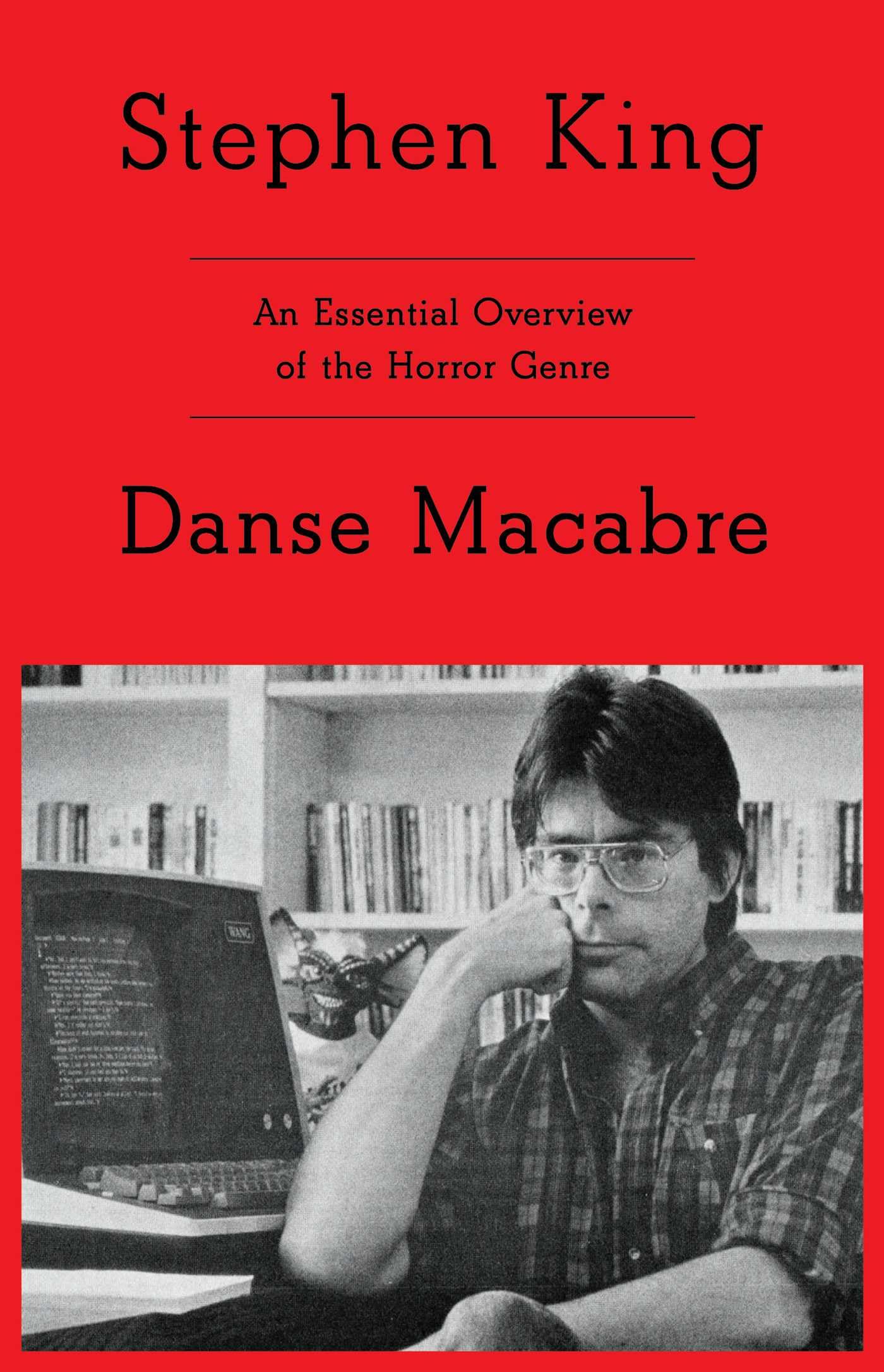



Before he gave us the “one of a kind classic” ( The Wall Street Journal ) memoir On Writing , Stephen King wrote a nonfiction masterpiece in Danse Macabre , “one of the best books on American popular culture” ( Philadelphia Inquirer ). From the author of dozens of #1 New York Times bestsellers and the creator of many unforgettable movies comes a vivid, intelligent, and nostalgic journey through three decades of horror as experienced through the eyes of the most popular writer in the genre. In 1981, years before he sat down to tackle On Writing , Stephen King decided to address the topic of what makes horror horrifying and what makes terror terrifying. Here, in ten brilliantly written chapters, King delivers one colorful observation after another about the great stories, books, and films that comprise the horror genre—from Frankenstein and Dracula to The Exorcist, The Twilight Zone , and Earth vs. The Flying Saucers . With the insight and good humor his fans appreciated in On Writing , Danse Macabre is an enjoyably entertaining tour through Stephen King’s beloved world of horror. Stephen King is the author of more than sixty books, all of them worldwide bestsellers. His recent work includes Never Flinch , the short story collection You Like It Darker ( a New York Times Book Review top ten horror book of 2024), Holly (a New York Times Notable Book of 2023), Fairy Tale , Billy Summers , If It Bleeds , The Institute , Elevation , The Outsider , Sleeping Beauties (cowritten with his son Owen King), and the Bill Hodges trilogy: End of Watch , Finders Keepers , and Mr. Mercedes (an Edgar Award winner for Best Novel and a television series streaming on Peacock). His novel 11/22/63 was named a top ten book of 2011 by The New York Times Book Review and won the Los Angeles Times Book Prize for Mystery/Thriller. His epic works The Dark Tower , It , Pet Sematary , Doctor Sleep , and Firestarter are the basis for major motion pictures, with It now the highest-grossing horror film of all time. He is the recipient of the 2020 Audio Publishers Association Lifetime Achievement Award, the 2018 PEN America Literary Service Award, the 2014 National Medal of Arts, and the 2003 National Book Foundation Medal for Distinguished Contribution to American Letters. He lives in Bangor, Maine, with his wife, novelist Tabitha King. Chapter I: October 4, 1957, and an Invitation to Dance CHAPTER I October 4, 1957, and an Invitation to Dance For me, the terror—the real terror, as opposed to whatever demons and boogeys which might have been living in my own mind—began on an afternoon in October of 1957. I had just turned ten. And, as was only fitting, I was in a movie theater: the Stratford Theater in downtown Stratford, Connecticut. The movie that day was and is one of my all-time favorites, and the fact that it—rather than a Randolph Scott western or a John Wayne war movie—was playing was also only fitting. The Saturday matinee on that day when the real terror began was Earth vs. the Flying Saucers , starring Hugh Marlowe, who at the time was perhaps best known for his role as Patricia Neal’s jilted and rabidly xenophobic boyfriend in The Day the Earth Stood Still —a slightly older and altogether more rational science fiction movie. In The Day the Earth Stood Still, an alien named Klaatu (Michael Rennie in a bright white intergalactic leisure suit) lands on The Mall in Washington, D.C., in a flying saucer (which, when under power, glows like one of those plastic Jesuses they used to give out at Vacation Bible School for memorizing Bible verses). Klaatu strides down the gangway and pauses there at the foot, the focus of every horrified eye and the muzzles of several hundred Army guns. It is a moment of memorable tension, a moment that is sweet in retrospect—the sort of moment that makes people like me simple movie fans for life. Klaatu begins fooling with some sort of gadget—it looked kind of like a Weed-Eater, as I recall—and a trigger-happy soldier-boy promptly shoots him in the arm. It turns out, of course, that the gadget was a gift for the President. No death ray here; just a simple interstellar cure for cancer. That was in 1951. On that Saturday afternoon in Connecticut some six years later, the folks in the flying saucers looked and acted a good deal less friendly. Far from the noble and rather sad good looks of Michael Rennie as Klaatu, the space people in Earth vs. the Flying Saucers looked like old and extremely evil living trees, with their gnarled, shriveled bodies and their snarling old men’s faces. Rather than bringing a cure for cancer to the President like any new ambassador bringing a token of his country’s esteem, the saucer people in Earth vs. the Flying Saucers bring death rays, destruction, and, ultimately, all-out war. All of this—most particularly the destruction of Washington, D.C.—was rendered with marvelous reality by the special effects work o