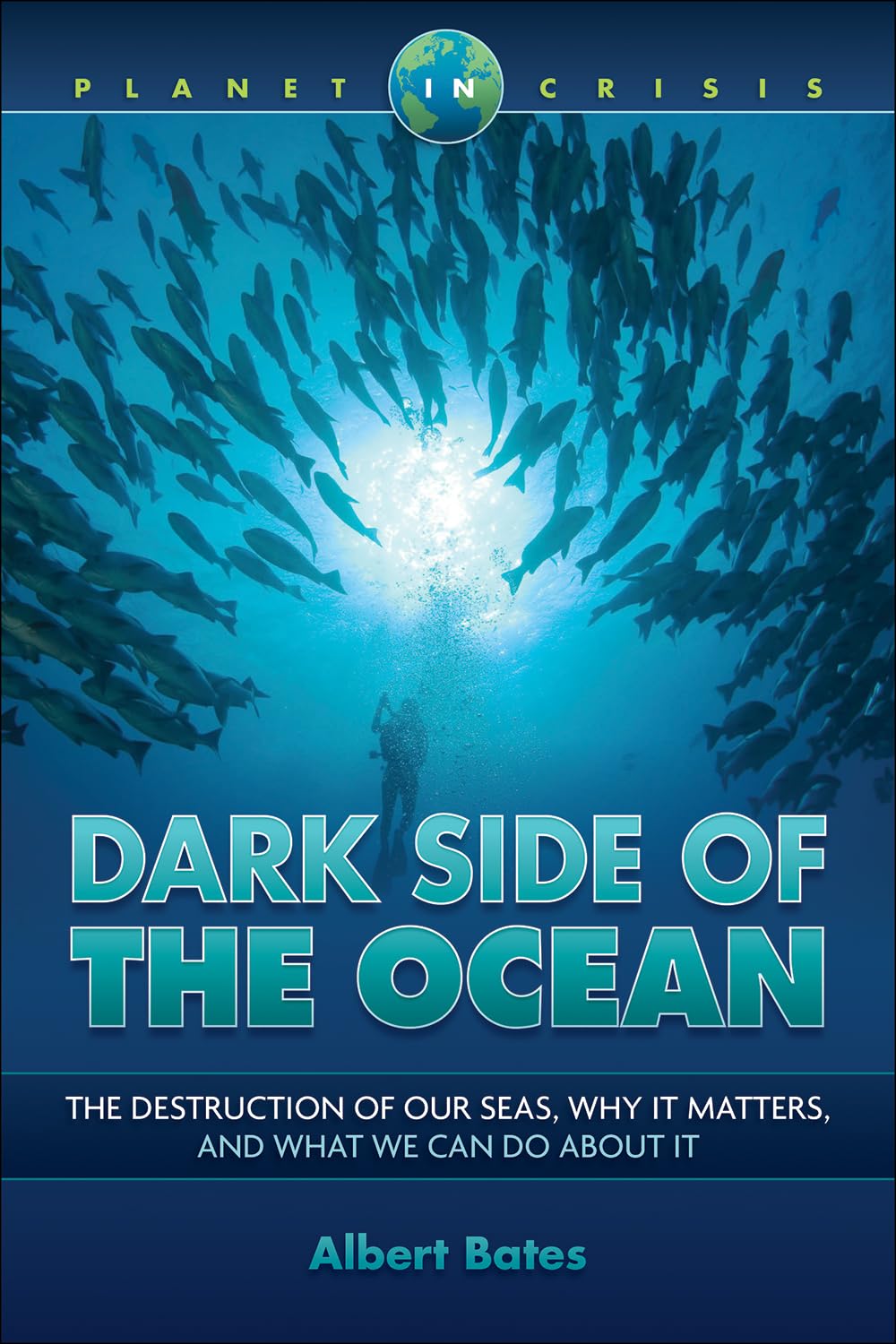
Dark Side of the Ocean: The Destruction of Our Seas, Why It Matters, and What We Can Do About It (Planet in Crisis)
$12.95
by Albert Bates



"Ocean biodiversity is being decimated on par with the fastest rates of rain forest destruction. More than 80 percent of pollutants in the oceans come from sewage and other land-based runoff (some of it radioactive). The rest is created by waste dumped by commercial and recreational vessels. In many areas and for many fish stocks, there are no conservation or management measures existing or even planned. Climate author Albert Bates explains how ocean life maintains adequate oxygen levels, prevents erosion from storms, and sustains a vital food source that factory-fishing operations cannot match--and why that should matter to all of us, whether we live near the ocean or not. Bates presents innovative companies and organizations working to change the human impact on marine reserves, improve ocean permaculture, and put the brakes on the ocean heat waves that destroy sea life and imperil human habitation at the ocean's edge. Along with eye-opening revelations of serious environmental concerns, The Dark Side of the Ocean conveys a deep appreciation for the fragile nature of the ocean's majesty and compels us to act now to preserve it. We can make a difference. "This meticulously researched book underscores what I have been teaching for decades. If the Ocean dies, we all die! The ecological insanity of humanity is undermining diversity and interdependence as we steal the carrying capacity from every other species in the sea. The choice is simple, we correct our behavior or we die. Albert Bates illustrates the imperative need to act now before it's too late." -- Captain Paul Watson, founder, Sea Shepherd Conservation Society "We are killing the oceans everywhere: from vanishing ice caps, polar bears, seals, whales, walruses, coral reefs, mangroves, kelp beds, and fisheries to ancient deep-sea reefs pulverized by trawlers and remote atolls uninhabitable due to nuclear bomb radiation. This enlightening book plunges in beneath the surface to show how humanity's long-term survival depends on healthy seas, and how we can help get there by regenerating marine ecosystems to naturally reverse climate change and halting the tsunami of lethal plastic garbage fouling the waters. -- Thomas J. F. Goreau, PhD, president, Global Coral Reef Alliance "If you are one of those for whom solid scientific information is a balm for environmental anxiety, Dark Side of the Ocean is the book for you. Comprehensive and inexpensive, it is an invaluable guide to those who wish to better understand the problems the oceans face, and what can be done to mitigate the damage. Bates writes about a great many hopeful avenues back to a healthy ocean, including the rebuilding of coral reefs with biochar and and electricity. It is an expensive proposition, but so is hurricane cleanup and mass migration from receding coastlines. He also covers low technology, such as movement to bring back wind-powered container ships (otherwise known as sailboats). Amazingly, even saving the whales will go a long way to a healthy ocean, for the CO2 they take out of the atmosphere each year. But the dark side of the ocean is very dark indeed. You will stay awake nights contemplating blue ocean events, where the white Artic ice disappears and no longer bounces the sunlight off the earth, which will absorb it instead, speeding the melting. It is a climate nightmare you cannot wake from. The Arctic ocean is warmer than it has been in 800K years, and since the oceans are all connected, it means rising water everywhere. You might as well kiss Miami good-bye, one of the most flood-prone areas in the world, which has two nuclear reactors just outside the city, on the beach. In spite of this, the final chapter is hopeful about what the future could look like if we put our minds and hearts to it. We can still turn the destruction of the seas around, but it will mean global cooperation and political will of every country, something in desperately short supply as the world trends towards a me first mentality, including America, who, as the worst offender, should be leading the fight. Bates includes the top ten priority actions for the Climate Emergency, but as always, the hardest thing about trying to change anything for the better is us." -- JoeAnn Hart, EcoLit Books Albert Bates is an influential figure in the intentional community and ecovillage movements and a groundbreaking author on climate change. His 1990 title, Climate in Crisis (with a forward by then-senator Al Gore), was one of the first books to sound the clarion call. He is also the author of Transforming Plastic (2019) and Carbon Cascades (2019).