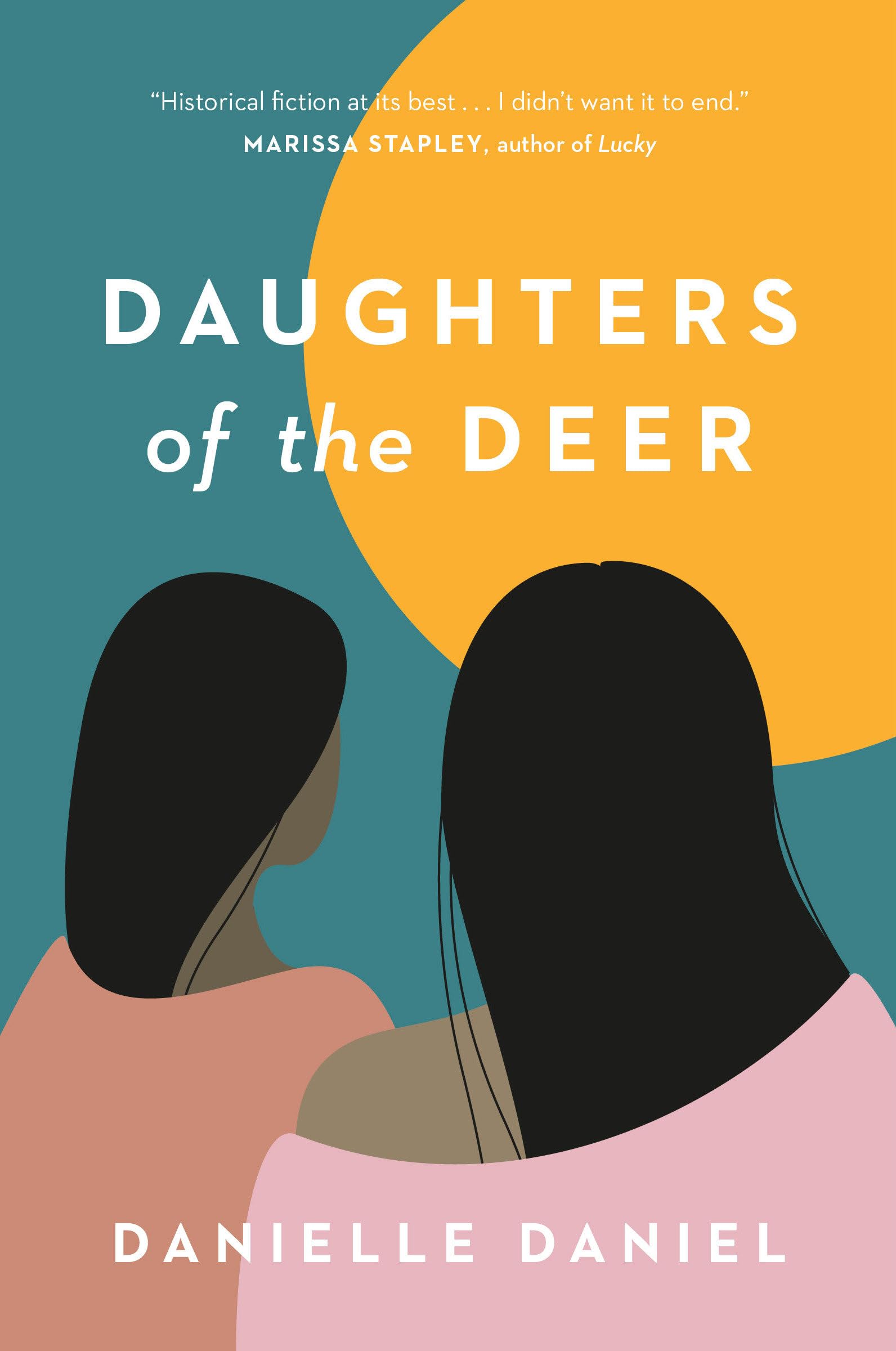



NATIONAL BESTSELLER In this haunting and groundbreaking historical novel, Danielle Daniel imagines the lives of women in the Algonquin territories of the 1600s, a story inspired by her family’s ancestral link to a young girl who was murdered by French settlers. 1657. Marie, a gifted healer of the Deer Clan, does not want to marry the green-eyed soldier from France who has asked for her hand. But her people are threatened by disease and starvation and need help against the Iroquois and their English allies if they are to survive. When her chief begs her to accept the white man’s proposal, she cannot refuse him, and sheds her deerskin tunic for a borrowed blue wedding dress to become Pierre’s bride. 1675. Jeanne, Marie’s oldest child, is seventeen, neither white nor Algonquin, caught between worlds. Caught by her own desires, too. Her heart belongs to a girl named Josephine, but soon her father will have to find her a husband or be forced to pay a hefty fine to the French crown. Among her mother’s people, Jeanne would have been considered blessed, her two-spirited nature a sign of special wisdom. To the settlers of New France, and even to her own father, Jeanne is unnatural, sinful—a woman to be shunned, beaten, and much worse. With the poignant, unforgettable story of Marie and Jeanne, Danielle Daniel reaches back through the centuries to touch the very origin of the long history of violence against Indigenous women and the deliberate, equally violent disruption of First Nations cultures. "A deeply felt and personal story from an author who we can only hope has more tales to tell." — Quill and Quire "This stunning adult debut from Daniel, who has already won awards for her children's books, has threads of what makes great kid lit: simple but powerful language, harnessing complicated ideas into strikingly distilled images. . . . A beautiful book, this is urgent reading for anyone seeking to understand more about the myriad ways European colonization in the 1600s still reverberates today, to devastating effect." — The Globe and Mail "Danielle Daniel renders the stories of her ancestors vividly, poetically and with deep love and respect. Daughters of the Deer gives long overdue voices to the Indigenous women who came before. A subtle, moving demonstration of how colonization attempted to strip Indigenous women of their power and place, and a testament to the enduring strength and wisdom that no colonial power could extinguish.” — Jessica McDiarmid , author of Highway of Tears: A True Story of Racism, Indifference and the Pursuit of Justice for Missing and Murdered Indigenous Women and Girls DANIELLE DANIEL is a writer, an award-winning children's book author and an illustrator. Like many Francophones with origins in Quebec, she shares an ancestral link to the people who inspired Daughters of the Deer , a first novel that springs from the story of what happened to the daughter of an Algonquin woman and a soldier/settler from France. Her picture books include Sometimes I Feel Like a Fox (winner of the Marilyn Baillie Picture Book Award and a Best 100 title at the New York Public Library) and You Hold Me Up, shortlisted for the 2018 Marilyn Baillie Award, among other honours. She holds an MFA in creative writing from the University of British Columbia and lives with her family on Manitoulin Island in Ontario. Prologue My father once told me that before I was born no white man walked our land, no church sat next to our village, no blackrobes circled our wigwams with their endless prayers. Before the whites arrived, our only enemy was the Iroquois, who had forced my parents to leave their ancestral territory north of the Ottawa River, in search of safety, for this place near the settlement the whites call Trois-Rivières. With each passing spring after my birth, more settlers landed in their ships, taking space, speaking a different tongue. Every boat brought more white men to trap our beaver and mink, to explore our lands along the Saint-Laurent River, a channel they believe leads to a place called China, and also more French soldiers in blue coats sent by their king to protect the fur traders and settlers. To protect us too, they say. Even so, the Iroquois still far outnumber these soldiers and their raids persist. Five years ago, I lost my husband and my two children to the Iroquois. How I escaped I do not know. Life is hard for the whites here, but they refuse to return home. They’ve built one of their churches at the edge of our village and a towering cathedral in Trois-Rivières. It seems like the blackrobes won’t rest until every one of us becomes a convert to their god. The settlers hunt our animals without real need, without gratitude—only for the coins they receive for their pelts. They take without asking and speak of this land being new. But how can it be new if we have always been here? Our village has shrunk to only a hundred strong, and most of our warriors have been