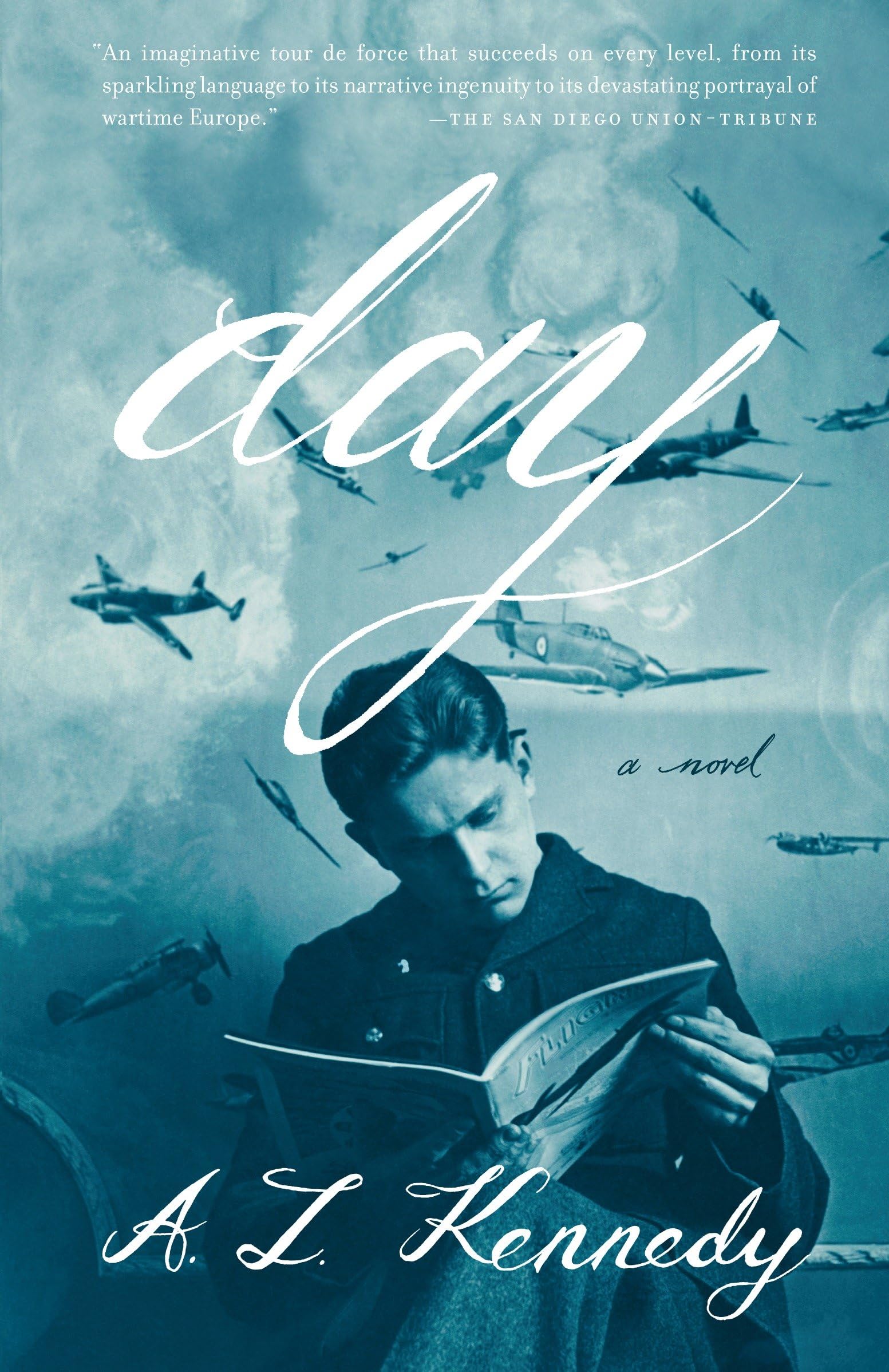



Funny and moving, wise and sad, this “imaginative tour de force” ( The San Diego Union-Tribune ) charts the intensity and courage found in a former World War II POW as he looks back on the closeness of death, from one of Britain's most iconoclastic and highly acclaimed young writers. Alfie Day, RAF airman and former World War II POW, never expected to survive the war. Now, five years later and more alone than ever, Alfie finds himself drawn to unearth those strange, passionate days by working as an extra on a POW film. What he will discover on the set about himself, his loves and the world around him will make the war itself look simple. “An imaginative tour de force that succeeds on every level, from its sparkling language to its narrative ingenuity to its devastating portrayal of wartime Europe.” — San Diego Union-Tribune “Kennedy faultlessly captures the brusque camaraderie of the bomber crew, men from vastly different backgrounds knitted together by a love so profound it can never be put in words.” — The Washington Post “[Kennedy] follows the examples of several of her contemporaries, including William Boyd and Sebastian Faulks, in writing about World War II, and in doing so makes that fertile territory very much her own.... Brilliant.” — The Boston Globe “Remarkable.... Day is a novel of extraordinary complexity.” — The New York Review of Books A. L. KENNEDY has published four previous novels, one book of non-fiction, and one collection of short stories, Indelible Acts. She has twice been selected as one of Granta 's Best of Young British Novelists and has won a number of prizes including the Somerset Maugham Award, the Encore Award and the Saltire Scottish Book fo the Year Award. She lives in Glasgow and is a part-time lecturer in creative writing at St. Andrews. Alfred was growing a moustache. An untrained observer might think he was idling, at a loose end in the countryside, but this wasn’t the case. In fact, he was concentrating, thinking his way through every bristle, making sure they would align and be all right. His progress so far was quite impressive: a respectable growth which already suggested reliability and calm. There were disadvantages to him, certain defects: the shortness, inelegant hands, possible thinning at his crown, habit of swallowing words before they could leave him, habit of looking mainly at the ground—and those few extra pounds at his waist, a lack of condition—but he wasn’t so terribly ugly, not such a bad lot. Mainly his problem was tiredness—or more an irritation with his tiredness—or more a tiredness that was caused by his irritation—or possibly both. He could no longer tell. It wasn’t that he was awkward, or peculiar, quite the reverse: he was biddable and sensible and ordinary, nothing more: but even an ordinary person could sometimes have enough and get browned off and, for example, want to be offered, every now and then, a choice. That was only reasonable, wasn't it? A man had to imagine he'd got a chance at freedom, a bit of space. The interval between alternatives, that gave you space. But sometimes you would consider yourself and all you could see were obstructions and you'd be amazed that you ever were able to leave your house—your bed, never mind your house. You'd look in the mirror some mornings and wonder why it didn’t show; the way most of you was always yelling to get out. Moustache or no moustache, that wouldn't change. The trouble was, you had too much to do: breathing, sleeping, waking, eating: you couldn't avoid them, were built to need them, and so they just went on and on. Where were the other possibilities, the changes you might want to make—like walking off beneath the ocean—not being a fish, he bloody hated fish, but being a man tucked away in the ocean, why couldn't he try that? Why couldn’t he try out whatever he thought? And thinking itself, that wasn't helpful and yet you had to do it all the time. It was there when you dreamed, when you spoke, when you carried out your very many other compulsory tasks. If you couldn’t keep control and stay wary, you might think anything, which was exactly the one freedom you’d avoid. You could dodge certain thoughts, corkscrew off and get yourself out of their way, but they’d still hunt you. You have to watch. This morning he could feel them, inside and out, bad thoughts getting clever with him, sly. They lapped like dirtied water behind his face and outside him they thickened the breeze until the surface touching him, pressing his lips, was far more quick and complex than only air. Today it had the smell of blue, warm Air-Force blue: the stink of drizzle rising up from wool and everywhere the smell of living blue: polish and hair oil and that sodding awful pinky-orange soap and Woodbines and Sweet Caporal and those other cheap ones, the ones they gave away after ops: Thames cigarettes, to flatten out the nerves. "Hello, looks like London Fog again." Pluckrose had started them