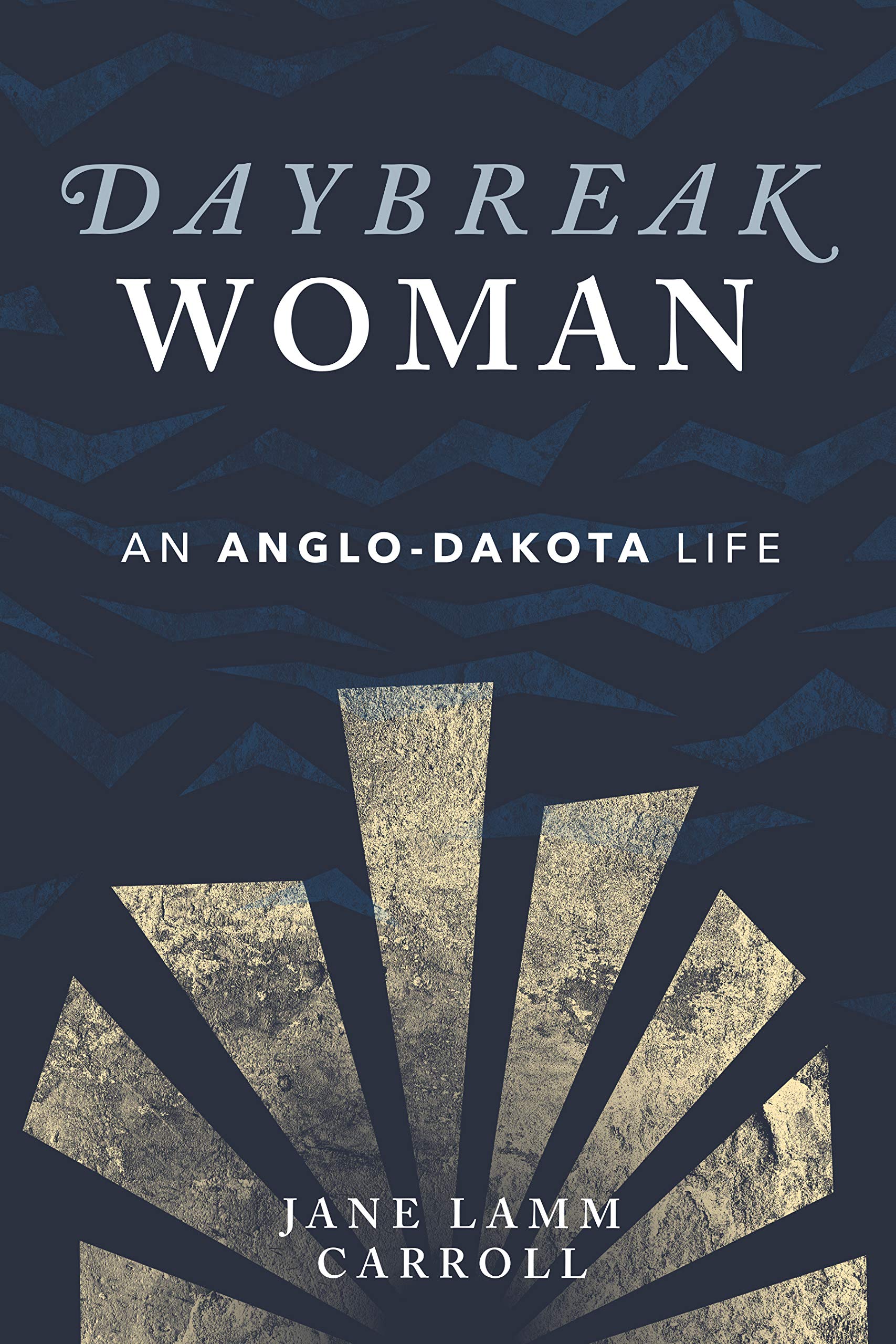



A woman's remarkable life provides a new perspective on a century of turbulent change. Daybreak Woman, also known as Jane Anderson Robertson, was born at a trading post on the Minnesota River in 1812 and lived for ninety-two years in Minnesota, Wisconsin, Michigan, Canada, and South Dakota. The daughter of an Anglo-Canadian trader and a Scots-Dakota woman, she witnessed seismic changes. For her first five decades, Daybreak Woman was nurtured and respected in the multiethnic society that thrived for generations in the region. But in the last forty years of the nineteenth century, this way of life was swamped and nearly annihilated as the result of Euro-American colonization and the forced exile of most Dakota and Euro-Dakota people from Minnesota after the US-Dakota War of 1862. Dakota and Euro-Dakota people struggled to reestablish their communities in the face of racial violence, injustice, calls for their mass extermination, abject poverty, disease, starvation, and death. Daybreak Woman and her children survived these cataclysmic events and endured to rebuild their lives as Anglo-Dakota people in an anti-Indian world. In this extraordinary biography, historian Jane Lamm Carroll uses the life of one mixed-heritage woman and her family as a window into American society, honoring the past's complexity and providing insights into the present. " Daybreak Woman , a gripping American drama, is history made real." CHOICE “In this deft biography, Jane Lamm Caroll guides us through a life rooted in the vital and expansive kinship networks that determined belonging, opportunity, conflict, and resilience for Dakota and mixed-ancestry community members in nineteenth-century Mni Sota Makoce. In a journey from the height of the fur trade, through the devastating war of 1862, and onward to the turn of a new century, we see the ways in which women’s labor―cultural, spiritual, economic, diplomatic, and domestic―built and rebuilt worlds of meaning that persisted despite great upheaval and change. This is a vibrant and engrossing book.” Catherine J. Denial, author of Making Marriage: Husbands, Wives, and the American State in Dakota and Ojibwe Country “The research in Daybreak Woman is rich, dense, and inclusive, and Jane Lamm Carroll writes a story that is highly personal and engaging. Learning about the lives of so many Dakota and Anglo-Dakota individuals and families forces readers to re-think what we thought we knew about the history of Mni Sota Makoce.” Colette Hyman, author of Dakota Women’s Work: Creativity, Culture, and Exile Jane Lamm Carroll is professor of history and women's studies at St. Catherine University and contributing author and co-editor of Liberating Sanctuary: 100 Years of Women's Education at the College of St. Catherine . Daybreak Woman was born at Patterson’s Rapids on the Minnesota, about 225 river miles upriver from the Mississippi, not far from the mouth of the Yellow Medicine River. At this place was a fur trading post that had been in almost continuous use since 1783 when Charles Patterson first established it. In fact, Daybreak Woman’s grandfather, James Aird, and Patterson were partners in the 1780s. In subsequent years Aird spent many winters trading with the Dakota on the Upper Minnesota, likely at this post. Daybreak Woman remembered visiting her grandfather at the Patterson’s Rapids at least once, probably late summer or fall of 1814, the last year he wintered on the Minnesota. Daybreak Woman said she was born there on August 4, 1810. The family story is that she was born there because her father was on his way to his wintering post at Lake Traverse, farther upriver. However, if this was the reason the family was at Patterson’s Rapids in August, then Jane was born in 1809, because 1809-1810 was the last winter Anderson spent trading on the Upper Minnesota. Anderson does recall going up the Minnesota River in the summer of 1811 to hunt buffalo at Big Stone Lake, at the source of the Minnesota. Thus, it seems that if Daybreak Woman was born in 1810, 1811, or 1812 at Patterson’s Rapids it was because the family was on a hunting excursion with the Dakota. In these early years of her life, Daybreak Woman, with her mother and Angus, were everywhere their father was, as he traded with the Dakota in Mnisota Makhoce. By 1810, Thomas Anderson was working in concert with other British and metis traders to circumvent U.S. restrictions on foreign traders by forming a league to run the blockade of trading boats by the American garrison at Fort Mackinac. Anderson, James Aird, Robert Dickson, Joseph Rolette and several others filled seven boats with trade goods and slipped them by Mackinac without incident. That winter (1810) Anderson and Grey Cloud Woman, now with their new child, Daybreak Woman, were trading on the lower St. Croix River near its junction with the Mississippi. In the spring of 1811 Anderson’s trading partners decided that he should man a post at Pike Island Pik