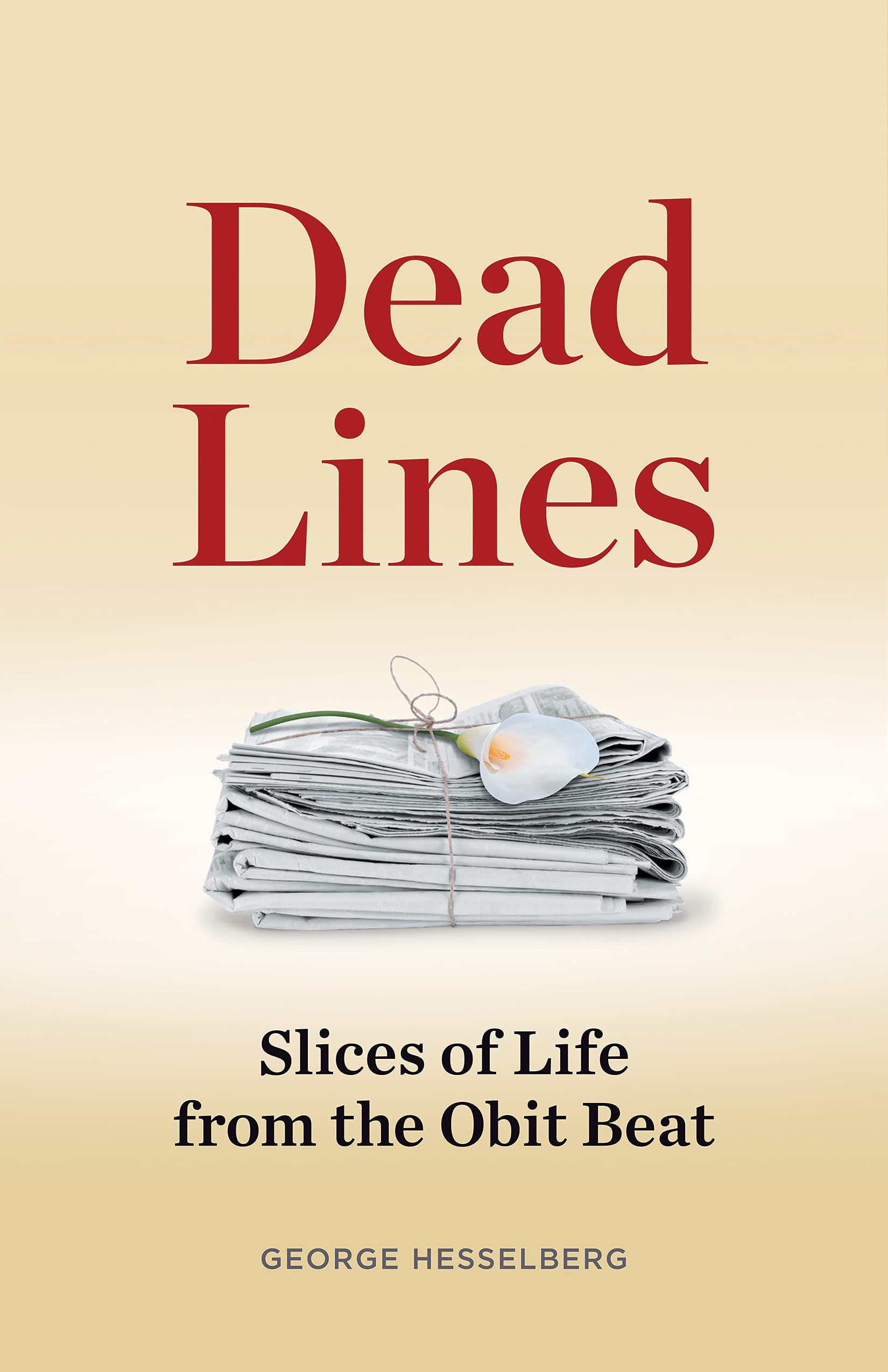



In a lively collection of feature obituaries and related news stories, longtime newspaper reporter George Hesselberg celebrates life, sharing the most fascinating stories that came from decades of covering the obit and public safety beats. In more than forty years at the Wisconsin State Journal , Hesselberg frequently found himself writing about fatal accidents, crime investigations, and the deaths of the wealthy, famous, or notorious. But he was most drawn to the curious, the unknown, and the unsung—the deaths that normally wouldn’t make much of a splash, if any mention at all, in the news columns of a daily paper. Digging deeper, he uncovered the extraordinary among the ordinary, memorializing the lives of a sword designer, a radio villain, a pioneering female detective, a homeless woman who spoke fluent French, a beloved classroom tarantula, and many more. Their stories are alternately amusing, sad, surprising, and profound. Together they speak to a shared human experience and inspire us to see the people around us with new eyes, valuing the lives while they are still being lived. Many of Hesselberg's selections are about Madison's street people, eccentrics or others who lived lives of quiet oddness. He writes about each of them with an understatement and gentleness that never comes off as maudlin or patronizing. One of the most touching was about a man named Harry Specht who died in 1983 at age 47. A meticulously organized man, Specht dressed in suit and tie on a Sunday morning, tidied up his house, organized his legal and financial papers neatly on the kitchen table and then started up his car in his garage with the door closed. When he was found the next day there was an envelope with him in the car containing a deed to a cemetery plot, a contract for a headstone and a Mother's Day card. His mother, to whom he was devoted, had passed away weeks before. That story, in the hands of a lesser writer, could be over the top, but Hesselberg writes like the reporter he is to the bone. He's objective and factual and he keeps his fingers on the keys and off the scales. Without telling you what to feel, you feel so much more. DAVE CIESLEWICZ in Isthmus There's something irresistible about the tiny tales you'll find inside this book; no kidding, they're kind of like potato chips, in that you can't enjoy just one. From 1977 to 2017, author George Hesselberg lauded each person well, making ordinary lives seem like important bits of history and letting readers imagine each subject as they went about their days, quietly hiding who they were before they fell on hard times or disappeared or went out in style — and that, in a wonderful number of tales, is just what happened. Daily Jefferson County Union George Hesselberg wrote many obits during his long career and collects several of those reflective essays in Dead Lines . He wrote with respect of a homeless eccentric who carried all her possessions in her coat pockets, the water meter repairman who dressed in his best suit before committing suicide, the semi-professional concert violinist who taped 500 reels of music broadcast on Wisconsin Public Radio—even of the corpse discovered in the chimney of an old building and the polar bear put down after he mauled the guy who entered his pen at the zoo. Hesselberg wrote with an acute awareness of the value of the creatures who were his subjects. Milwaukee Shepherd Express (But) as Hesselberg's new book, "Dead Lines: Slices of Life from the Obit Beat," shows, just because he was writing about the departed doesn't mean the stories are depressing. While the stories in the collection, written for the WSJ between 1977 and 2017, have their share of sadness, they're also funny, offbeat, touching and inspiring. Rob Thomas, Capital Times More than just a compendium of death listings - which is what many newspaper obituaries have become - this book is an absorbing read about the true stories of real people, the celebrated and the uncelebrated. As Hesselberg learned, "Everybody has a story." Hesselberg's stories, written from 1977 to 2017, are about "the people who populate the periphery of our own lives, contributing in a thousand unrecorded ways," he says in the book's introduction. There are stories of sadness and joy - of missed pets and miracle survivals. But Hesselberg found that the one thing that tied together all these stories is that they all made for a good read. July, 2022, American Funeral Director magazine George Hesselberg was a reporter for the Wisconsin State Journal for forty-three years. He covered every beat, wrote hundreds of news obituaries of the famous and the not-so-famous, and was a columnist for eighteen years.