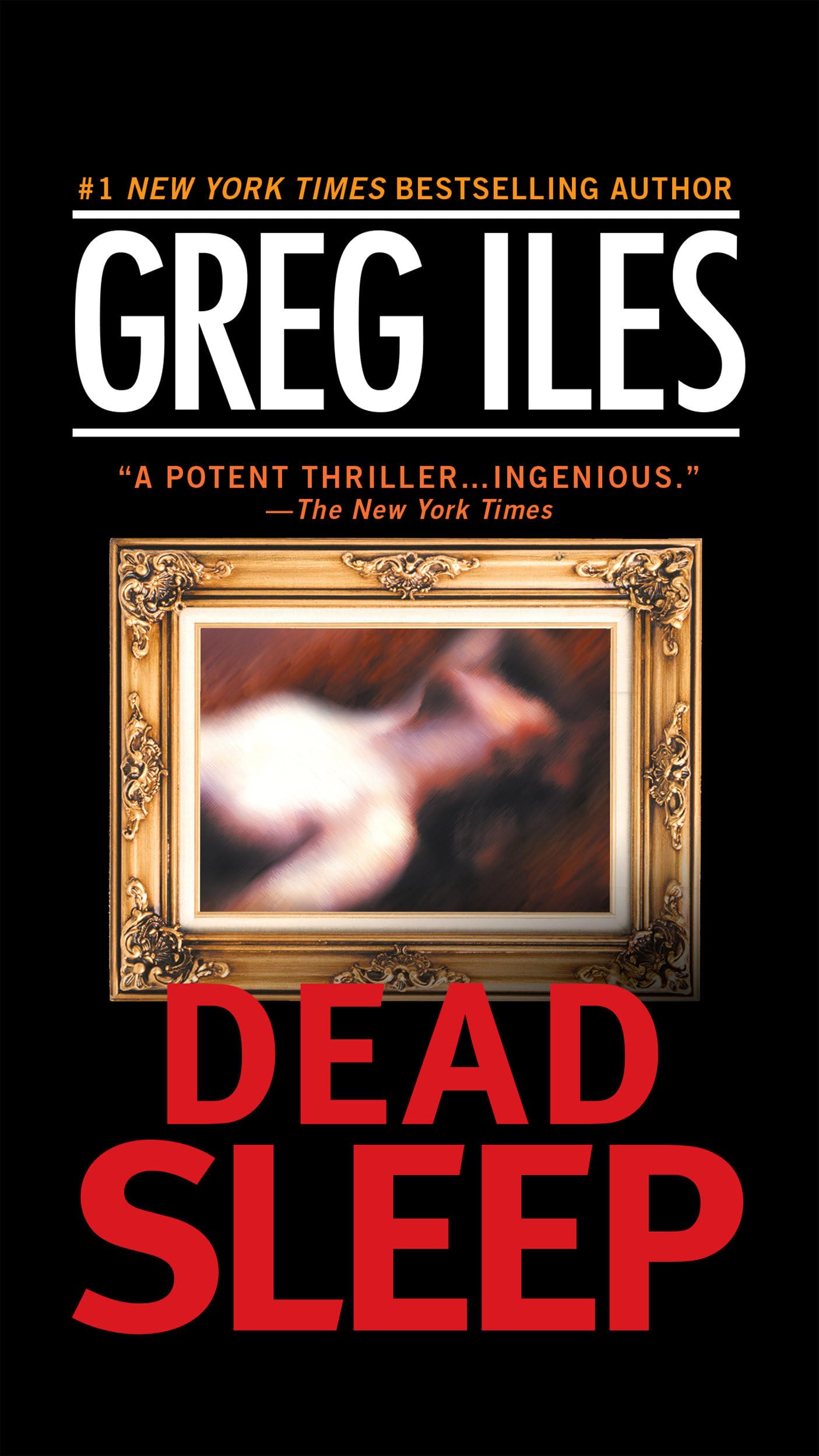



A woman comes face-to-face with a serial killer who glorifies the art of death in this “ingenious”* thriller from the #1 New York Times bestselling author of the Penn Cage series. They are called “The Sleeping Women.” A series of unsettling paintings in which the nude female subjects appear to be not asleep, but dead. Photojournalist Jordan Glass has another reason to find the paintings disturbing…The face on one of the nudes is her own—or perhaps the face of her twin sister, who disappeared and is still missing. At the urging of the FBI, Jordan becomes both hunter and hunted in a search for the anonymous artist—an obsessed killer who seems to know more about Jordan and her family than she is prepared to face... “A potent thriller.”—* The New York Times “Filled with so much action that it deserves to be read in one long and satisfying session.”— Chicago Tribune “Perfectly calibrated suspense...Iles keeps the reader guessing right up to the double surprise ending, delivering the perfect final payoff.”— Publishers Weekly “Gripping, suspensful, exciting.”— Library Journal “Iles deftly sets up his plot, introducing a string of memorable characters and taking the reader on a ride that’s as fast as any techno-thriller and as well thought out as an Agatha Christie mystery...Grade A.”— Rocky Mountain News “Atmospheric, sexy, and provocative in its depiction of the duality of human nature.”— Booklist Greg Iles is the #1 New York Times bestselling author of the Penn Cage series. His novels have been made into films, translated into more than twenty languages, and published in more than thirty-five countries worldwide. Dead Sleep, Chapter One 1. I stopped shooting people six months ago, just after I won the Pulitzer Prize. People were always my gift, but they were wearing me down long before I won the prize. Still, I kept shooting them, in some blind quest that I didn't even know I was on. It's hard to admit that, but the Pulitzer was a different milestone for me than it is for most photographers. You see, my father won it twice. The first time in 1966, for a series in McComb, Mississippi. The second in 1972, for a shot on the Cambodian border. He never really got that one. The prizewinning film was pulled from his camera by American marines on the wrong side of the Mekong River. The camera was all they found. Twenty frames of Tri-X made the sequence of events clear. Shooting his motor-drive Nikon F2 at five frames per second, my dad recorded the brutal execution of a female prisoner by a Khmer Rouge soldier, then captured the face of her executioner as the pistol was turned toward the brave but foolish man pointing the camera at him. I was twelve years old and ten thousand miles away, but that bullet struck me in the heart. Jonathan Glass was a legend long before that day, but fame is no comfort to a lonely child. I didn't see my father nearly enough when I was young, so following in his footsteps has been one way for me to get to know him. I still carry his battle-scarred Nikon in my bag. It's a dinosaur by today's standards, but I won my Pulitzer with it. He'd probably joke about the sentimentality of my using his old camera, but I know what he'd say about my winning the prize: Not bad, for a girl. And then he'd hug me. God, I miss that hug. Like the embrace of a great bear, it swallowed me completely, sheltered me from the world. I haven't felt those arms in twenty-eight years, but they're as familiar as the smell of the sweet olive tree he planted outside my window when I turned eight. I didn't think a tree was much of a birthday present back then, but later, after he was gone, that hypnotic fragrance drifting through my open window at night was like his spirit watching over me. It's been a long time since I slept under that window. For most photographers, winning the Pulitzer is a triumph of validation, a momentous beginning, the point at which your telephone starts ringing with the job offers of your dreams. For me it was a stopping point. I'd already won the Capa Award twice, which is the one that matters to people who know. In 1936, Robert Capa shot the immortal photo of a Spanish soldier at the instant a fatal bullet struck him, and his name is synonymous with bravery under fire. Capa befriended my father as a young man in Europe, shortly after Capa and Cartier-Bresson and two friends founded Magnum Photos. Three years later, in 1954, Capa stepped on a land mine in what was then called French Indochina, and set a tragic precedent that my father, Sean Flynn (Errol's reckless son), and about thirty other American photographers would follow in one way or another during the three decades of conflict known to the American public as the Vietnam War. But the public doesn't know or care about the Capa Award. It's the Pulitzer they know, and that's what makes the winners marketable. After I won, new assignments poured in. I declined them all. I was thirty-nine years old, unmarried (though not with