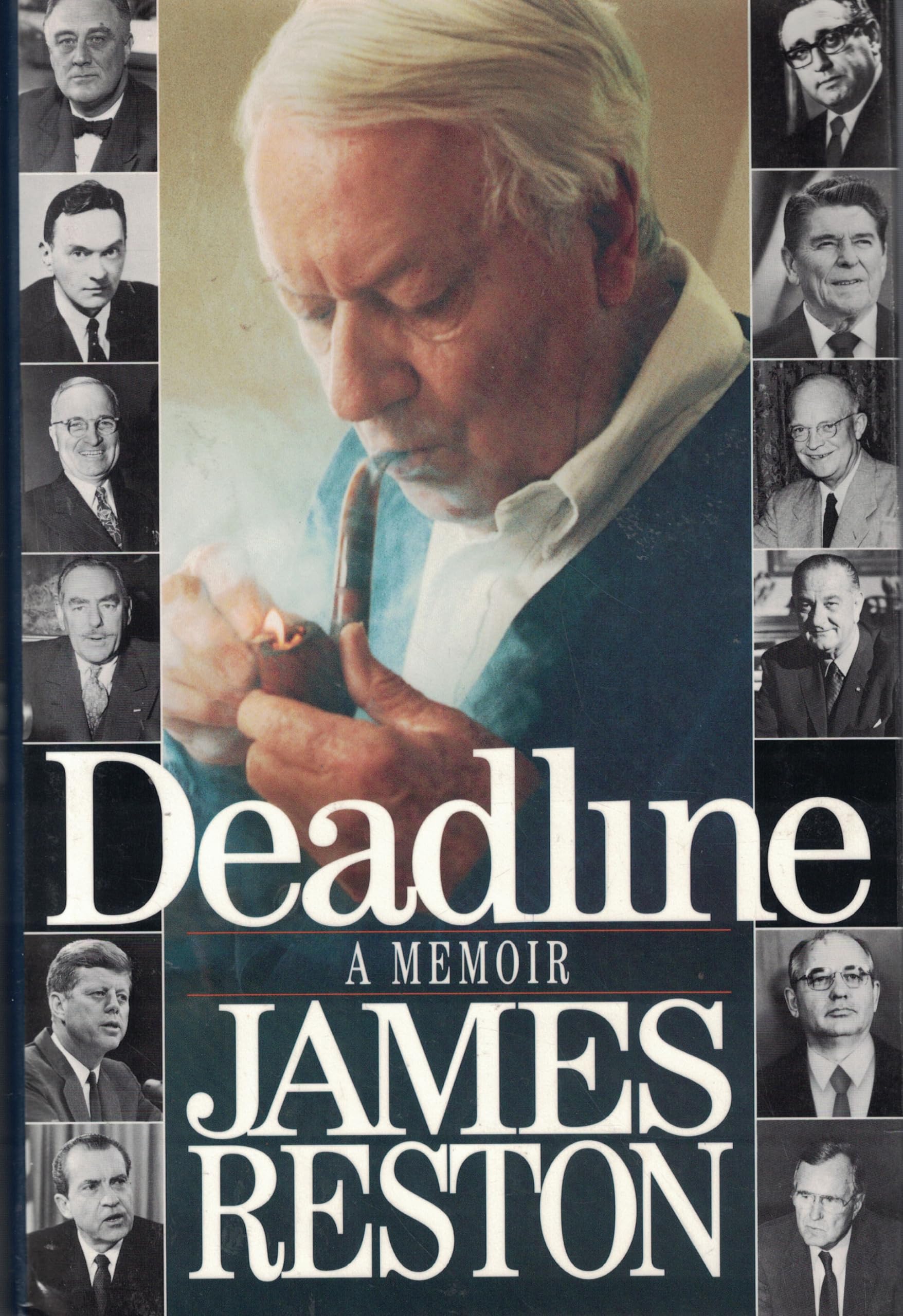



An award-winning journalist offers an illuminating memoir that reveals the pivotal events of the twentieth century and of his own life, his role as a newspaperman, and the course of American journalism "Scotty" Reston emerges unscathed from Russell Baker's The Good Times ( LJ 5/1/89), an ironic memoir of the New York Times political beat, and after reading Reston's memoirs, it's not hard to see why. Reston is one of those writers whose simple sentences seem so only for seconds; then the acuity of the expression hits. Reston provides a solid summary of his days covering the London blitz, being chief Washington correspondent during the Cold War, and achieving the executive editorship in 1968. While Reston lacks Baker's fine sense of absurdity, he has other admirable qualities: he is fiercely proud of his Scottish heritage (he emigrated to the United States as a child) and dedicated to his job (he now writes in retirement for the Times ) and most of all his family. With so much media-bashing going on these days, it's nice to hold up an exemplar of the profession. Recommended to anyone interested in reporting on this time period and for all journalism collections. --Judy Quinn, "Library Journal" Copyright 1991 Reed Business Information, Inc. Two-time Pulitzer-winner Reston (Reston's Washington, 1986, etc.) recalls with verve and good humor his life and times, including 50 years as reporter, Washington bureau chief, executive editor, and columnist for The New York Times. Now a retired octogenarian, Reston offers an almost classic immigrant's success story. After coming to the US from Scotland with his devoutly Calvinist parents, the young ``Scotty'' caught the eye of Ohio Governor James Cox while caddying and was helped through college by this former Democratic presidential nominee. Thereafter, his rise was steady but sure: Cincinnati Reds publicist, AP sportswriter, then his legendary tenure at the Times, where his politically mainstream column became required Washington reading for several decades. Save for final chapters when he mounts the pulpit to expound on how the world has changed in his lifetime, the worst quality of the column--its omniscient tone--is refreshingly absent from the bright, informal prose here (Ronald Reagan ``announced when he arrived that it was morning in America, but he didn't like to get out of bed''). The longtime Washington press-corps dean sheds little light on the convulsive internal struggles at the Times (including his year as executive editor) recounted in Harrison Salisbury's Without Fear or Favor and Gay Talese's The Kingdom and the Power, but provides affectionate, often compassionate, portraits of journalist colleagues Arthur Krock and Walter Lippmann, heavyweight politicians and statesmen (Dean Acheson, Arthur Vandenberg, and ``favorite loser'' Adlai Stevenson), and Presidents (the account of a 40-minute telephone harangue from LBJ is a comic classic). Remembering a life and tumultuous century in tranquillity, Reston resists gossip, the occupational hazard of journalists. Instead, he offers an engaging ``love story about America and other impossible dreams.'' (Eight pages of b&w photographs--not seen.) -- Copyright ©1991, Kirkus Associates, LP. All rights reserved. " Deadline gives us a wry and ironic take on some of the most cherished myths and icons of American journalism."--The Los Angeles Times From the Trade Paperback edition. Stated first edition