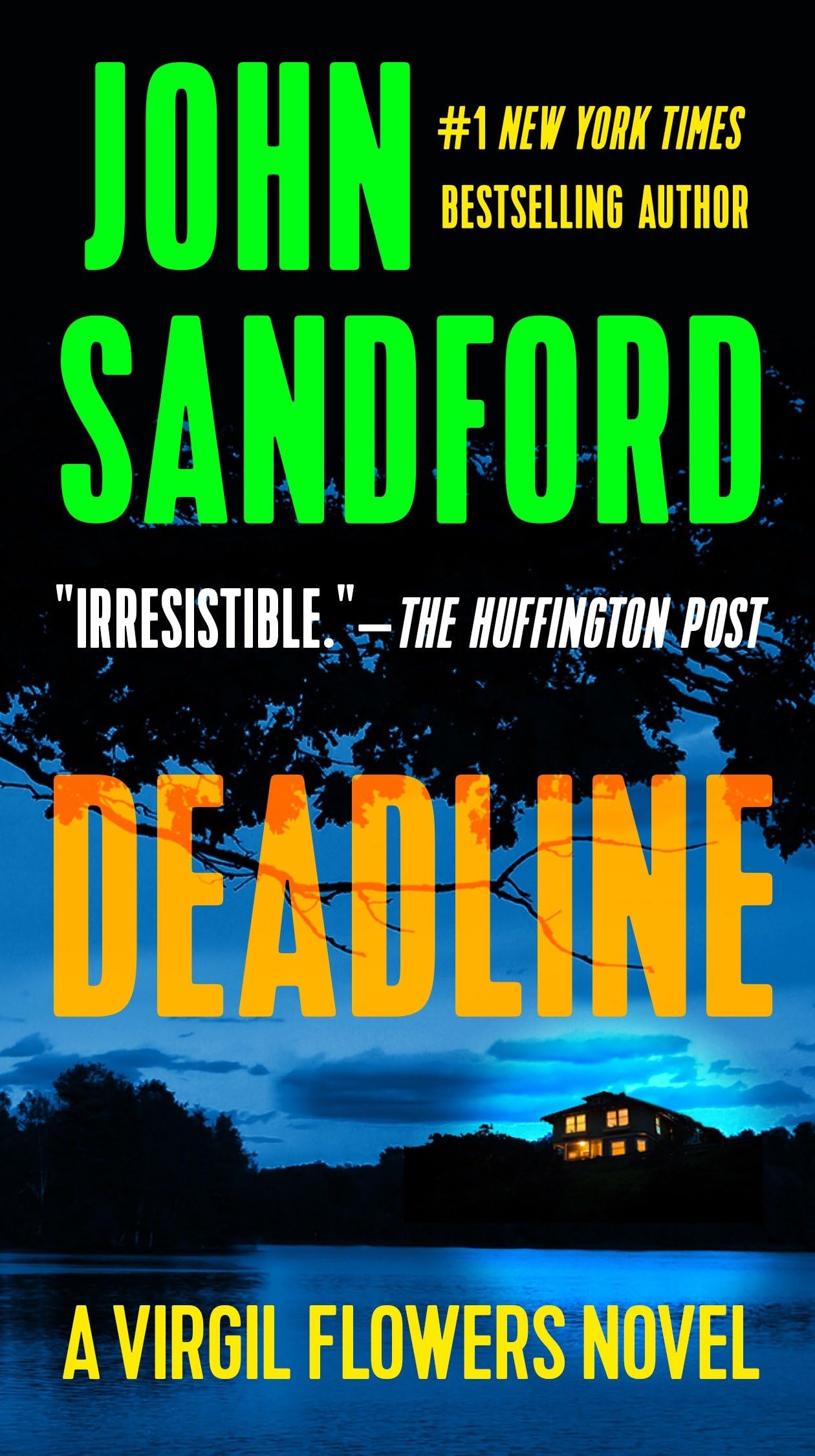



In southeast Minnesota, a school board meeting is coming to an end. The chairman announces that the rest of the meeting will be closed to only a few—for personal issues. The remaining members vote on the fate of a local reporter. And it’s unanimous… Kill him. Meanwhile, Virgil Flowers is investigating a dognapping crime wave in a Mississippi River town when he gets a call from Lucas Davenport. A corpse has been found, and the victim is local reporter Clancy Conley. Virgil has no idea where this is all headed. All he knows for sure is that things are getting nasty in Buchanan County. Praise for Deadline “Sandford keeps one last surprise up his sleeve for the denouement of the dognapping case, and it's a doozy. Exhilaratingly professional work by both Virgil and his creator that breaks no new ground but will keep the fans happy and add to their number.”—Kirkus Reviews“Stellar . . . Sandford is an accomplished and amusing storyteller, and he nails both the rural characters and terrain as well as he has skewered urban life in past installments.”—Publishers Weekly (starred review)“Sanford balances straight-talking Virgil Flowers’ often hilariously folksy tone and Trippton’s dark core of methamphetamine manufacturers and sociopaths; the result is pure reading pleasure for thriller fans.”—Booklist John Sandford is the pseudonym for the Pulitzer Prize–winning journalist John Camp. He is the author of twenty-six Prey novels, most recently Extreme Prey ; four Kidd novels; nine Virgil Flowers novels; three YA novels coauthored with his wife, Michele Cook; and three stand-alones, most recently Saturn Run . 1 Dark, moonless night, in the dog days of early August. A funky warm drizzle kept the world quiet and wet and close. D. Wayne Sharf slid across Winky Butterfield’s pasture like a greased weasel headed for a chicken house. He carried two heavy nylon leashes with choke-chain collars, two nylon muzzles with Velcro straps, and a center-cut pork chop. The target was Butterfield’s kennel, a chain-link enclosure in the backyard, where Butterfield kept his two black Labs, one young, one older. The pork chop would be used to make friends. D. Wayne was wearing camo, head to foot, which was no change: he always wore camo, head to foot. So did his children. His ex-wife, Truly, whom he still occasionally visited, wore various pieces of camo, depending on daily fashion demands—more at Walmart, less at Target. She also had eight pairs of camo under pants, size 4XL and 5XL, which she wore on a rotating basis: two each of Mossy Oak, Realtree, Legend, and God’s Country, which prompted D. Wayne to tell her one night, as he peeled them off, “This really is God’s country, know what I’m sayin’, honeybunch?” His new, alternative honeybunch wore black cotton, which she called “panties,” and which didn’t do much for D. Wayne. Just some thing hot about camo. A few thousand cells in the back of his brain were sifting through all of that as D. Wayne crossed a split-rail fence into Butterfield’s yard, and one of the dogs, the young one, barked twice. There were no lights in the house, and none came on. D. Wayne paused in his approach, watching, then slipped the pork chop out of its plastic bag. He sat for a couple of minutes, giving the dogs a chance to smell the meat; while he waited, his own odor caught up with him, a combination of sweat and whiskey-blend Copenhagen. If Butterfield had the nose of a deer or a wolf, he would have been worried. But Butterfield didn’t, and D. Wayne started moving again. He got to the kennel, where the dogs were waiting, slobbering like hounds . . . because they were hounds. He turned on the hunter’s red, low-illumination LED lights mounted in his hat brim, ripped the pork chop in half, held the pieces three feet apart, and pushed them through the chain link. The dogs were all over the meat: and while they were choking it down, he flipped the latch on the kennel gate and duckwalked inside. “Here you go, boys, good boys,” he muttered. The dogs came over to lick his face and look for more pork chop, the young dog prancing around him, and he slipped the choke collars over their heads, one at a time. The young one took the muzzle okay—the muzzle was meant to prevent barking, not biting—but the older one resisted, growled, and then barked, twice, three times. A light came on in the back of the Butterfield house. D. Wayne said, “Uh-oh,” dropped the big dog’s muzzle, and dragged the two dogs out of the kennel toward the fence. Again, the younger one came without much resistance at first, but the older one dug in. Another light came on, this one by the Butterfield side door, and D. Wayne said, “Shit,” and he picked up the bigger dog, two arms under its belly, and yanking the other one along on the leash, cleared the fence and headed across the pasture at an awkward trot. The side door opened on Butterfield’s house, and D. Wayne, having forgotten about the red LEDs on his hat brim, made the mistake