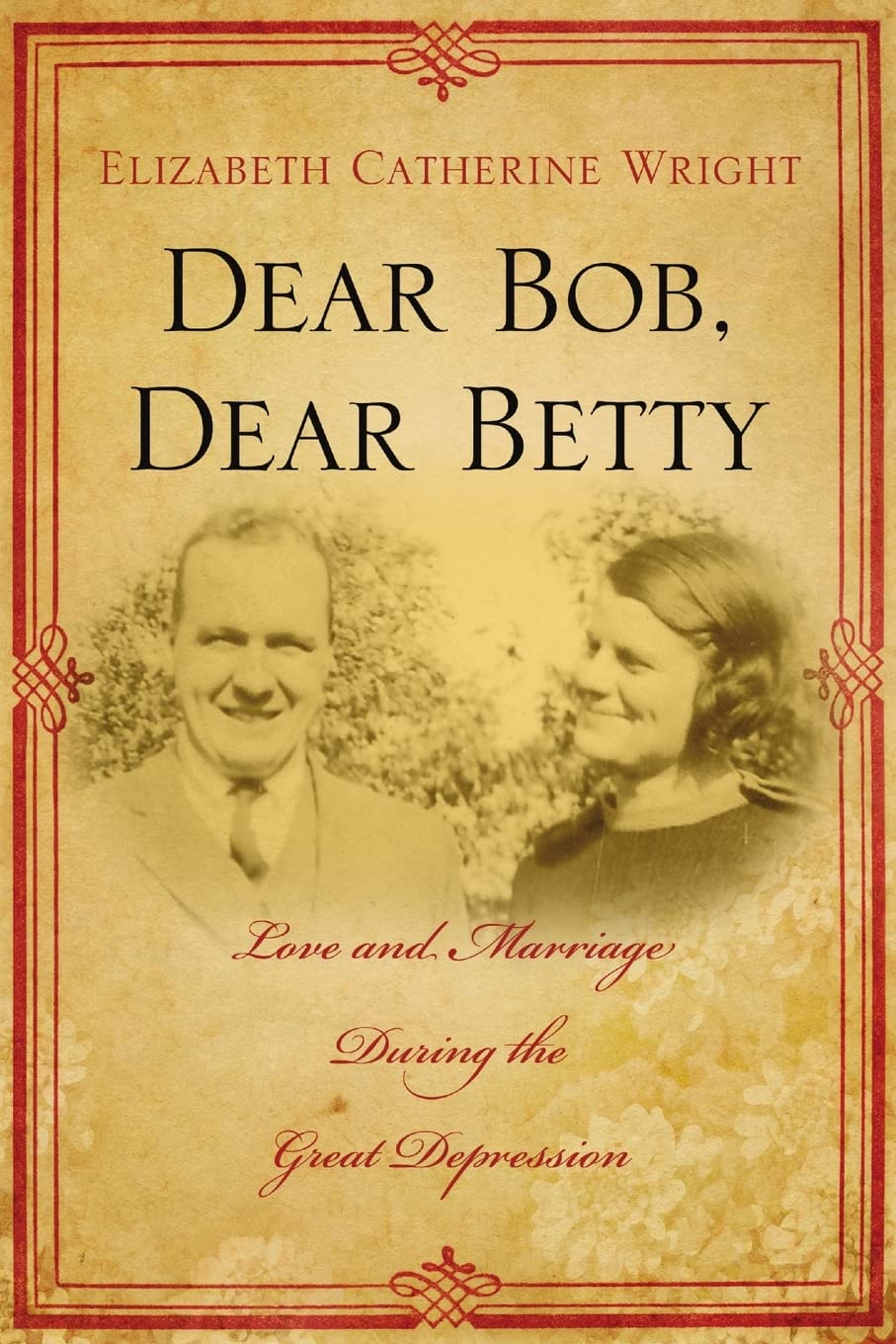
Dear Bob, Dear Betty: Love and Marriage During the Great Depression
$13.20
by Elizabeth C Wright



In 1932, at the height of the Great Depression, two young people meet and fall in love. Llewellyn Wright (Bob), Frank Lloyd Wright’s youngest son, whose adolescence was marked by the public scandals surrounding his father’s private life, is struggling to begin a private law practice in Chicago. Elizabeth Kehler (Betty), daughter of a Chicago artist who abandoned the family when she was still in the womb, is working as an intake counselor at the Milwaukee Vocational School. Their fervent correspondence over a 10-month courtship period is witty, sassy and poignant, as they grapple with their passionate feelings and try to create a financially stable marriage in the midst of the 20th century’s most serious economic crisis. The couple’s daughter, a scholar of French literature, has written an Introduction telling their story before and after the courtship. 35 illustrations, extensive footnotes and an Index illuminate the family and social history behind the letters. "... the back-and-forth financial fretting eerily echo[es] today's man on the street.... Bob's declaration...will cause romantic readers to swoon. The playful and flirtatious mock-formal letters ... are sheer delight." --Kirkus Reviews "...smiles will be generated by readers temporarily transported to the center of Bob and Betty's lives, as they ... witness... two minds--two hearts--moving together." --J. Alpha, US Review of Books "Betty and Bob's love letters ... reflect genuine emotional tension that holds the reader's interest from start to finish." --Margaret Cullison, Foreword CLARION Reviews "This poignant view of the lives of two intelligent Midwesterners embracing life during an arduous time in our history...." --Love Blossoms in 'Dear Bob, Dear Betty' by Jenni Herrick, Shepherd Express, Milwaukee, July 15, 2010 "While Betty had a job, her paychecks were sporadic, and her prospects of finding a job in Chicago were grim." --"Recovered letters tell Depression Era love story" by Brooke Kenny, Montgomery County Gazette, March 17, 2010 I was so excited to find my parents' courtship letters, when my brother and I were clearing out my parents' house in the fall of 2003. First of all because they voiced emotions I had never heard them express. I loved their eloquent writing, their struggle to find different ways to say I love you, my father's wit, and my mother's sassy talking back to him. I also was fascinated by their evocation of events of the Great Depression - bank closings, my mother's salary not being paid, the impossibility of finding her a job in Chicago. I decided I wanted to share this treasure with the general public, because I thought it was a testimony from the past that would interest many people. I began archiving, organizing and transcribing the letters, and then embarked on research about them, both geographical and archival. This was my favorite part of the project. It was magical to tour the actual building where my mother had worked in the early 1930s in Milwaukee, to find out my father's grades from Oak Park High School (not particularly brilliant), to see his yearbook pictures from the Francis W. Parker School where he graduated. I wept when I discovered the tender letters he had written to his father when he was a young boy, as I had never seen him express such sentiments. I also really liked looking through the Chicago and Milwaukee newspaper archives to find articles about the events mentioned in the letters. I often found myself stopping to read other news stories, and look at the fashion pages and advertisements. Doing this research placed me back in the time they were writing the letters, and made them come more alive for me. The most challenging part for me was writing the Introduction to the book, where I recount my parents' lives before and after the letters. It was difficult because I had so much information - too much really, and was so close to the subject. I had to choose the most important elements and organize them into a coherent story that would draw people into the letters. However, at the end I really enjoyed this process of discovery. Rather than knowing what I wanted to say before I wrote, my thoughts often became clear to me only after I had written them. Through doing this, I developed a new vision of my parents and their relationship. I hope readers will laugh and cry with my parents as they read this story of a couple who persevered in their love despite difficult circumstances. 1909 and 1910 were tumultuous years for two Chicago families. Frank Lloyd Wright sailed for Europe with his lover, Mamah Borthwick Cheney, leaving his wife Catherine and their six children behind in Oak Park. James Howard Kehler, a prominent advertising man and friend of Wright's, left his pregnant wife and their two young sons to marry a widow. Robert Llewellyn Wright ("Bob"), was Frank and Catherine's youngest son. Five years old at the time of his father's departure, he suffered throughout his youth from the public