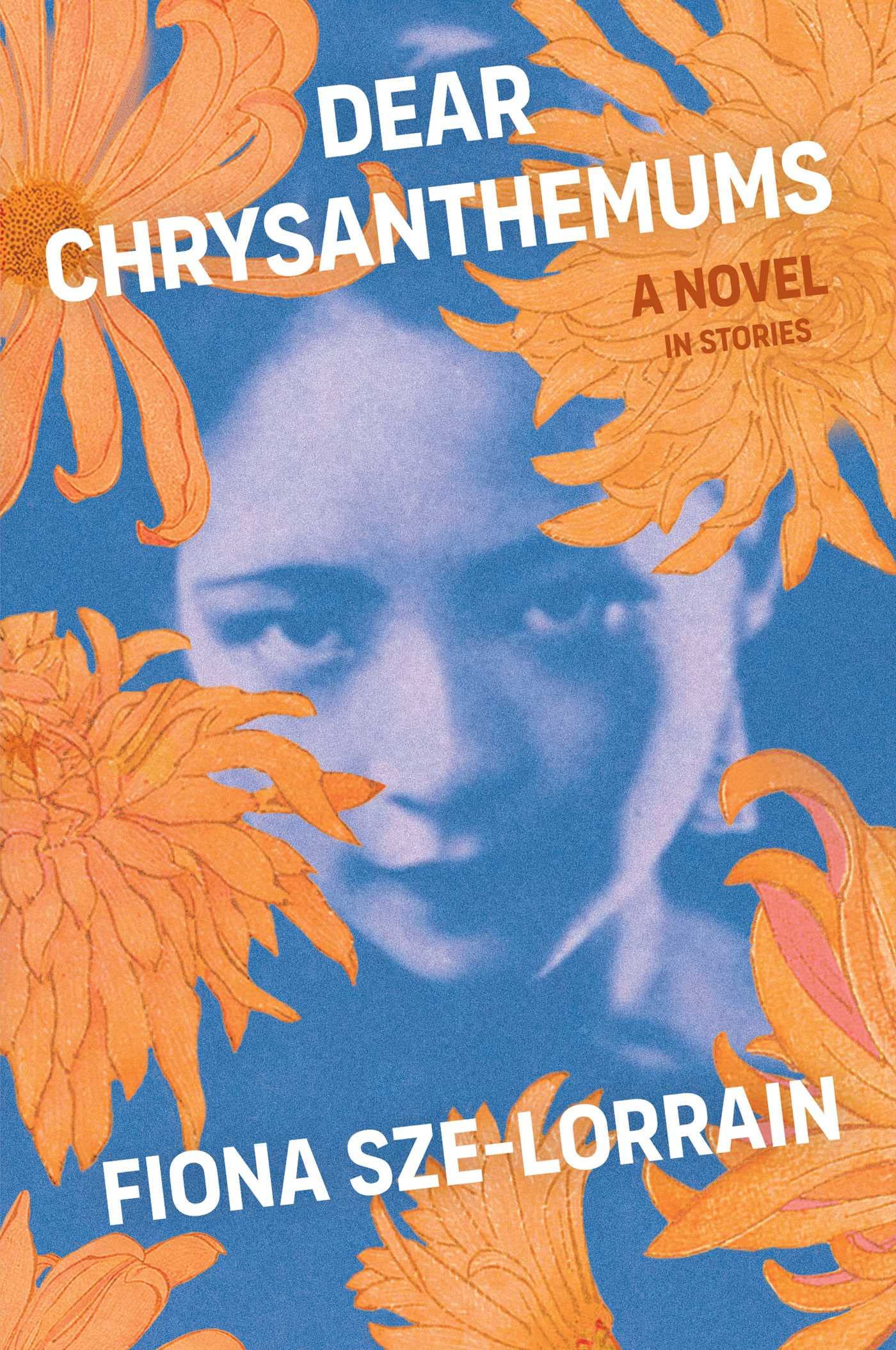



Longlisted for the 2024 Carnegie Medal for Excellence in Fiction, a startling and vivid debut novel in stories from acclaimed poet and translator Fiona Sze-Lorrain, featuring deeply compelling Asian women who reckon with the past, violence, and exile—set in Shanghai, Beijing, Singapore, Paris, and New York. Composed of several interconnected stories, each taking place in a year ending with the number six, ironically a number that in Chinese divination signifies “a smooth life,” Dear Chrysanthemums is a novel about the scourge of inhumanity, survival, and past trauma that never leaves. The women in these stories are cooks, musicians, dancers, protestors, mothers and daughters, friends and enemies, all inexplicably connected in one way or another. “Cooking for Madame Chiang,” 1946: Two cooks work for Madame Chiang Kai-shek and prepare a foreign dish craved by their mistress, which becomes a political weapon and leads to their tragic end. “Death at the Wukang Mansion,” 1966: Punished for her extramarital affair, a dancer is transferred to Shanghai during the Cultural Revolution and assigned to an ominous apartment in a building whose other residents often depart in coffins. “The White Piano,” 1966: A budding pianist from New York City settles down in Paris and is assaulted when a mysterious piano arrives from Singapore. “The Invisible Window,” 2016: After their exile following the Tiananmen Square massacre, three women gather in a French cathedral to renew their friendship and reunite in their grief and faith. With devastating precision, a masterly ear for language, and a profound understanding of both human cruelty and compassion, Fiona Sze-Lorrain weaves Dear Chrysanthemums , an evocative and disturbing portrait of diasporic life, the shared story of uprooting, resilience, artistic expression, and enduring love. Praise for Dear Chrysanthemums "In nimble, evocative prose, these stories follow Chinese women from 1946 to 2016 as they brave moments of personal and national turmoil." — New York Times Book Review “A haunting debut… At once brutal and tender, this novel of women’s lives has the power to move and complicate our understanding of the long shadow cast by revolution as well as the inextinguishable longing every person has for beauty, love, art, and selfhood.” —Asymptote "Dear Chrysanthemums may be short at just 160 pages, but the unique structure of connecting the stories through the many decades of modern Chinese history and some of the same characters gives it the feel of a longer novel." — Asian Review of Books “Sze-Lorrain brings her attentiveness to sound and rhythm to her prose. The book’s settings and characters do feel very much alive, thanks to her attention to concrete detail.” — Georgia Review “Attention to detail, especially with respect to numbers and music, is part of what makes the novel a joy to read… Sze-Lorrain pushes the boundaries of the Asian American novel into a global conversation. .. Dreamy and haunting...” —Columbia Journal of Literary Criticism "Sze-Lorrain is to be praised for her ornate, intimate stories. Sze-Lorrain has a gift for capturing distinctive voices, and this shines through in all of her characters." —No Man is an Island "Provocative... In Dear Chrysanthemums , women try to free their bodies to be instruments of life as much as death, of self-expression as much as silence..." — Mekong Review "In a novel that centers around the theme of erasure, the ‘white space’ between the lines, what is left unsaid or just alluded to, is where you’ll find the true story." —Reading Chinese Network Reviews “Sze-Lorrain does not only shed light on the losses but also on the hypocritical nature of communist regimes. Perspectives on modern Chinese history like these are rare — and for a reason. A recommended read to those who wonder, but do not seek answers.” — Mochi Magazine “Inventive and powerful… [a] stunning novel…” —Soapberry Review “Elegant… Sze-Lorrain's lyrical writing suggests that rebellion, even if it has tragic consequences in the present, might bear fruit in the future through artistic expression.” — Shelf Awareness “With shattering clarity, Sze-Lorrain teases apart the layers of complicity and survival that create a web of secrets, casting doubt on ever knowing the full truth behind each person’s story.” — Booklist “Graceful… Sze-Lorrain effortlessly evokes the spirit of each setting, be it the ardent fervor of nationalism during the Chinese Civil War or the seedy glamor of a dive bar in Paris, and she imbues her characters with haunting melancholy as victims ‘doomed to the mishaps of verity and the equally hurtful edges of fiction.’ This author is one to watch.” — Publishers Weekly "Sze-Lorrain excels in the lyrical mode as her attention to sensory observation illustrates how seemingly minor details such as the play of light from a shattered stained-glass window or