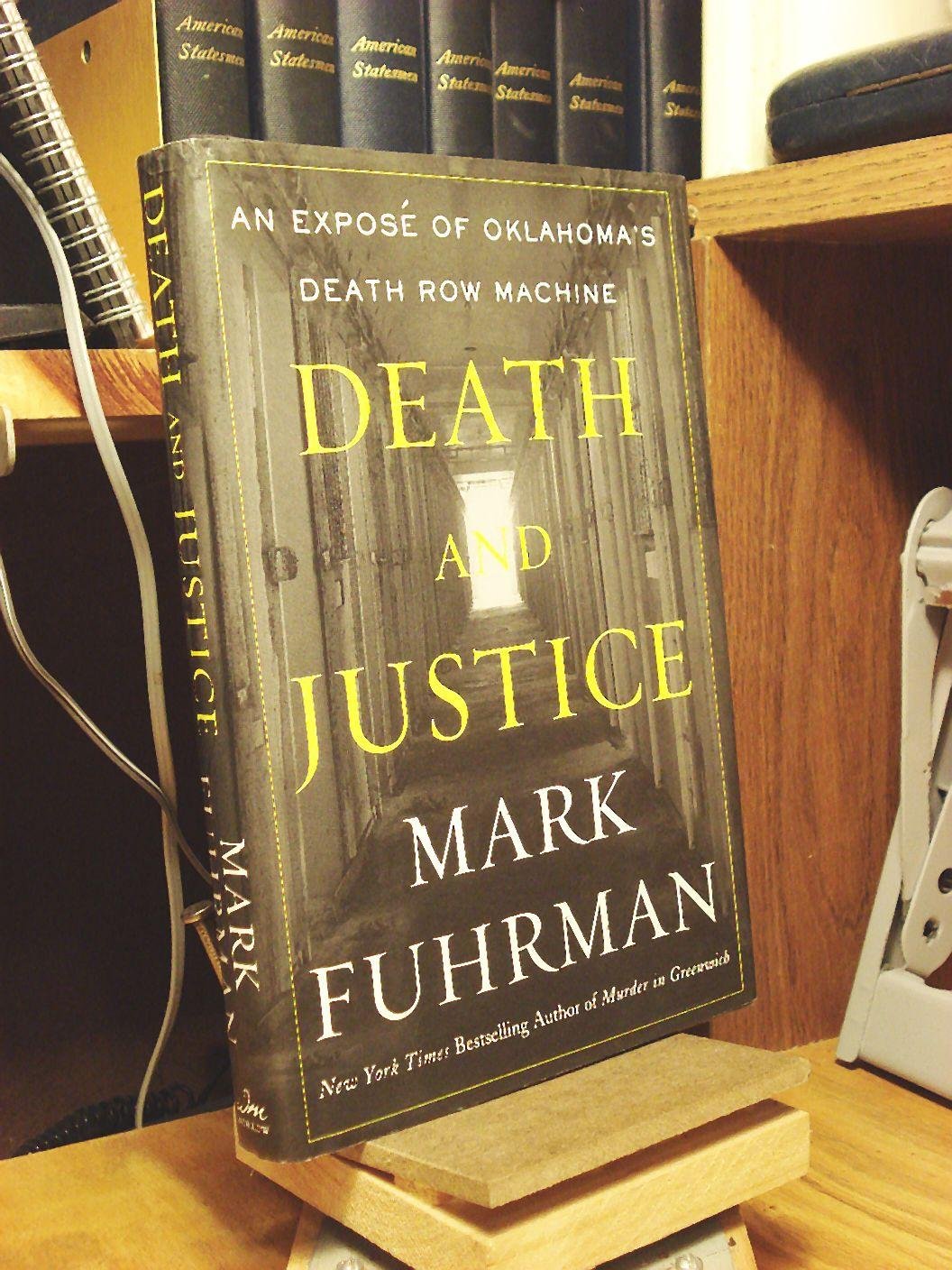



Controversy rages about capital punishment as innocent men and women are being released from death rows all over the country. Into the debate steps Mark Fuhrman, America's most famous detective, and no stranger to controversy himself. Are innocent people being executed? Are death penalty cases being investigated and tried as if someone's life depended on it? Is capital punishment justice or revenge? Fuhrman seeks to answer these questions by investigating the death penalty in Oklahoma, a place where a "hang 'em high" attitude of cowboy justice resulted in twenty-one executions in 2001, more than in any other state in the nation. The majority of these death penalty cases came from one jurisdiction, Oklahoma County, where legendary district attorney Bob Macy bragged about sending more people to death row than any other prosecutor, and police chemist Joyce Gilchrist was eventually fired for mismanaging the crime lab. These two figures loom large in Fuhrman's investigation. Examining police records, trial transcripts, and appellate decisions, and conducting hundreds of interviews, Fuhrman focuses his considerable investigative skills on more than a dozen of the most controversial Oklahoma death penalty cases, including two in which innocent men nearly lost their lives. When he began Death and Justice, Mark Fuhrman was a firm believer in the death penalty. What he saw in Oklahoma changed his mind. It may change yours. Fuhrman thought he'd be a sympathetic observer when he decided to focus on conservative Oklahoma County while researching the death penalty. Little did he know that his own research would turn his views upside down. After the U.S. Supreme Court reinstated the death penalty in 1976, "frontier justice," as Fuhrman calls it, became the norm in Oklahoma. Overzealous law-enforcement officials would find a suspect and retrofit the evidence. Heading up this practice was the extremely popular D.A., Bob Macy, and his most trusted forensic scientist, Joyce Gilchrist. With the precision of a first-rate detective--which, O.J. notwithstanding, Fuhrman truly is--he breaks down several death-penalty cases that relied on rather questionable investigative techniques and considerably suspect scientific reasoning. When faced with the possibility that innocent people might have been executed at the hands of an overly ambitious prosecutorial machine, Fuhrman reconsiders his position on the matter: "Macy's career showed me the futility of vengeance. Evil cannot be met with evil, no matter how it is justified. The whole point of law enforcement is to serve justice, not your own ego, ambition, or pathology." With every offering, Fuhrman, once reviled, is showing himself to be a courageous man who dares to take on his own industry. Dominick Dunne, look out. Mary Frances Wilkens Copyright © American Library Association. All rights reserved “Essential for all true-crime collections.” (Library Journal) “Convinces that a criminal justice system can be criminal and lack justice.” (Kirkus Reviews) Retired LAPD detective Mark Fuhrman is the New York Times bestselling author of Murder in Brentwood , Murder in Greenwich , Murder in Spokane , and Death and Justice . He lives in Idaho.