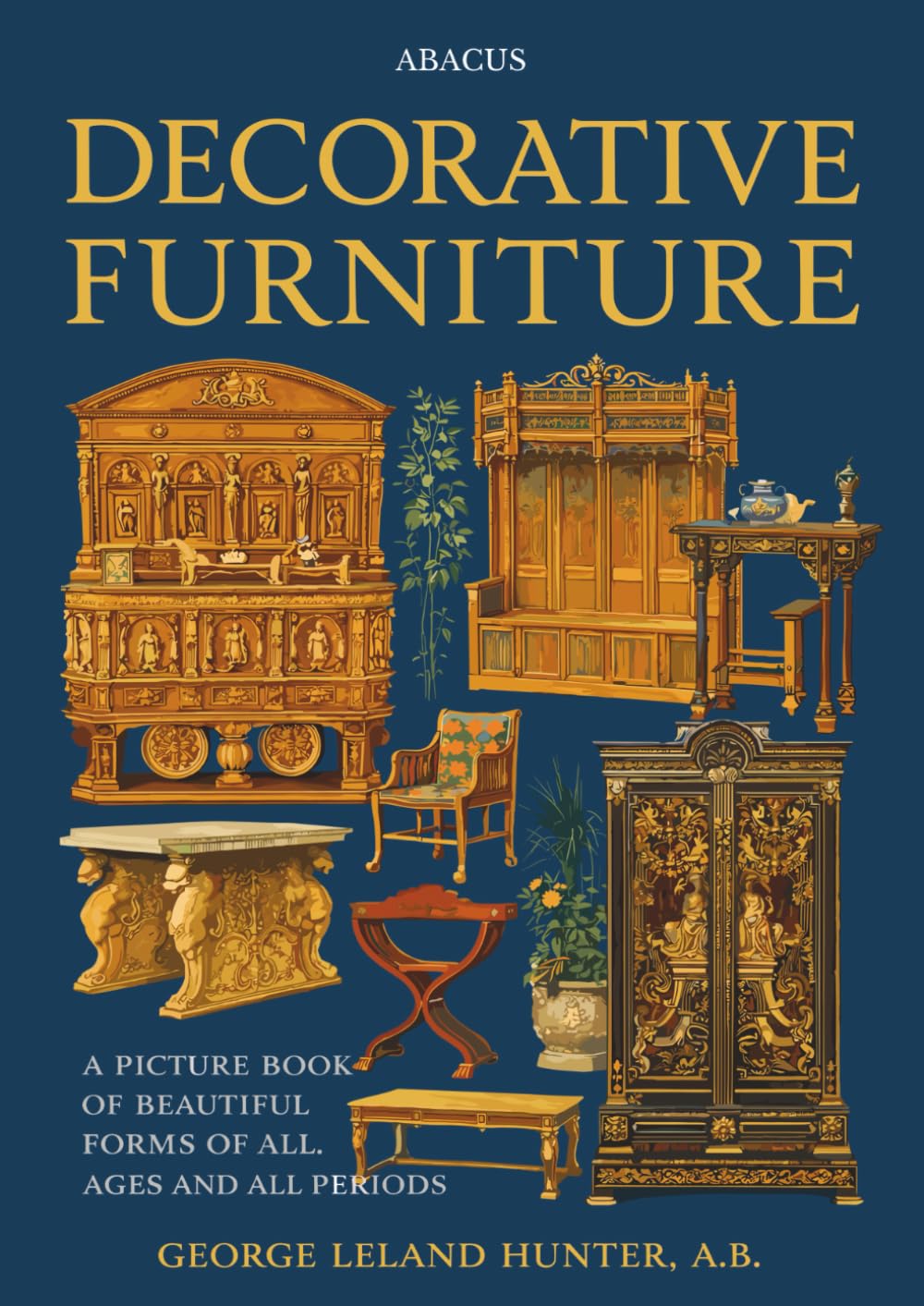
Decorative Furniture: A Picture Book of the Beautiful Forms of All Ages and All Periods
$34.95
by George Leland Hunter



A Visual Encyclopedia of 4,000 Years of Furniture History Published in 1923, just months after the discovery of Tutankhamen's tomb, Decorative Furniture stands as one of the most comprehensive visual surveys of furniture ever compiled. George Leland Hunter, one of early twentieth-century America's most respected decorative arts authorities, created this magnificent work as a companion to his earlier masterwork on textiles, providing scholars, collectors, and designers with an unprecedented visual reference spanning ancient civilizations through the modern era. This lavishly illustrated volume features 480 plates with over 900 illustrations , including 23 color plates, documenting furniture from Egyptian tombs, Assyrian palaces, Greek and Roman antiquity, Byzantine splendor, Oriental traditions (Chinese, Japanese, Persian), Medieval craftsmanship (Romanesque and Gothic), the Renaissance across Italy, France, and Spain, regional European styles, the golden age of English design (Elizabethan through Sheraton), American Colonial furniture, and Modern European and American styles including Arts and Crafts and Mission furniture. What Makes This Book Exceptional: Museum-quality documentation with specific references to pieces in the Metropolitan Museum of Art, Cairo Museum, Louvre, and Brooklyn Museum - Detailed coverage of Tutankhamen's throne chair and related fourteenth-century B.C. royal furniture—published immediately after the historic 1922 discovery - Technical analysis of construction methods: ivory inlays, marquetry, gilt plaster, glazed tile, and period-specific joinery techniques - Evolution of furniture forms across cultures, showing how Egyptian lion-legged chairs influenced Roman and Renaissance designs - Classic vs. Romantic theoretical framework distinguishing symmetrical, balanced styles from asymmetrical, exuberant ones Who Should Read This Book: This volume is essential for furniture historians, museum curators developing period room installations, antique collectors authenticating pieces, interior designers working in revival styles, preservationists restoring historic buildings, architecture students studying decorative elements, and anyone fascinated by the evolution of design across millennia. Published during the height of the Colonial Revival movement and concurrent with the opening of the Metropolitan Museum's American Wing, this work captures furniture history at a pivotal cultural moment when historical consciousness and collecting enthusiasm reached their peak. Hunter's emphasis on visual documentation over textual description makes this book accessible to multiple audiences while maintaining scholarly rigor. The work validates American decorative arts alongside European and ancient traditions, serving both as a practical identification guide and an intellectual exploration of aesthetic principles governing furniture design across 4,000 years of human civilization.