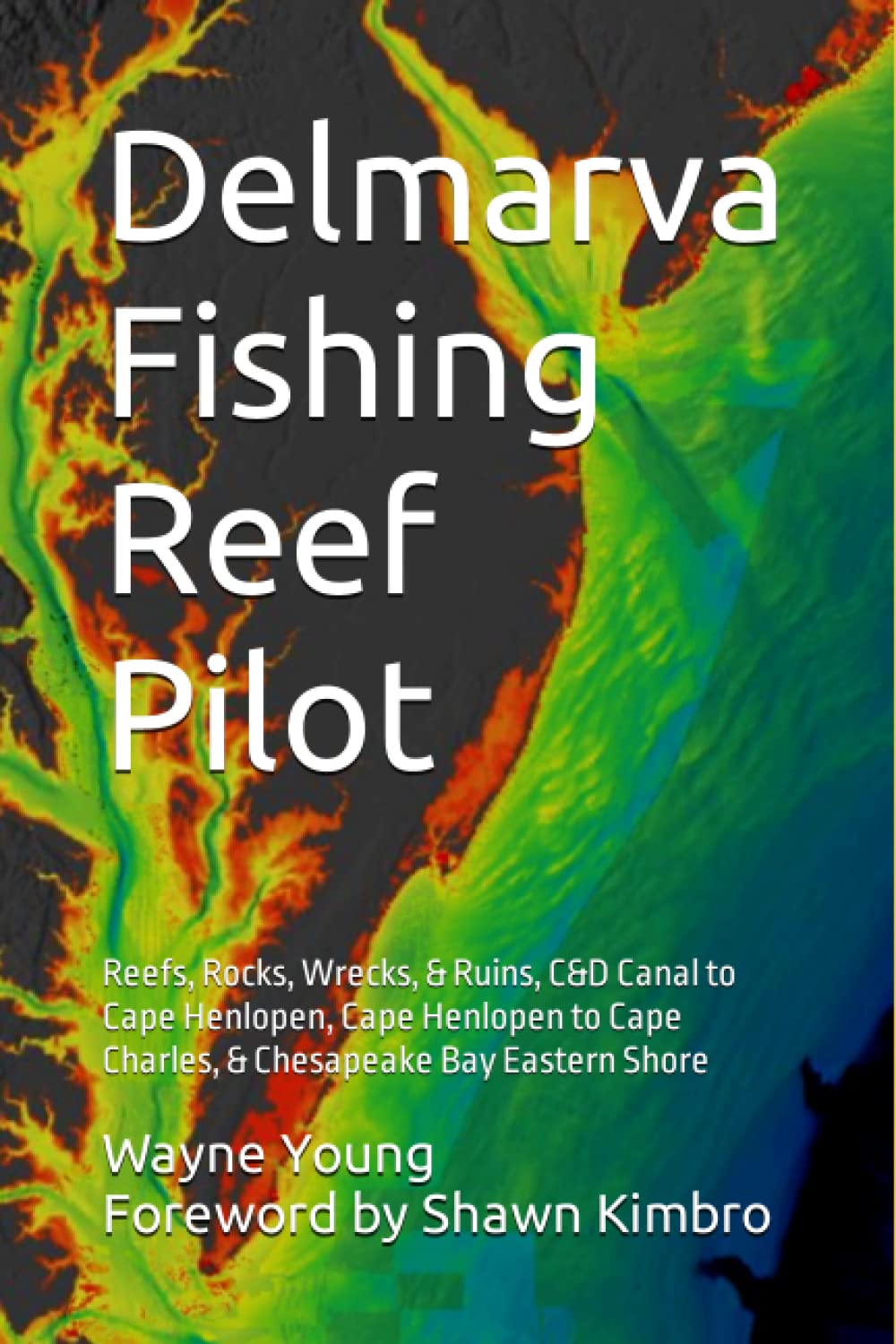
Delmarva Fishing Reef Pilot: Reefs, Rocks, Wrecks, & Ruins, C&D Canal to Cape Henlopen, Cape Henlopen to Cape Charles, & Chesapeake Bay Eastern Shore
$29.95
by Wayne Young



Told by a former artificial reef manager, recreational boater, and sport-fisherman with a foreword by recreational fisherman and author Shawn Kimbro, this is first and foremost a comprehensive field manual for fisherman who trailer their boats to multiple launch ramps around the Delmarva Peninsula. It provides practical methods to find and prospect bottom and shoreline features that attract bait, striped bass, catfish, white perch, redfish, cobia, black drum, and other sportfish. It also draws on boating and fishing lessons from the author's formative years growing up on a New Jersey barrier island, Coast Guard service, and Chesapeake Bay, Delaware Bay, and Potomac River fishing experience, and Chesapeake and coastal Maryland marine habitat restoration experience to encourage boating and fishing safety. This fourth book of a multi-volume Mid-Atlantic Fishing Reef series consolidates and supplements materials from other books in the Mid-Atlantic Fishing Reef series and also the Chesapeake Bay Fishing Reef series into single volume for advance planning and practical use during fishing trips. It covers waters surrounding the Delmarva Peninsula from the Chesapeake and Delaware (C&D) Canal downriver through the Delaware Bay Entrance and along the Atlantic Coast to the Chesapeake Bay Entrance. The Chesapeake Bay Eastern Shore from the Upper Bay to the Bay Entrance are also covered. It provides a detailed look at wrecks, obstructions, natural formations including reefs and rocks, artificial reefs, icebreakers, and shoreline ruins. Designed for jump-starting the acquisition of local knowledge about light-tackle fishing structure by casual and journeyman sport fisherman, there are jewels of information inside for sportfishing veterans as well. The narrative and annotated charts not only show and tell where to look for structure, but also include a selection of sonar images from hydrographic surveys and small-boat sonar electronics to convey what is actually there to inform fishing strategies and tackle selection. Geographic coordinates are included. A selection of color graphics used to produce greyscale images in the series are found on the Facebook page for the Author’s works, "Chesapeake Bay Fishing Reefs", and as illustrations for the Author's articles in FishTalk Magazine . Fish and fishermen are drawn to many structures that pose dangers to navigation. Fishing for striped bass is also best during colder months. Recognizing the associated risks, this book concludes with a detailed chapter about fishing and boating safety developed with contributions and technical support from kayak light-tackle fisherman and author Alan Battista.