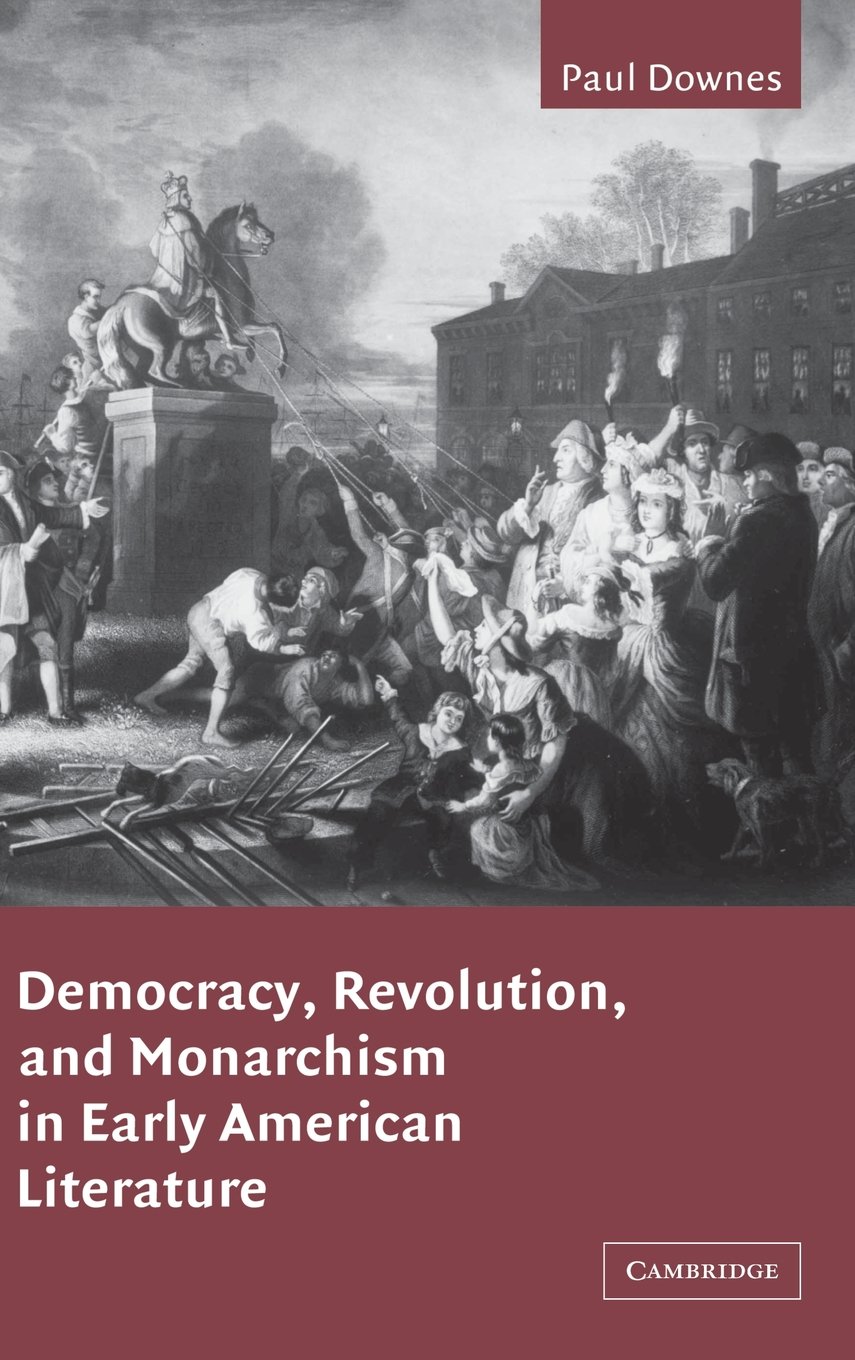
Democracy, Revolution, and Monarchism in Early American Literature (Cambridge Studies in American Literature and Culture, Series Number 130)
$68.27
by Paul Downes



Paul Downes offers a radical revision of some of the most cherished elements of early American cultural identity. The founding texts and writers of the Republic, he claims, did not wholly displace what they claimed to oppose. Instead, Downes argues, the entire construction of a Republican public sphere actually borrowed and adapted central features of Monarchical rule. Downes discovers this theme not only in a wide range of American novels, but also in readings of a variety of political documents that created the philosophical culture of the American revolutionary period. "....Downes's study presents a valuable new reading of American Revolutionary culture, and it stands as an example of the important work that remains to be done within the confines of American studies and the geographical boundaries of the United States." American Literature "Downe's Democracy deconstructs the traditional opposition between monarchy and democracy, thus advancing a compelling argument of how the extension of democratic rights owes much to its inheritance from monarchy. Unapologetically theoretical, Downes creates an engaging dialogue with the work of philosophers and political theorists like Derrida, Balibar, Adrendt, Laclau and Mouffe. The result is a work that provides a fresh methodological approach to the field of early American literature." English Studies in Canada,/i Pablo Ramirez, University of Guelph This is an ambitious study of an important theme in early American culture and society. Paul Downes is an Associate Professor in the department of English at the University of Toronto. He is the author of a number of articles on eighteenth and nineteenth century American literature. Used Book in Good Condition