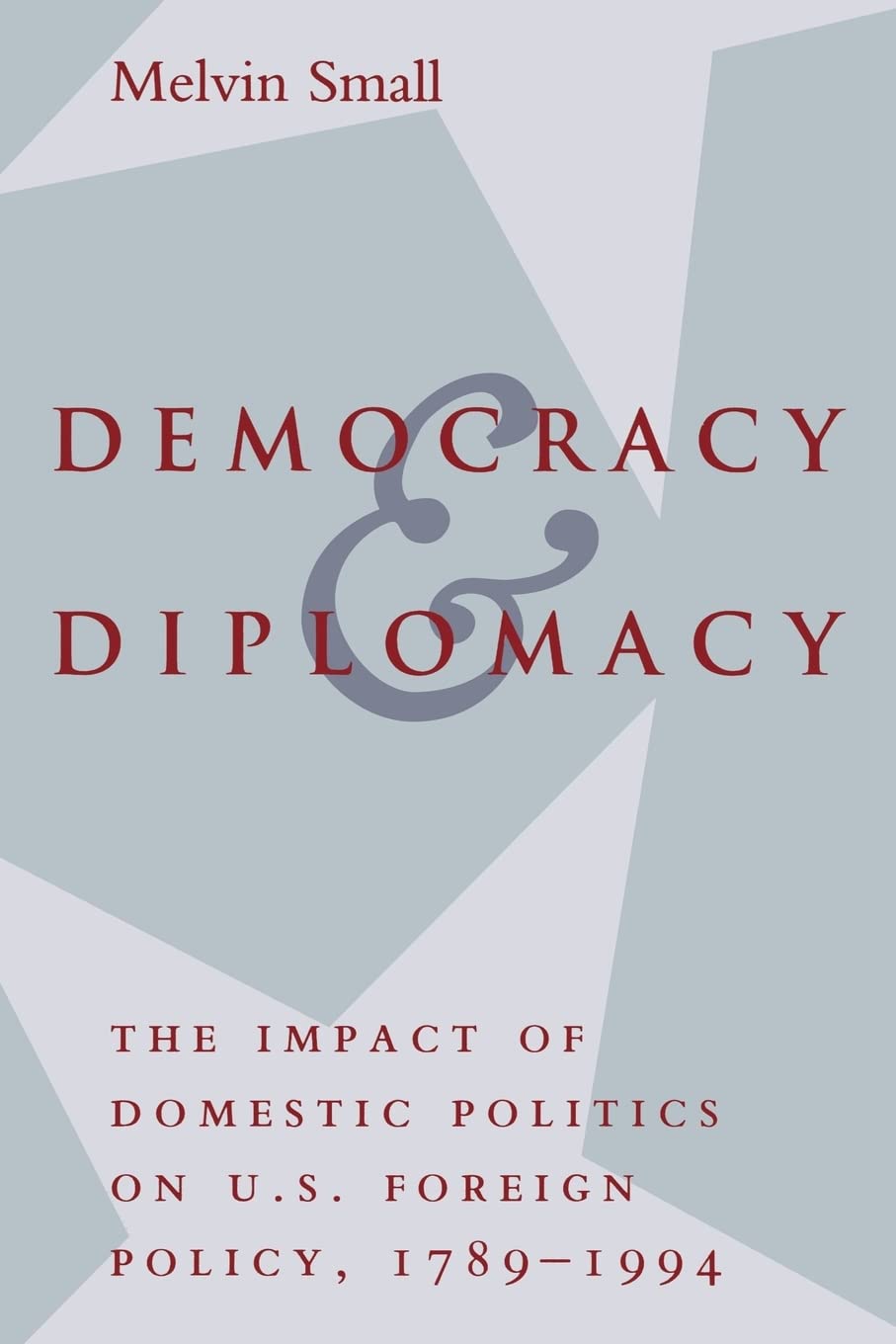
Democracy and Diplomacy: The Impact of Domestic Politics in U.S. Foreign Policy, 1789-1994 (The American Moment)
$28.00
by Melvin Small



From the Hamiltonian-Jeffersonian split over English and French policy in the 1790s to the Republican-Democratic clash over Haitian policy in the 1990s, Americans and foreign observers have been troubled—and often exasperated—by the extraordinary influence of U.S. domestic politics on matters of vital national security. Some critics, including Alexis de Tocqueville, concluded—that America's democratic system would cripple the effective and efficient conduct of its foreign policy. In this first historical overview of the subject, Melvin Small examines the central role of domestic politics in the shaping and conduct of American foreign policy from the early republic to the end of the Cold War. Over all, this is a very good book. It is an engaging and convincing survey, and it is written for readers at all levels of expertise. I suspect that it will be quite useful for many courses on American foreign policy in both history and political science. ―T. Clifton Morgan, Political Science Quarterly This is a concise and sophisticated analysis which carefully assesses the many internal influences on foreign policy-making in the United States. The author concludes that the impact of domestic politics on foreign policy has not necessarily been bad and has certainly been more successful than the advocates of a more reallpolitik approach would have it. ― International Affairs From the Hamiltonian-Jeffersonian split over English and French policy in the 1790s to the Republican-Democratic clash over Haitian policy in the 1990s. Americans and foreign observers have been troubled - and often exasperated - by the extraordinary influence of U.S. domestic politics on matters of vital national security. Some critics, including Alexis de Tocqueville, concluded that America's democratic system would cripple the effective and efficient conduct of its foreign policy. In this first historical overview of the subject, Melvin Small examines the central role of domestic politics in the shaping and conduct of American foreign policy from the early republic to the end of the Cold War. While accounting for various factors such as special interest groups (including agriculture and business) public opinion the media elections and party politics, and executive-legislative conflicts. Small's discussion focuses on American presidents and the bureaucrats who fashion and carry out foreign policy. Their task is a formidable one, he argues, especially when the legitimate need to conduct some policies in secret clashes with the duty to be accountable to the American people. The book gives particular attention to the events of the twentieth century, when the United States became a major power - and then a superpower. Melvin Small is professor in the Department of History at Wayne State University. Used Book in Good Condition