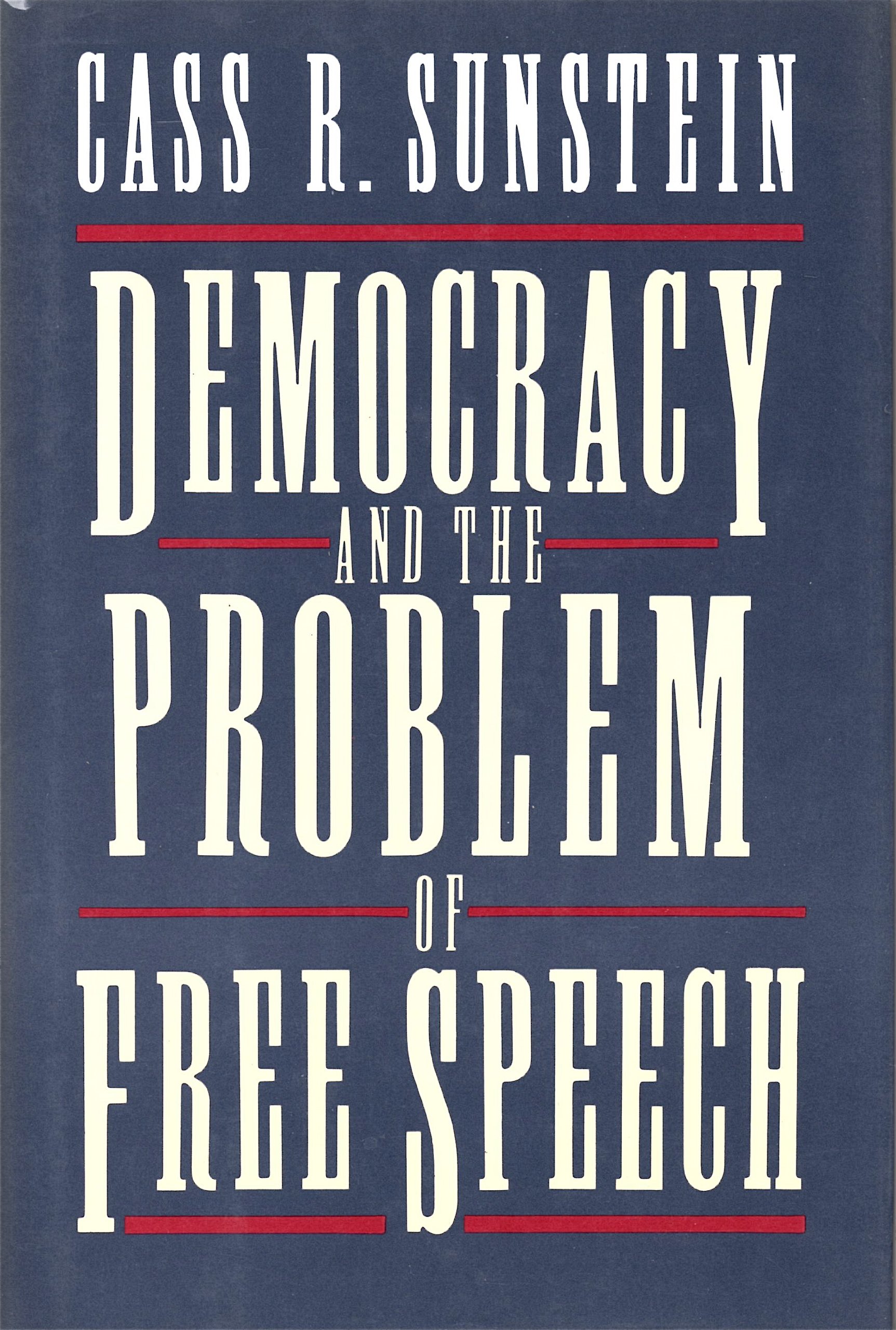



Attempts to strike a balance between limitless free expression and censorship, arguing that freedom in broadcasting, campaign finance, hate speech, pornography, government funding of the arts, and cases of privacy must go hand in hand with responsibility and civility. To many, the First Amendment to the Constitution is clear and unambiguous: "Congress shall make no law abridging the freedom of speech, or of the press." Sunstein (jurisprudence & political science, Univ. of Chicago) instead analyzes the First Amendment under the Madisonian conception: that is, he links the amendment to the American vision of sovereignty and a specific idea of democracy. Arguing that the First Amendment has been changed from a Madisonian principle to a "species of neo-classical economics," he calls for a "New Deal" vision of the First Amendment in which political speech, so vital to a democracy, would be more fully protected than commercial speech. Though Sunstein analyzes the relationships among broadcasting, politics, and liberty and discusses issues raised by hate speech, cross burning, pornography, government arts funding, and corporate speech, his arguments will satisfy neither the free speech absolutists nor proponents of "politically correct" speech. For academic and law libraries. - Sue Kamm, Inglewood P.L., Cal. Copyright 1993 Reed Business Information, Inc. Cass R. Sunstein is the Karl Llewellyn Professor of Jurisprudence at the Law School and Department of Political Science at the University of Chicago.