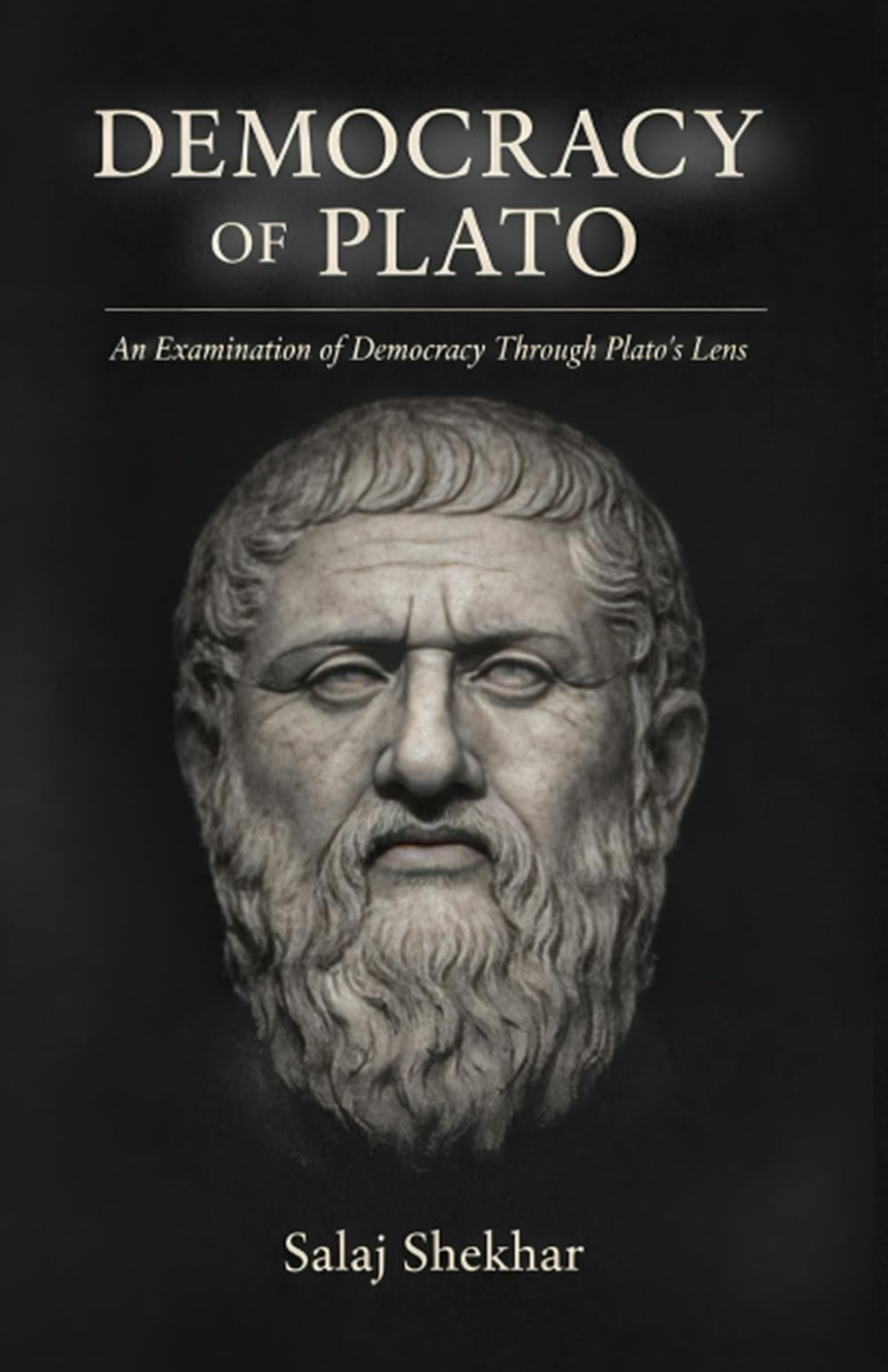
Democracy of Plato: An Examination of Democracy Through Plato’s Lens
$8.99
by Salaj Shekhar



Democracy of Plato examines democracy through the critical framework developed by Plato, focusing on how democratic systems distribute power, shape judgment, and influence collective decision-making. Rather than arguing for or against democracy, the book analyzes Plato’s concerns about opinion, persuasion, and the role of knowledge in governance. Drawing on The Republic , the trial of Socrates, and Plato’s observations of Athenian democracy, it explores the tension between equality and expertise, participation and understanding. The discussion extends to modern contexts, considering how mass opinion, crowd psychology, and concentrated influence affect democratic reasoning today. The book does not propose political solutions or ideological positions. Its aim is analytical rather than prescriptive. Written in a concise and reflective style, Democracy of Plato is intended for readers interested in political philosophy, critical thinking, and the intellectual foundations of democratic systems.