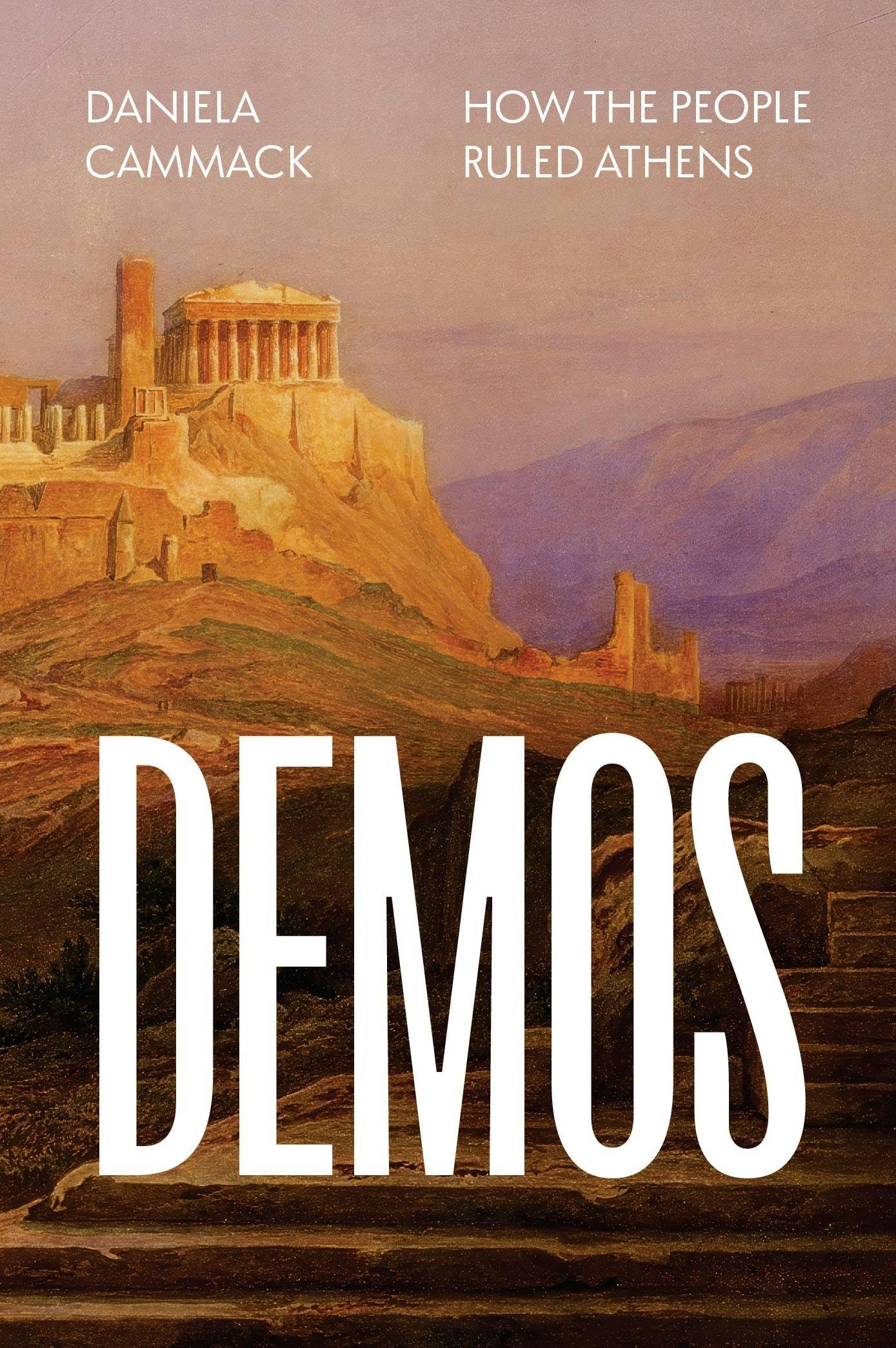



A compelling reinterpretation of ancient Greek democracy showing that the people ruled by securing mass control over leaders In ancient Greece, demokratia meant “rule by the people”—but what people, and how did they rule? Scholars have long argued that demokratia signified the rule of all adult male citizens over themselves. In Demo s, Daniela Cammack counters this view by arguing that demokratia meant rule by the crowd that assembled when a public meeting was held. This crowd was the demos , which the Greeks distinguished from orators, generals, councilors, public benefactors, and other civic leaders. Drawing on literary and epigraphical evidence as well as the key theoretical insights of Aristotle and Hobbes, Cammack explains how constantly changing masses of ordinary ancient Greek men ruled while their leaders were ruled over. This political system relied on kratos , the power to prevail militarily, epitomized by the victories of the Athenian demos in civil conflicts around 508 and 404 BC. In peacetime, the superior strength of the demos revealed itself in large, frequently summoned crowds of ordinary citizens acting as policymakers, legislators, and (crucially) judges, who wielded great power over politicians. Aristotle characterized the years 403 to 322 as the era of “ultimate democracy,” and it was during this period that the Athenians pulled off a feat unmatched by modern democrats: making use of talented and ambitious leaders without being ruled by them. By contrast, the Greeks called rule by elected office-holders “oligarchy.” As people today lose faith in democratic institutions, Cammack’s account prompts us to ask if we’ve been doing democracy all wrong—or even at all. “The book is exciting, important, and original, a must-read for ancient historians and classicists, political scientists, and political philosophers. It will surely spark debate, perhaps even controversy, due to its original and daring arguments. Daniela Cammack brings a truly new perspective to a field that has been exhaustively studied.”— Josine Blok, author of Drawing Lots: From Egalitarianism to Democracy in Ancient Greece “Looking to 4th century BCE Athenian demokratia for an alternative to modern democracy and treating demos-kratos as the power of a mass to control leaders, hold officials to account, and rule over them , Daniela Cammack flips the script on where and how demos-kratos happens. Powerful, lucid, and especially timely, Demos is an impressive achievement.” —Jill Frank, Cornell University Daniela Cammack is assistant professor in the Department of Political Science at the University of California, Berkeley.