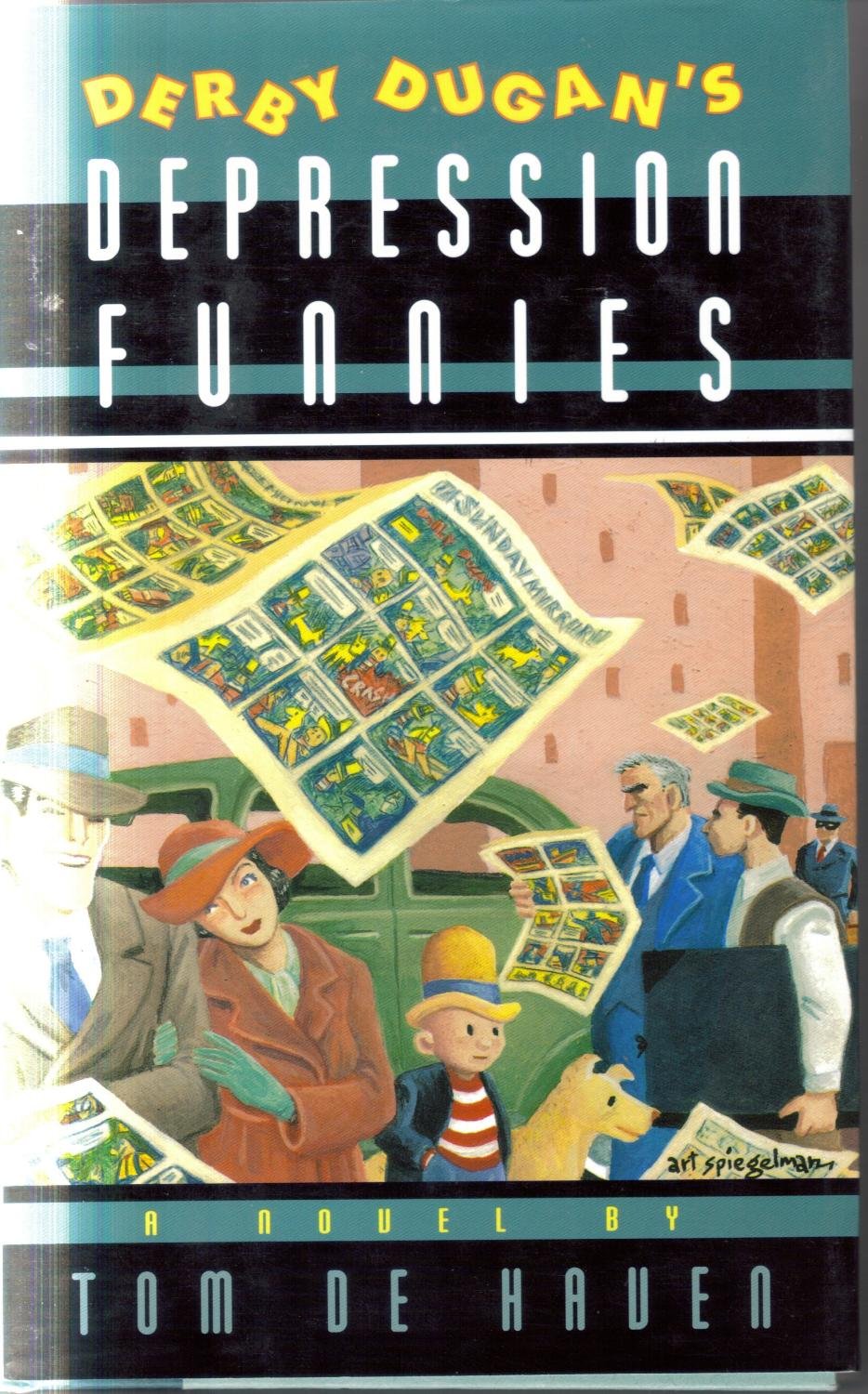



Narrated by a fast-talking pulp fiction author, a darkly comic novel set amid New York City's tabloid press of the 1930s follows the frantic search for a replacement for the roguish creator of America's favorite comic strip. In Derby Dugan's Depression Funnies , Al Bready ghostwrites a popular comic strip and struggles to get along with his boss and mentor, Walter Geebus. Set in 1930s New York, the novel is populated with characters who seem to have stepped straight out of a Damon Runyon story. While Mysterious Jones roams the city in a black mask, Marty Planet runs the Mafia, and an ambitious young cartoonist's assistant named Frank Sweeney rots in jail for lacing his boss's coffee with arsenic. He was trying to poison his way to a promotion, but it didn't work. Al Bready caught him, and although Walter Geebus survived the arsenic poisoning, he was never the same. This novel charts Geebus's decline and Bready's efforts to come to terms with the loss of the comic strip he clung to throughout his difficult childhood. Bready is a man of many routines who generally keeps to himself. He ghostwrites five or six comic strips and pumps out a pulp novel every month, but when he tries to write something personal, he feels stymied. He knows the story begins, "Derby's in a rowboat, it's night," but he can't fill in the rest. Bready yearns for the days of his youth, when reading the funnies aloud to his kid sister made everything seem all right. His story is not terribly moving, but it is quite funny, and he makes good company for a few hundred pages. This novel is a nostalgic, witty look back at the glory days of comic strips. --Jill Marquis YA-Orphaned Derby and sidekick Fuzzy, his talking dog, conquer near-death obstacles in a 1930s daily comic strip, Derby Dugan. Al Bready scripts the comic strip that the originator, Walter Geebus, illustrates. Both men, orphaned in their youth, devote their lives to the strip like loving fathers. Differing vastly personally, they disagree professionally only on whether Derby is 10 or 14 years old (the ages they were orphaned). Al narrates and loosely links professional and personal events into a bittersweet tale. He and his cohorts speak in a lively, upbeat dialogue that oozes with Depression years' slang. Interspersed are fascinating tidbits about the comic-book industry. Many teens will enjoy the novel's quick pace and characters who transform their dysfunctional family backgrounds into productive adult lives. Linda Diane Townsend, formerly of Fairfax County Public Schools, VA Copyright 1996 Reed Business Information, Inc. A colorful, mid-1930s Manhattan-that-never-was of nightclubs, seedy hotels, lunch counters, and brothels is the backdrop for this novel set in the heyday of the newspaper comic strip. The narrator is sardonic Al Bready, who ghostwrites the "Orphan Annie" ^-like "Derby Dugan" for misanthropic artist Walter Geebus. What plot there is deals with Geebus' failing health (he never recovered from being poisoned by an assistant scheming to take over the strip), the search for his replacement, and Bready confronting the dual loss of father figure Geebus and the married woman, Jewel Rodgers, with whom he is futilely smitten. These main figures are well drawn, but what brings the bittersweet story to life is a quirky supporting cast and the Depression-era milieu that, rather than seeming authentic, appears to be derived--appropriately--from period pop culture. Also, Bready's cynicism and tough-guy patois perfectly express the outlook of his fellow cartoonists, whose pride in their unappreciated art form belies their dismissive comments about it and whose sad lives poignantly contrast with the romantic, larger-than-life figures that populate "Derby." Gordon Flagg A good-natured romp through the New York newspaper world of the 1930s, by the whimsical author of such unconventional comic fiction as Freaks' Amour (1979)--and a previous novel about the joys and sorrows of the cartoonist's life, Funny Papers (1985). De Haven's narrator, Al Bready, looks backward from the vantage point of cranky old age to the palmy if conflicted days when ``strip'' cartoonists were media kings and when Al, a self- taught hustler steeped in the works of Jack London and Booth Tarkington, wrote scripts for irascible Walter Geebus's popular Derby Dugan strip, which portrayed the adventures of a resourceful street kid and his faithful talking dog. Everybody loved Derby-- even John Dillinger wrote Walter a fan letter from prison. But, as Al recalls it here, those were dangerous days as well: When his boss's inexplicable illness raises fears of a plot by a rival, Al is drawn into the unsettling lives of such broadly drawn individuals as lunchroom owner Jimmie Rodgers, who says everything twice, Jimmie's beauteous (and perhaps faithful) wife Jewel, an enigmatic man-about-town known only as Mysterious Jones, and several other Damon Runyonesque personalities. Walter Geebus is a wonderful creation, a