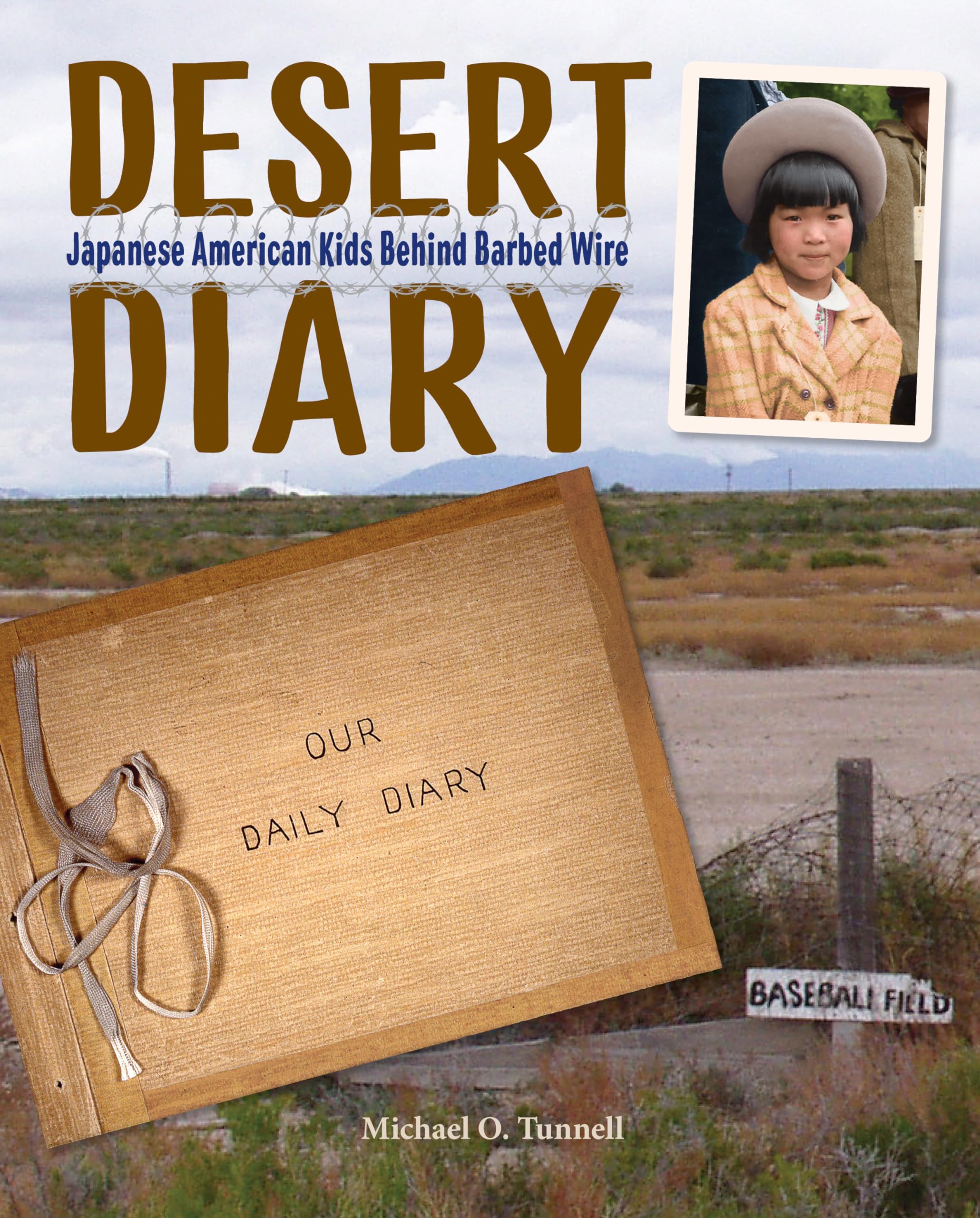



A moving primary source sheds light on the experience of Japanese American children imprisoned in a World War II internment camp. A classroom diary created by Japanese American children paints a vivid picture of daily life in a so-called "internment camp." Mae Yanagi was eight years old when she started school at Topaz Camp in Utah. She and her third-grade classmates began keeping an illustrated diary, full of details about schoolwork, sports, pets, holidays, and health--as experienced from behind barbed wire. Diary pages, archival photographs, and narrative nonfiction text convey the harsh changes experienced by the children, as well as their remarkable resilience. Gr 4-7-This nonfiction resource spotlights the experiences of families of Japanese ancestry imprisoned at Topaz Camp, in Utah, during World War II. Miss Yamauchi, a teacher at Mountain View School, and her third grade students discussed what was happening at school and at home. She would write a summary of their experiences on a new page in their class daily diary. Students would take turns illustrating a page with pencil and crayon drawings. These pages provide a window into the children's perspectives and emotions during this dark event in American history. Eleven chapters focus on various aspects of the students' daily life. Color pages from the diary and numerous black-and-white historic photographs complement the text. An epilogue, an author's note, a glossary, an editor's note on terminology, a note on the photos, photo credits, source notes, a selected bibliography, and an index are included. In her editor's note, Alyssa Mito Pusey, a fourth-generation Japanese American, explains how she and the author worked carefully together to make thoughtful word choices regarding the use of terms such as internment or internment camp. VERDICT This well-researched primary source provides a close look at the daily lives of Japanese American children and their families who were forced out of their homes during World War II. An illuminating addition to all library shelves that challenges readers to think about how people can learn from history and its reverberations.-Helen Foster James, Univ. of California at San Diegoα(c) Copyright 2011. Library Journals LLC, a wholly owned subsidiary of Media Source, Inc. No redistribution permitted. ♦ This nonfiction resource spotlights the experiences of families of Japanese ancestry imprisoned at Topaz Camp, in Utah, during World War II. Miss Yamauchi, a teacher at Mountain View School, and her third grade students discussed what was happening at school and at home. She would write a summary of their experiences on a new page in their class daily diary. Students would take turns illustrating a page with pencil and crayon drawings. These pages provide a window into the children’s perspectives and emotions during this dark event in American history. Eleven chapters focus on various aspects of the students’ daily life. Color pages from the diary and numerous black-and-white historic photographs complement the text. An epilogue, an author’s note, a glossary, an editor’s note on terminology, a note on the photos, photo credits, source notes, a selected bibliography, and an index are included. In her editor’s note, Alyssa Mito Pusey, a fourth-generation Japanese American, explains how she and the author worked carefully together to make thoughtful word choices regarding the use of terms such as internment or internment camp. VERDICT This well-researched primary source provides a close look at the daily lives of Japanese American children and their families who were forced out of their homes during World War II. An illuminating addition to all library shelves that challenges readers to think about how people can learn from history and its reverberations. —School Library Journal, starred review A look into a third grade class’s daily diary while imprisoned. In December 1941, one year after the bombing of Pearl Harbor, those of Japanese ancestry, or Nikkei, living on the West Coast were torn from their homes and sent to prison camps. By 1943, 8-year-old Mae Yanagi and other Japanese American children were starting school in Topaz Internment Camp in Utah. Mae’s third grade class started an illustrated diary of their daily life at camp. Diary entries included details about positive things, like schoolwork, sports, pets, and holidays. Often entries also mentioned injuries, illnesses, and goodbyes experienced by the students and the other captives. Quotes from prisoners of all ages are interlaced throughout, allowing their voices due prominence. By highlighting the children’s classroom diary, Tunnell gives today’s young readers a primary source from the perspectives of their peers. Images of diary pages fill in the gaps of the archival photos that too often hid the injustice. One entry notes that several blocks lost their running water; another records the loss of a roof to a storm. The selections throughout caref