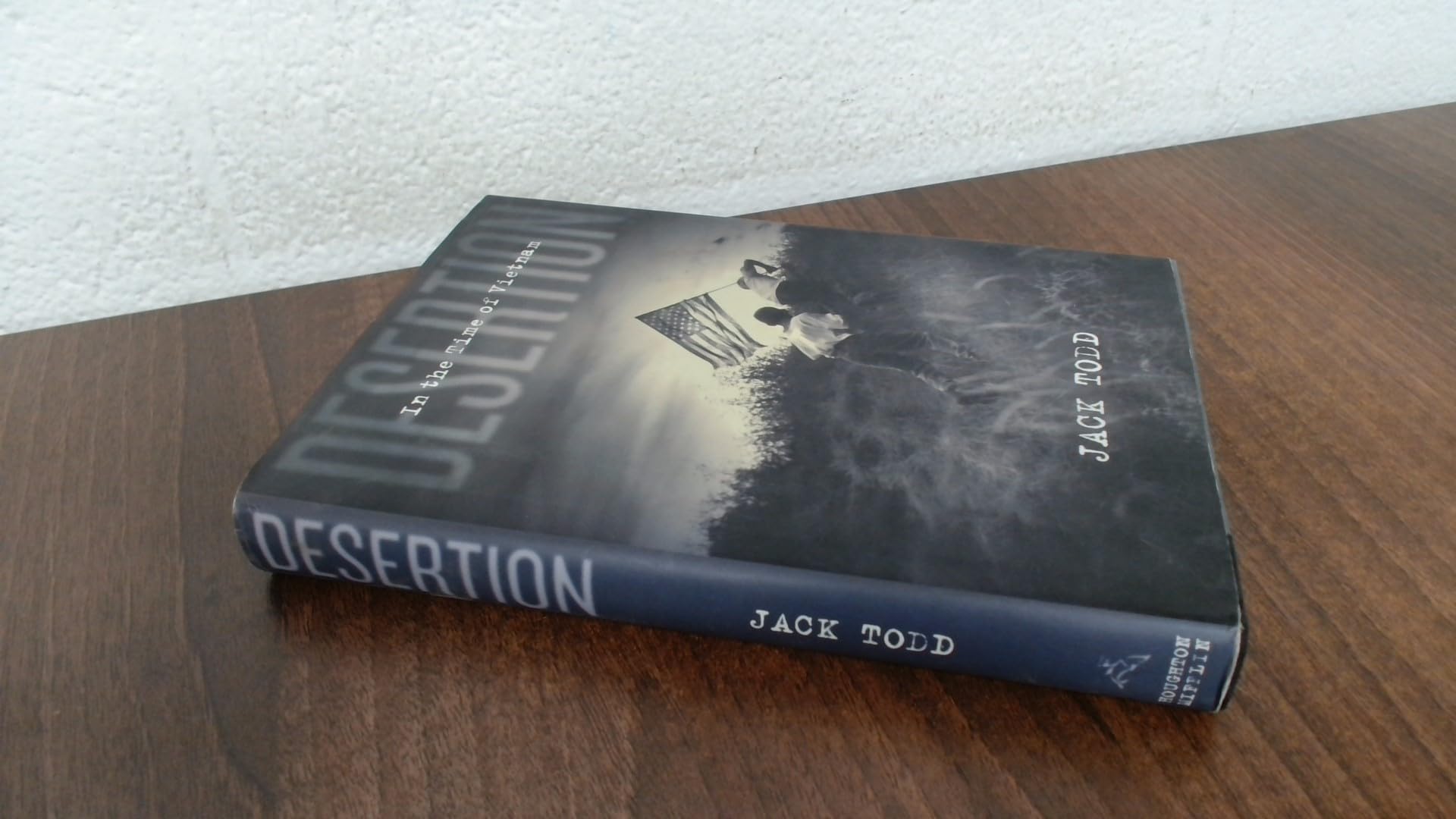



In 1969, Jack Todd was twenty-three and happy beyond his dreams. He had left behind a hardscrabble youth in a small Nebraska town, had an exciting and enviable job as a reporter for the Miami Herald, and was wildly in love with his beautiful Cuban-American girlfriend. As the war in Vietnam drew closer, he assumed that he would fight, as the men in his family had always fought, though he was increasingly troubled by America's role there. His oldest friend had just returned from Vietnam and was already showing signs of the war-caused trauma that would destroy him; he had seen and done things too terrible to describe. He pleaded with Jack to dodge the draft, to go to Canada. Nevertheless, Jack entered the army. He had almost completed his basic training when, on Christmas leave, he made an agonizing decision. By now deeply opposed to the war, he crossed the border into Canada, leaving behind his family, the girl he loved - and his beloved homeland. Now one of Canada's most successful journalists, Jack Todd is a remarkable writer of great power and vibrancy. It has taken him thirty years to come to terms with the guilt and shame of desertion, to break the silence, to tell this controversial, important, profoundly American story. In a dark century, when many "only obeyed orders," he chose not to. This is an intensely moving personal story told with searing honesty, passion, and literary verve, as well as an eloquent account of a tortured time in our nation's history. It is hard to put down, and impossible to forget. Jack Todd made a fateful decision in 1969. A farm boy from a time and place where the obligation to serve in the military was taken for granted, Todd had just completed basic training at an army post near Seattle when he opted to take a Vietnam-veteran friend's advice and slip across the border into British Columbia rather than risk his life fighting in an unpopular war. His life in Canada was by no means easy; he spent time on Skid Row among fellow deserters and draft evaders, many of them parasitical criminals, and, although he was a veteran journalist, he had to start from scratch at a Vancouver paper, slowly winning the acceptance of his colleagues. Todd renounced his American citizenship, which made him one of a handful of Vietnam-era deserters to have been ineligible for the general amnesty offered during Jimmy Carter's presidency--he could not even return to the United States for his mother's funeral. In this graceful memoir, Todd revisits what he calls his "absurd decision" to leave his country. Absurd, in part, because he later discovered he would not have been sent to Vietnam at all, but was instead slated to serve as a military journalist in Germany. For that decision he has many regrets, although he has clearly made a good life for himself in his adopted country. The cost was perhaps too great, though: "The effect of forced exile is felt not in any sudden tearing away but in the corrosive loss, over a period of time, of too many of the things that make you who you are." --Gregory McNamee Award-winning Montreal Gazette columnist Todd has written a moving memoir focusing on his decision to desert from the U.S. Army because of his opposition to the Vietnam War. Using flashbacks, Todd describes growing up in Scottsbluff, NE, son of a hard-nosed ex-fighter and horse-trainer father and sympathetic, pacifist mother. Drafted in his early twenties from a good job as a reporter for the Miami Herald, the antiwar Todd reluctantly went to basic training, then deserted while on leave. The book focuses on his experience in Canada as he moves from job to job to unemployment, attempting to write about his life and his decision. In a powerful conclusion, he talks about the death of his childhood friend, Sonny, who never recovered from his service in Vietnam. In spite of somewhat unconvincingly described love interests, Desertion is a powerful, well-written account. Highly recommended for all libraries. A.O. Edmonds, Ball State Univ., Muncie, IN Copyright 2001 Reed Business Information, Inc. Montreal Gazette columnist Todd followed an unusual path through the Vietnam years. Todd, a farm boy from Scottsbluff, Nebraska, volunteered from college for marine officer training but was discharged because of bad knees. He went back to the University of Nebraska, got radicalized, went to work for the Miami Herald , fell in love, and then got drafted in 1969. Todd hated the war but saw no alternative, so he did basic training at Fort Lewis, Washington. He decided he couldn't continue (though he'd likely have qualified as an army journalist), so he headed north and has been a Canadian citizen for most of the intervening decades. As a deserter, Todd faced special challenges on both sides of the border. In the early 1970s, he supported a valiant effort to write the great American novel by working for a chain of tabloid papers and wandered back and forth across Canada, looking for a place that felt like home. Becau