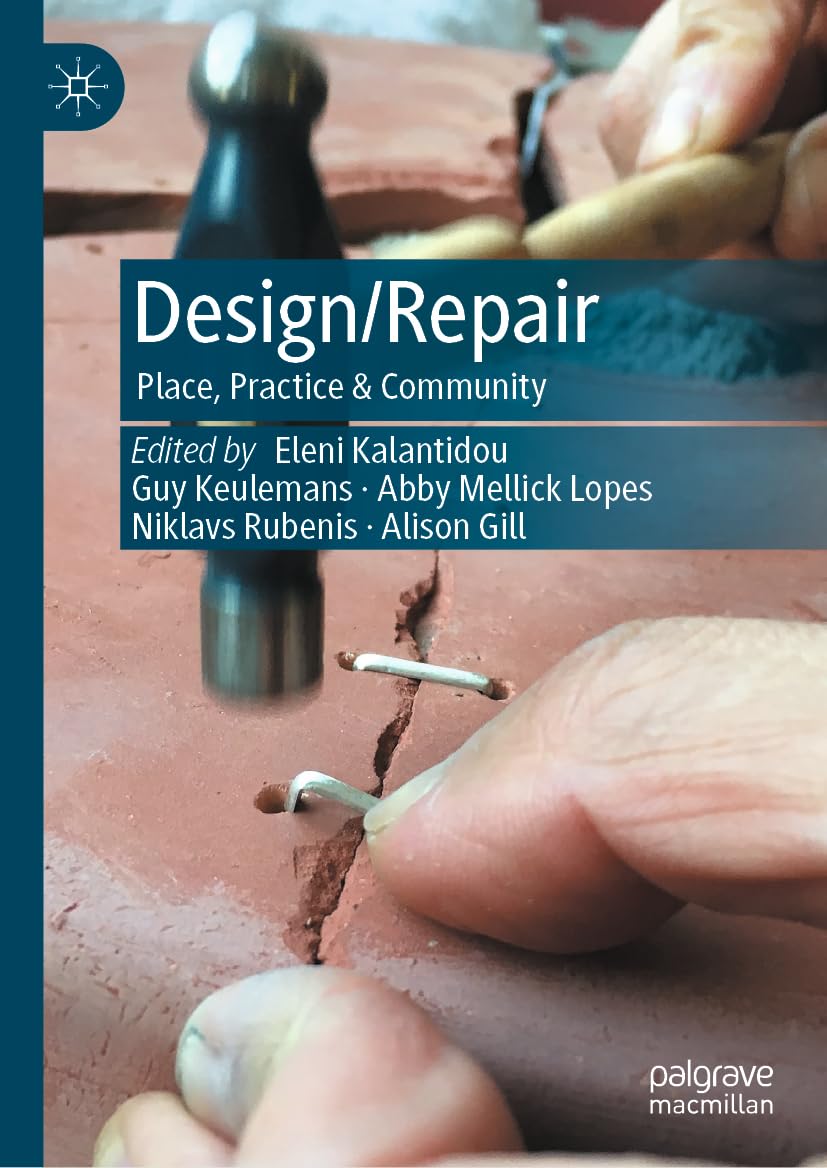



This collection of essays sheds light on repair as a disposition to material culture and a practice rooted in diverse sociocultural experiences. It provides an in-depth exploration of how repair manifests itself through the different lenses of governance, grassroots activism, transformative design and community-led initiatives. Most importantly, the chapters demonstrate how place-based approaches can reveal blueprints for social impact in circumstances of growing environmental and social precariousness. “Repair and design are important interventions into our socio-material culture―ones that have much potential to address the devastating challenges we face. This books highlights what can be unleashed when these practices are foregrounded and a wider conception of economic practice and subjectivity is embraced. Production and output, with its endpoint focus, are reframed by repair and flow. Agency is mobilized in unexpected places as the chapters illustrate. This is a hopeful and excitingly bold book. A must read for all of us wanting to reshape the material culture that has us shackled to overconsumption and environmental degradation.” (Katherine Gibson, Professor, Institute for Culture and Society, Western Sydney University, and author of “The end of capitalism (as we knew it): a feminist critique of political economy” (2006)) “This book fills an important and well-known gap in technology studies by thinking deeply about the connection between design and repair. If products aren’t designed to be repairable, they quickly become waste, and yet so many things in our human-built world are made with an almost anti-repair agenda. The impressive set of researchers in this volume do much to enrich our understanding about this issue both in terms of cultures and communities of repair and the role that design plays in these processes.” (Lee Vinsel, Associate Professor, Virginia Tech, co-founder of “The Maintainers”) This collection of essays sheds light on repair as a disposition to material culture and a practice rooted in diverse sociocultural experiences. It provides an in-depth exploration of how repair manifests itself through the different lenses of governance, grassroots activism, transformative design and community-led initiatives. Most importantly, the chapters demonstrate how place-based approaches can reveal blueprints for social impact in circumstances of growing environmental and social precariousness. Eleni Kalantidou is a design psychologist, researcher and educator at Griffith University. Her research investigates alternative models of behavioural change, repair, community resilience and social impact within conditions of climate change. She has conducted community-led repair projects in collaboration with the local government, national and international NGOs. Guy Keulemans is a designer, artist and curator researching repair, reuse, materiality and the environmental impacts of production and consumption. An Enterprise Fellow at the University of South Australia, his current research explores bioregionality and transformative design practices in partnership with industry. Abby Mellick Lopes is an Associate Professor in Design Studies at UTS. Abby’s research focuses on the role of design in addressing the impacts of climate change and supporting the transition to more sustainable urban cultures and economies through engaged research partnerships. She is part of federally-funded (ARC) research projects about waste economies and living with urban heat. Niklavs Rubenis is a designer and maker focused on craft, design, ethics and people. He has been involved with projects spanning community, non-profit, commercial and cultural institutions, and has had work presented and exhibited nationally and internationally. He is coordinator of design and object and furniture at the School of Creative Arts and Media, University of Tasmania. Alison Gill is an interdisciplinary design researcher and educator at Western Sydney University. Alison’s research in socio-material studies investigates pathways to more sustainable living by design, evident in publications about social practices of repair; alternative conceptions of use and consumption; deconstruction and slow fashion; and sustainable design education. Eleni Kalantidou is a design psychologist, researcher and educator at Griffith University. Her research investigates alternative models of behavioural change, repair, community resilience and social impact within conditions of climate change. She has conducted community-led repair projects in collaboration with the local government, national and international NGOs. Guy Keulemans is a designer, artist and curator researching repair, reuse, materiality and the environmental impacts of production and consumption. An Enterprise Fellow at the University of South Australia, his current research explores bioregionality and transformative design practices in partnership with industry. Abby Mellick Lopes is