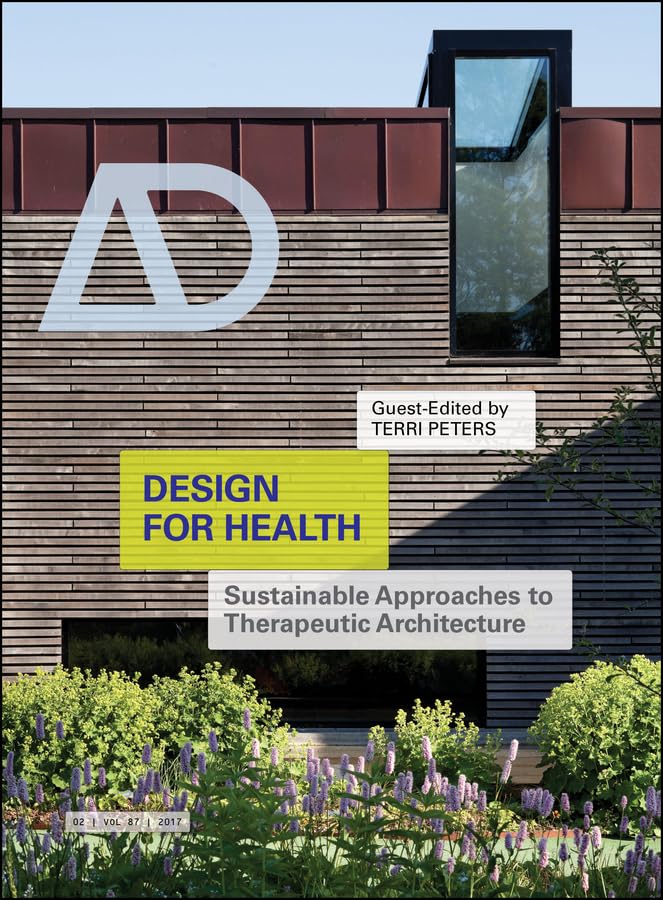
Design for Health: Sustainable Approaches to Therapeutic Architecture (Architectural Design)
$29.00
by Terri Peters



Design for Health: Sustainable Approaches to Therapeutic Architecture Guest-Edited by Terri Peters This issue of AD seeks out innovative and varied sustainable architectural responses to designing for health, such as: integrating sensory gardens and landscapes into the care environment; - specifying local materials and passive technologies; - and reinvigorating aging postwar facilities. Contributors include: Anne-Marie Adams, Sean Ahlquist, Giuseppe Boscherini, Robin Guenther, Charles Jencks, Richard Mazuch, Stephen Verderber, Featured architects: 100% Interior, Arup, C.F. Møller, Lyons, MASS Design Group, Mongomery Sisam Architects, Penoyre & Prasad "Serves as a timely, topical and thought-provoking reminder of the potential of our industry to significantly and tangibly improve the quality of people's lives through better buildings." (The NBS, July 2017) Our experience of hospitals and medical clinics is almost wholly determined by their architecture. The spatial and sensory qualities of our surroundings influence how we behave and relate to others, while also affecting our spiritual and physical wellbeing. It is proven that an abundance of daylight, access to fresh air and to low-stress uncluttered spaces aids the reduction of anxiety, elevates the mood and improves patients’ outcomes. Sustainability is permeating all areas of architecture, and designers are investigating the connections between patient experience, wellbeing and long-term thinking in healthcare design. This issue of AD seeks out innovative and varied sustainable architectural responses to designing for health, such as: integrating sensory gardens and landscapes into the care environment; specifying local materials and passive technologies; and reinvigorating ageing postwar facilities. Both qualitative and quantitative approaches to sustainability are explored. Design solutions range from those employing passive thermal strategies and recycled materials in construction to those giving careful consideration to the manner in which a structure is positioned on site and orientated. Each design makes its own unique interpretation of the sustainable brief. Drawing on international built examples that excel in combining the highest level of healthcare with an enlightened approach to architectural design, this AD highlights the importance of designing for the long term, creating inspiring spaces, and connecting healthcare to the wider community. Contributors include: Annmarie Adams, Sean Ahlquist, Giuseppe Boscherini, Robin Guenther, Charles Jencks, Richard Mazuch, and Stephen Verderber. Featured architects: 100% interior, Arup, CF Møller, Lyons, MASS Design Group, Montgomery Sisam Architects, and Penoyre & Prasad. Our experience of hospitals and medical clinics is almost wholly determined by their architecture. The spatial and sensory qualities of our surroundings influence how we behave and relate to others, while also affecting our spiritual and physical wellbeing. It is proven that an abundance of daylight, access to fresh air and to low-stress uncluttered spaces aids the reduction of anxiety, elevates the mood and improves patients’ outcomes. Sustainability is permeating all areas of architecture, and designers are investigating the connections between patient experience, wellbeing and long-term thinking in healthcare design. This issue of AD seeks out innovative and varied sustainable architectural responses to designing for health, such as: integrating sensory gardens and landscapes into the care environment; specifying local materials and passive technologies; and reinvigorating ageing postwar facilities. Both qualitative and quantitative approaches to sustainability are explored. Design solutions range from those employing passive thermal strategies and recycled materials in construction to those giving careful consideration to the manner in which a structure is positioned on site and orientated. Each design makes its own unique interpretation of the sustainable brief. Drawing on international built examples that excel in combining the highest level of healthcare with an enlightened approach to architectural design, this AD highlights the importance of designing for the long term, creating inspiring spaces, and connecting healthcare to the wider community. Contributors include: Annmarie Adams, Sean Ahlquist, Giuseppe Boscherini, Robin Guenther, Charles Jencks, Richard Mazuch, and Stephen Verderber. Featured architects: 100% interior, Arup, CF Møller, Lyons, MASS Design Group, Montgomery Sisam Architects, and Penoyre & Prasad. Terri Peters is a Canadian architect, writer and researcher now based in Toronto, who previously lived and worked in Denmark and the UK for 12 years. She has a broad network of multi-disciplinary collaborators, relating to sustainability research, building transformation, health and wellbeing, as well as the employment of new technologies. She is a Post-Doctoral researcher at the University of Toronto,