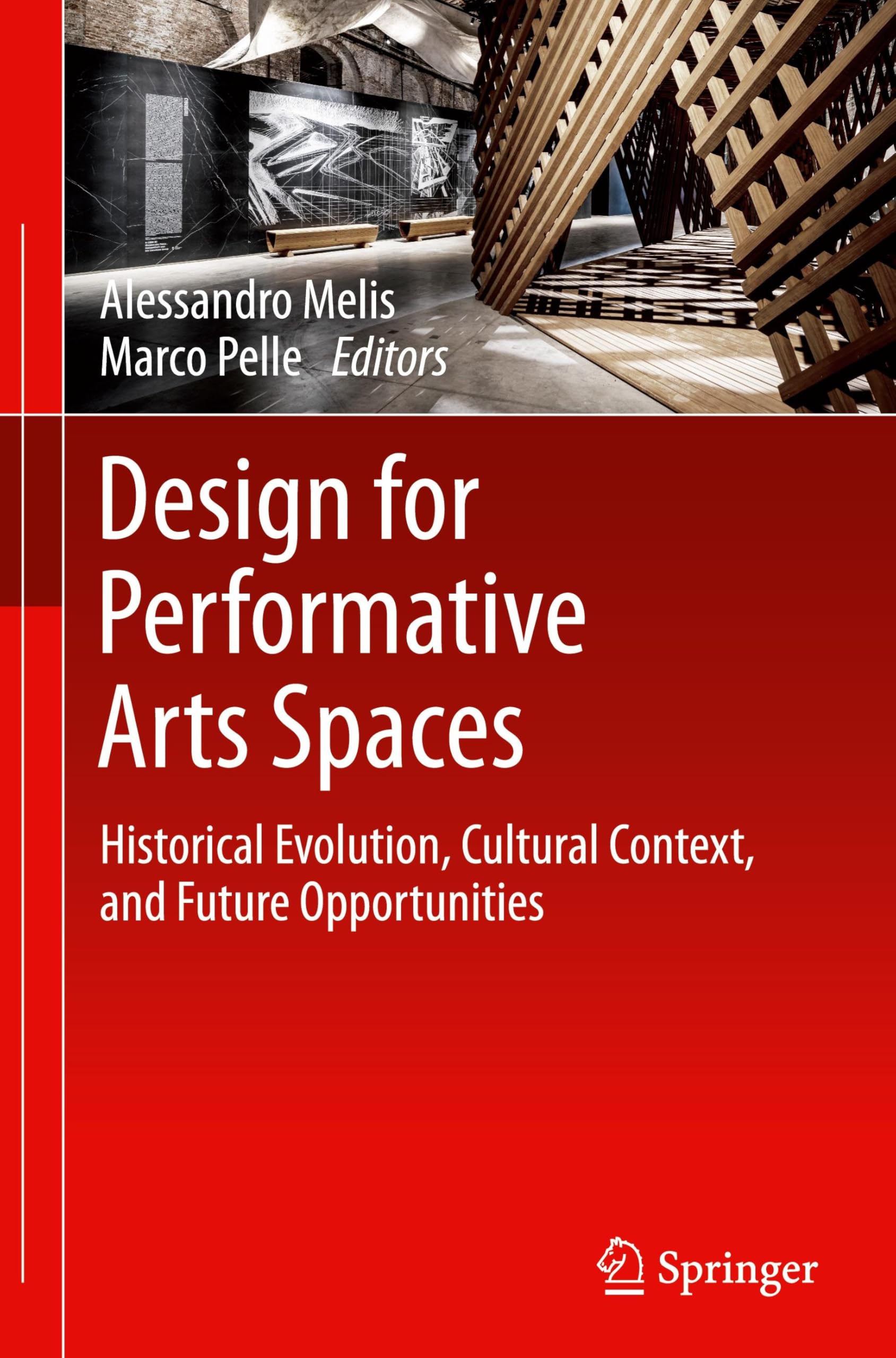
Design for Performative Arts Spaces: Historical Evolution, Cultural Context, and Future Opportunities
$109.99
by Alessandro Melis



This comprehensive book explores the multifaceted world of performative arts spaces. Part I establishes a strong foundation by tracing the historical evolution of these spaces, showcasing iconic examples, and emphasizing the importance of multidisciplinary collaboration within diverse cultural contexts. It also examines the relationship between dance, movement, and embodiment in performative spaces, highlighting their transformative power in times of global challenges. Part II takes readers on a visionary journey into the future, exploring the transformative potential of cutting-edge technologies. Chapters in this section discuss the interplay of digital arts and architecture, the integration of immersive technologies, adaptive environments, AI and machine learning, robotics, and digital fabrication. These innovations are explored in relation to their ability to enhance audience experiences, optimize performance spaces, and push the boundaries of creativity. Part III addresses the significant need for comprehensive resources in interior design, digital arts, performing arts, and disruptive technologies. It provides valuable insights for students and professionals alike, covering essential design principles, case studies of notable venues, and the role of performative arts spaces in promoting sustainability amid global crises. Overall, this book presents a holistic exploration of the most important aspects of performative arts spaces—blending historical context, architectural design, technological advancements, and educational perspectives. It is an essential resource for anyone interested in the dynamic interplay between architecture, design, and the performing arts. This comprehensive book explores the multifaceted world of performative arts spaces. Part I establishes a strong foundation by tracing the historical evolution of these spaces, showcasing iconic examples, and emphasizing the importance of multidisciplinary collaboration within diverse cultural contexts. It also examines the relationship between dance, movement, and embodiment in performative spaces, highlighting their transformative power in times of global challenges. Part II takes readers on a visionary journey into the future, exploring the transformative potential of cutting-edge technologies. Chapters in this section discuss the interplay of digital arts and architecture, the integration of immersive technologies, adaptive environments, AI and machine learning, robotics, and digital fabrication. These innovations are explored in relation to their ability to enhance audience experiences, optimize performance spaces, and push the boundaries of creativity. Part III addresses the significant need for comprehensive resources in interior design, digital arts, performing arts, and disruptive technologies. It provides valuable insights for students and professionals alike, covering essential design principles, case studies of notable venues, and the role of performative arts spaces in promoting sustainability amid global crises. Overall, this book presents a holistic exploration of the most important aspects of performative arts spaces—blending historical context, architectural design, technological advancements, and educational perspectives. It is an essential resource for anyone interested in the dynamic interplay between architecture, design, and the performing arts. Alessandro Melis , architect, artist, and curator, holds the distinguished position of the first Endowed Chair Professor at the New York Institute of Technology.In 2021, he was appointed curator of the Italian Pavilion at La Biennale di Venezia by the Italian Ministry of Culture.Since 2020, he has also served as an Ambassador of Italian Design for the Italian Ministry of Foreign Affairs.Melis has made significant contributions to research, as evidenced by over 200 publications, numerous citations in leading journals, and keynote lectures at prestigious institutions including the University of Cambridge, MoMA New York, the China Academy of Art, the Italian Cultural Institutes in London and New York, the Italian Trade Agency, and TEDx. He is the founding director of Heliopolis 21, an international architecture firm with offices in Italy, the United Kingdom, the United States, Germany, and Mexico. His work has been documented in several monographs, including Heliopolis 21 (Skira, 2022) and Alessandro Melis. Utopic Real World (D Editore, 2021). Among his most notable projects are the Stella Maris Hospital, Italy’s only facility dedicated exclusively to children with autism, and the ongoing construction of the Trentino Fair. His designs for the Polo della Memoria SM1938—a university hub located at the Memorial of the Shoah in Pisa—and the Municipal Library of Peccioli have been recognized by the Ministry of Culture as among the most significant examples of Italian architecture produced after 1945. Marco Pelle is an internationally acclaimed choreographer and the resident