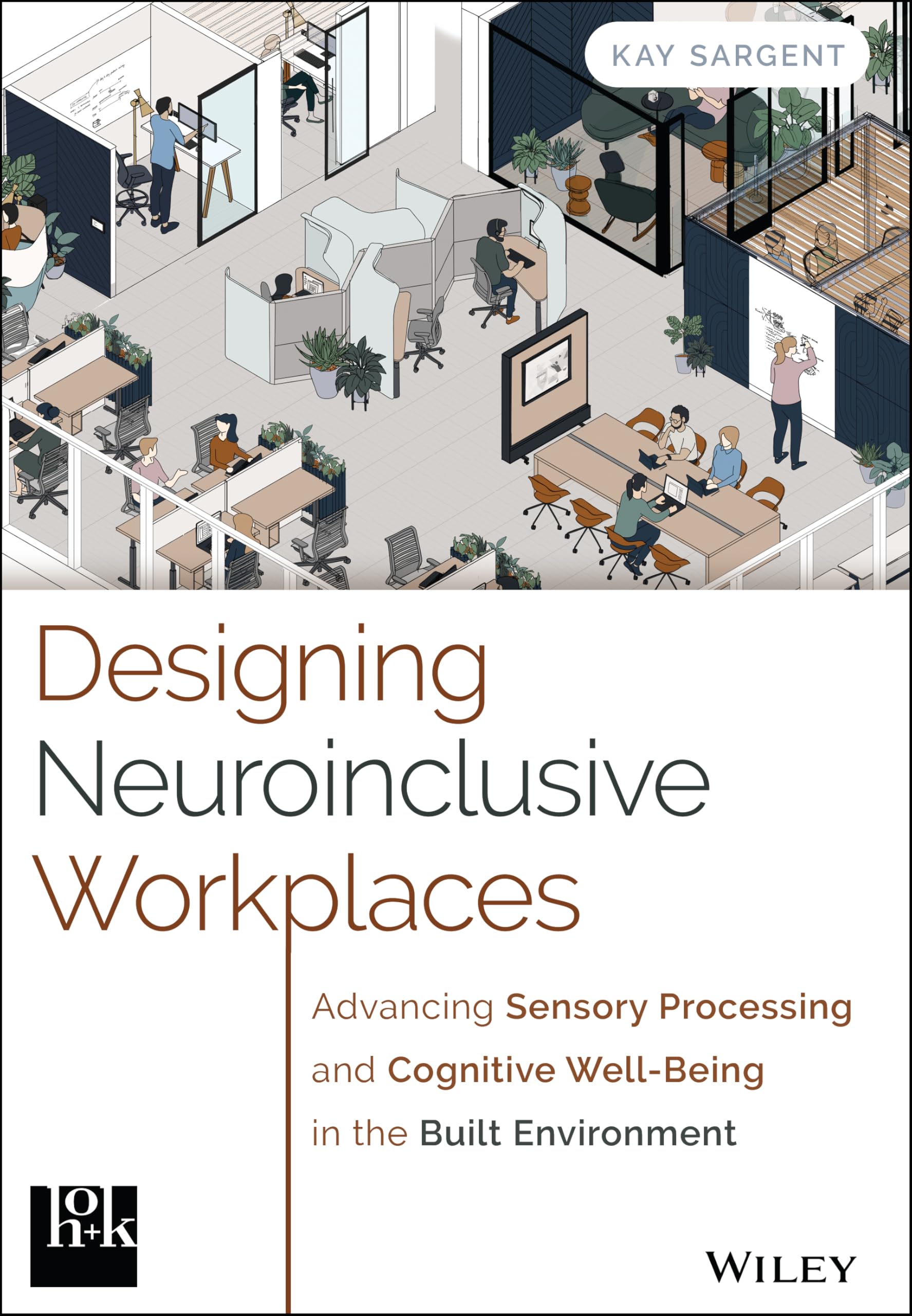
Designing Neuroinclusive Workplaces: Advancing Sensory Processing and Cognitive Well-Being in the Built Environment
$29.00
by Kay Sargent



Assist the growing neurodivergent population with strategic adjustments to physical spaces Designing Neuroinclusive Workplaces: Advancing Sensory Processing and Cognitive Well-Being in the Built Environment explores how to employ strategic spatial zoning and sequencing, sensory zones, patterns, textures, colors, lighting, and soundscaping to create spaces that cater to the various sensory needs of neurodivergent individuals, who now make up 1/5 of the world's population. This group possesses unique strengths that can be harnessed if they are in environments designed to be welcoming and supportive of their needs. Written by Kay Sargent of HOK, a leader in the field of workplace design and architecture, this groundbreaking book argues that even minor adjustments to physical spaces can drive giant improvements in cognitive function, fulfillment, and belonging for both neurodivergent and neurotypical individuals. Some of the topics explored in this book include: Reimagining the design of offices and workplaces through a neuroinclusive lens - Optimizing spaces to accommodate hypersensitivities across all six work modalities, ranging from focused tasks to collaborative endeavors - Inclusion practices to boost productivity in the workplace and transform high-stress environments into more welcoming and functional spaces for everyone Filled with practical, actionable strategies for designing spaces that embrace and empower individuals across the neurodiversity spectrum, Designing Neuroinclusive Workplaces is a timely, essential read for all forward-thinking HR, DEI, and accessibility teams, as well as architects and interior designers. “The needs of the future workforce are not neurotypical, but will include wide ranging neurotypes, so the link between the design of workplaces, health, and wellbeing is critical to address. Kay Sargent has been a passionate advocate shining a light on this critical issue in the industry highlighting why designing for neurotypes is good for people and good for business. Combining the insights of neuroscience, research, evidence, and the expertise of design, this book sets out considerations and recommendations for those who are building, designing, and operating offices―a holistic approach and must-read for the creation of enabling work environments, where all people can feel supported to thrive.” ― Despina Katsikakis , Executive Partner & Global Head, Total Workplace Consulting, Cushman & Wakefield “This book could not be more timely and important―a practical and progressive guide to designing workplaces for a neurodiverse workforce, written by one of the world’s leading experts in the field. Kay Sargent demonstrates how neuroinclusive design can make a real difference, going beyond a duty of compliance to creating a sense of belonging.” ― Jeremy Myerson , Professor Emeritus, Royal College of Art; Director, Worktech Academy “The time has come to understand the importance of neuroinclusive workspaces. As founder of the International Well Building Institute, I am thrilled to see cognitive well-being get such detailed exposure, and to earn its due attention as a critical component of indoor health. This amazing body of work is a true benchmark, and will help advance Industry understanding and awareness for years to come.” ― Paul Scialla , Founder and CEO, Delos; Founder, International Well Building Institute “As we envision the workplace of tomorrow, it's imperative that we prioritize the sensory elements within these spaces, recognizing their profound impact on the well-being, productivity, and engagement of our teams. The sensory environment―encompassing factors like lighting, acoustics, textures, and overall ambiance―can significantly influence how individuals feel and perform in their daily tasks. HOK’s pioneering research on neuroinclusive design offers a robust foundation for creating environments that are not only functional but also attuned to the diverse sensory needs of all employees. By integrating scientific principles and evidence-based strategies, we can craft spaces that are not just visually appealing but also supportive of mental and emotional well-being, ultimately fostering a more inclusive and effective workplace for everyone.” ― Reniér André Saayman , Head of Global Corporate Real Estate Services, The World Bank “The information covered in this book is relevant and timely in addressing the need to design workplaces that foster innovation, productivity, and comfort for all users. Addressing the environmental needs of people with neurological and sensory differences is often overlooked and misunderstood. This book helps bridge this gap through thoughtful and practical recommendations.” ― Dr. Kristi Gaines , Associate Dean in the Graduate School and Professor and Chair in the Department of Design, Texas Tech University “Kay Sargent and HOK bring a much-needed and innovative perspective into designing workplaces for the future. For too long a one-size-fits-all