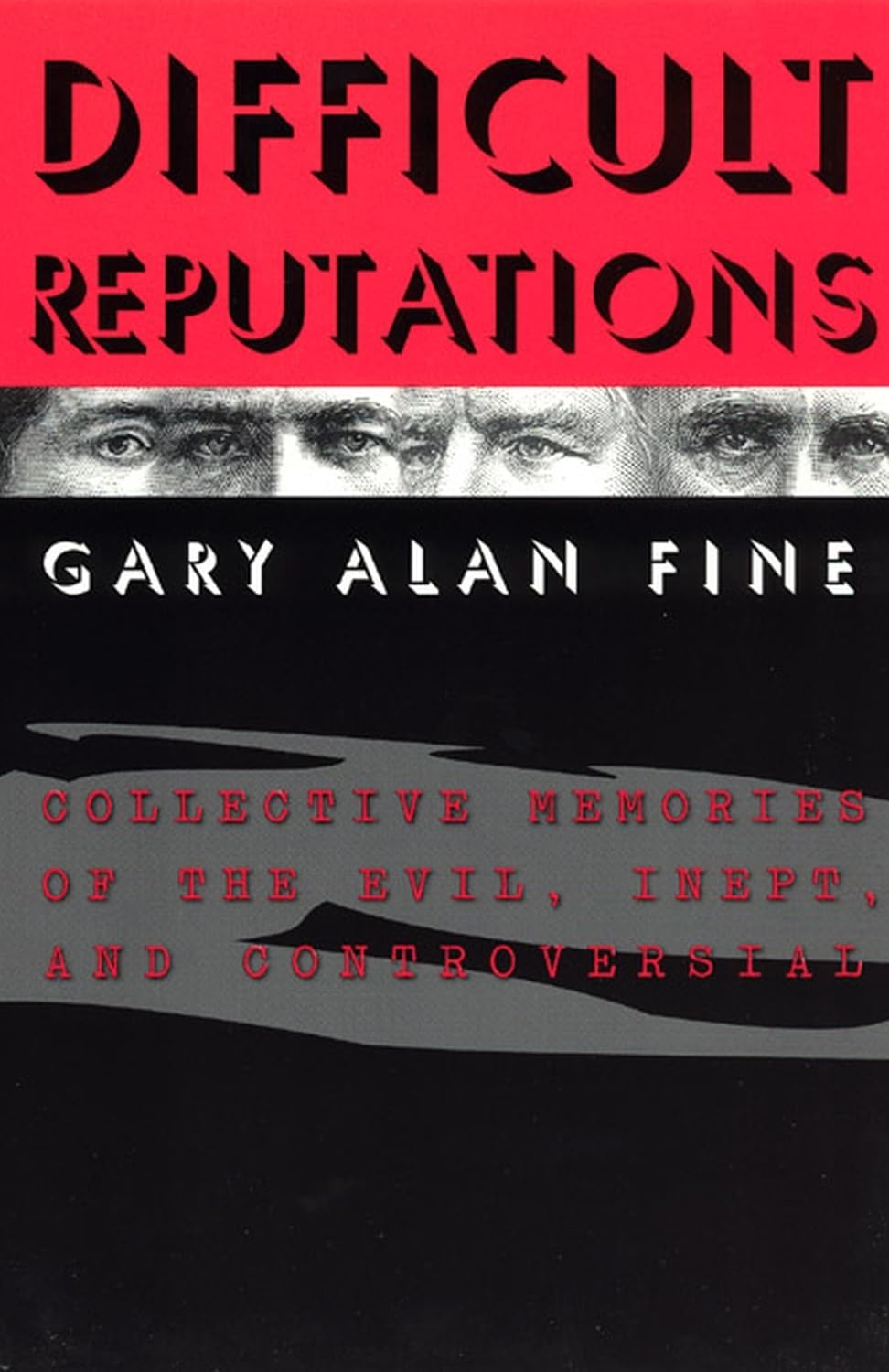
Difficult Reputations: Collective Memories of the Evil, Inept, and Controversial
$35.00
by Gary Alan Fine



We take reputations for granted. Believing in the bad and the good natures of our notorious or illustrious forebears is part of our shared national heritage. Yet we are largely ignorant of how such reputations came to be, who was instrumental in creating them, and why. Even less have we considered how villains, just as much as heroes, have helped our society define its values. Presenting essays on America's most reviled traitor, its worst president, and its most controversial literary ingénue (Benedict Arnold, Warren G. Harding, and Lolita), among others, sociologist Gary Alan Fine analyzes negative, contested, and subcultural reputations. Difficult Reputations offers eight compelling historical case studies as well as a theoretical introduction situating the complex roles in culture and history that negative reputations play. Arguing the need for understanding real conditions that lead to proposed interpretations, as well as how reputations are given meaning over time, this book marks an important contribution to the sociologies of culture and knowledge. We take reputations for granted. Believing in the bad and the good natures of our notorious or illustrious forebears is part of our shared national heritage. Yet we are largely ignorant of how such reputations came to be, who was instrumental in creating them, and why. Even less have we considered how villains, just as much as heroes, have helped our society define its values. Presenting essays on Fatty Arbuckle, Herman Melville, Benedict Arnold, Warren Harding, John Brown, Sinclair Lewis, Henry Ford, and Vladimir Nabokov, Gary Fine explores the complex roles in culture and history that difficult reputations play.
We take reputations for granted. Believing in the bad and the good natures of our notorious or illustrious forebears is part of our shared national heritage. Yet we are largely ignorant of how such reputations came to be, who was instrumental in creating them, and why. Even less have we considered how villains, just as much as heroes, have helped our society define its values. Presenting essays on Fatty Arbuckle, Herman Melville, Benedict Arnold, Warren Harding, John Brown, Sinclair Lewis, Henry Ford, and Vladimir Nabokov, Gary Fine explores the complex roles in culture and history that difficult reputations play. We take reputations for granted. Believing in the bad and the good natures of our notorious or illustrious forebears is part of our shared national heritage. Yet we are largely ignorant of how such reputations came to be, who was instrumental in creating them, and why. Even less have we considered how villains, just as much as heroes, have helped our society define its values. Presenting essays on Fatty Arbuckle, Herman Melville, Benedict Arnold, Warren Harding, John Brown, Sinclair Lewis, Henry Ford, and Vladimir Nabokov, Gary Fine explores the complex roles in culture and history that difficult reputations play. Gary Alan Fine is a visiting scholar at Emory University in Atlanta and the James E. Johnson Professor Emeritus at Northwestern University. He is the author of Fair Share: Senior Activism, Tiny Publics, and the Culture of Resistance, published by the University of Chicago Press.
We take reputations for granted. Believing in the bad and the good natures of our notorious or illustrious forebears is part of our shared national heritage. Yet we are largely ignorant of how such reputations came to be, who was instrumental in creating them, and why. Even less have we considered how villains, just as much as heroes, have helped our society define its values. Presenting essays on Fatty Arbuckle, Herman Melville, Benedict Arnold, Warren Harding, John Brown, Sinclair Lewis, Henry Ford, and Vladimir Nabokov, Gary Fine explores the complex roles in culture and history that difficult reputations play. We take reputations for granted. Believing in the bad and the good natures of our notorious or illustrious forebears is part of our shared national heritage. Yet we are largely ignorant of how such reputations came to be, who was instrumental in creating them, and why. Even less have we considered how villains, just as much as heroes, have helped our society define its values. Presenting essays on Fatty Arbuckle, Herman Melville, Benedict Arnold, Warren Harding, John Brown, Sinclair Lewis, Henry Ford, and Vladimir Nabokov, Gary Fine explores the complex roles in culture and history that difficult reputations play. Gary Alan Fine is a visiting scholar at Emory University in Atlanta and the James E. Johnson Professor Emeritus at Northwestern University. He is the author of Fair Share: Senior Activism, Tiny Publics, and the Culture of Resistance, published by the University of Chicago Press.