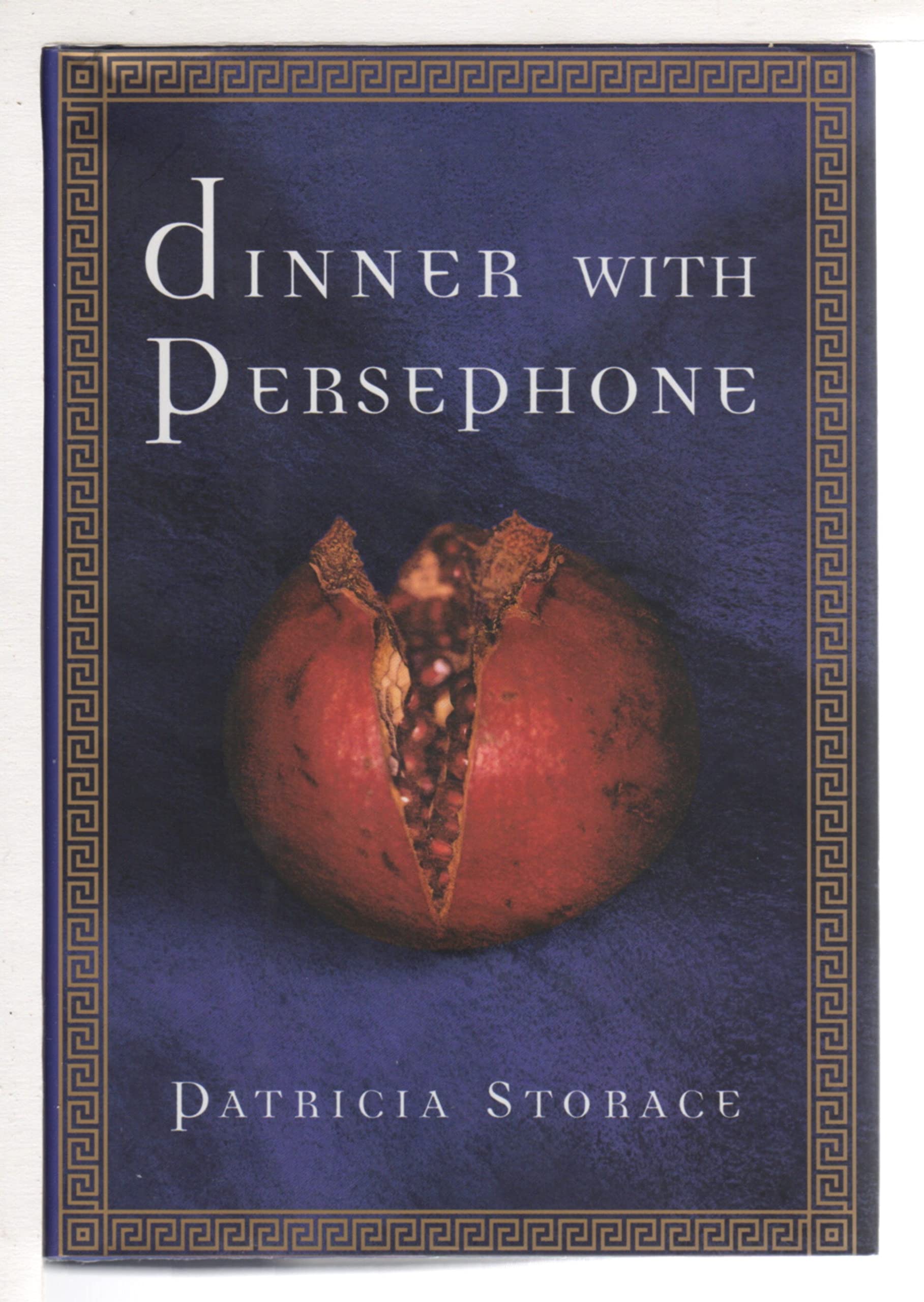



With winning detail and infectious humor, award-winning poet and essayist Patricia Storace magically conjures up noisy, anarchist cities and quiet, idyllic towns and harbors where the unseen worlds of the past--the Roman, the Byzantine, the Ottoman--continuing to make thier presence felt. For many, Greece is a land lost in time. It conjures up images of the looming Parthenon with its pillars of marble and the timeless whitewashed buildings of its parched islands glinting against a backdrop of the crystal blue Mediterranean. But ask about contemporary Greece and most people draw a blank. In Dinner with Persephone , poet Patricia Storace does a compelling job of filling in this empty canvas. She conjures a country where history and modernity coexist in often surprising ways, and with the past as an ineluctable backdrop, Storace paints in the everyday details that bring the country and its people vividly to life. "I lived in Athens, at the intersection of a prostitue and a saint," says Storace in what will probably be the most quoted line in book reviews this fall. Storace, a poet (Heredity, LJ 5/1/87) and contributor to the New York Review of Books, moved to Athens for a year of thoughtful reflection that resulted in this fine, absorbing book. Able to speak Greek, Storace moves easily around the city, relating little details of Athenian life and custom ("there is a balcony etiquette I must master," "the Greeks scowl theatrically, implacably, since a smile is not considered an impressive facial expression") and just as easily through Greek history and culture, revealing a breadth of learning that is impressive. The result is neither travelog (though we get plenty of vivid details, like the "glowing lemon" falling like a star on her dining table) nor memoir (though the book is enriched with Storace's personal insights) but a fine cultural study of a country whose magnificent past contrasts painfully with contemporary surliness, embattled pride, and a violence toward women that Storace remarks on throughout. This is the sort of book that defines the pleasure of reading. Highly recommended.?Barbara Hoffert, "Library Journal" Copyright 1996 Reed Business Information, Inc. Most Americans know more about ancient than modern Greece, a shortcoming Storace hopes to remedy with her illuminating, dazzlingly poetic, and very funny account of her experiences living for a year in this much mythologized and misunderstood land. Storace describes everything from nosy neighbors to a winy lunch and jolting bus ride with splendid animation. She knows that there's something inherently amusing in her attempts to converse in Greek, a language that so intrigues her with its complexities and contrariness that she pauses often to describe examples of hilarious linguistic confusion, including an obscene phone call. Storace is consistently shrewd and vivacious, gliding from the minutiae of her days and nights to arresting discussions of Greece's "preoccupation with dual natures of all kinds." She improvises on this theme in anecdotes that reflect the country's pairing of "Greek and Turk, ancient and modern, Roman and Byzantine, East and West, Christian and polytheist." Storace's sparkling chronicle is like a fountain on a sunny day: bright, melodic, and entrancing. Donna Seaman Poet and essayist Storace creates a lively, richly textured, anecdotal synthesis of the glorious--and inglorious--modern Greece. Fending off aggressive Greek men, negotiating with near-comic bureaucracies, visiting the spectacular Greek islands, Storace insinuates herself into quotidian Grecian life--all the while recording a wryly perceptive impression of the land of constant disputation and anomaly. She finds a people who speak of Alexander the Great in the present tense and who blame Coca-Cola for stealing the Olympic Games. Distressing for Storace is the pervasive subordination of women (TV programs, she notes, frequently feature knocking women about as a prelude to love-making); yet the society is also one of maternal worship, and Storace encounters a surprising tolerance for transvestism. Beyond its sexual contradictions, however, Storace perceives a counterintuitive cultural layering, a people whose seemingly conflicting Classical, Roman, Byzantine, and Ottoman influences survive in unremarked combination. (Writing of the language from hymns heard at a Lenten ceremony honoring the Virgin: ``Like Persephone, Mary is a divine bride, like the Demeter of the Orphic hymns, she is . . . the divine nursing mother . . . like Hecate, Athena and Tyche, she is the defender of a city.'') Added to this book's wide breadth of history, philosophy, and language are intimately drawn portraits of the countryside and its inhabitants. Storace cruises to the islands of myth, such as Andros and Naxos; visits cemeteries with life-size stone tableaux; attends a lavish wedding (noting that she can never be married in the Greek sense, the word for ``marriage'' being pandremeni, or