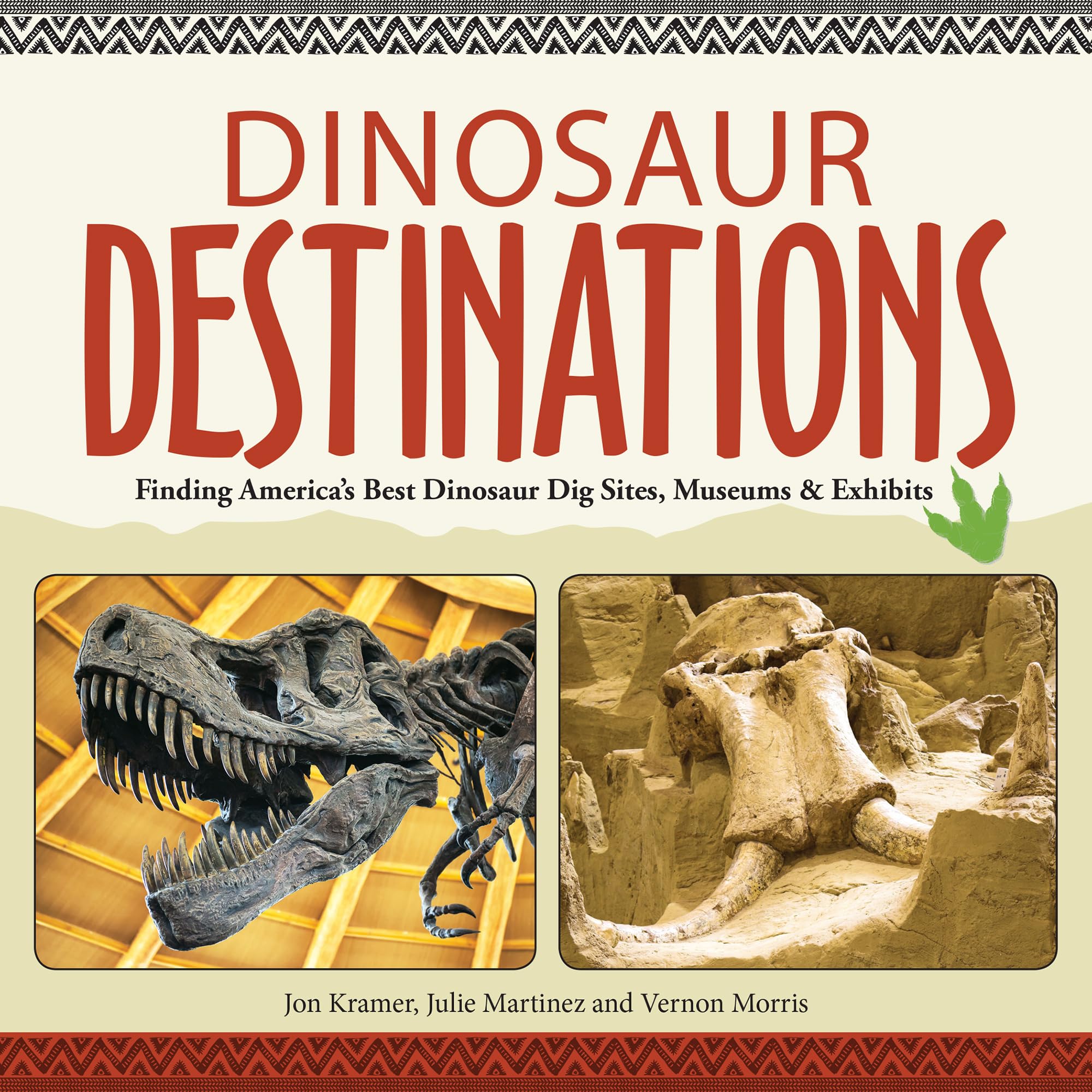
Dinosaur Destinations: Finding America's Best Dinosaur Dig Sites, Museums and Exhibits
$10.66
by Jon Kramer



When it comes to dinosaurs and other fascinating fossils, the U.S. has it all, from Tyrannosaurus rex and Triceratops to Stegosaurus and Brachiosaurus . Dinosaur Destinations, by Jon Kramer, Julie Martinez, and Vernon Morris, will help you find the best dinosaur sites near you and across the country. Visit a dinosaur dig site or a famous dinosaur track siteand even make your own cast of fossilized tracks! With details about the nation's best dinosaur-related locales, you'll learn what fossils have been found at or near each place, what kids will enjoy about each site, contact information and more. Plus, this field guide to extinct creatures introduces each species and includes their former range maps and fun facts. Dinosaur Destinations features: The most famous dinosaur dig sites, track sites and fossil locales in the U.S., including a few that allow visitors to participate in real dinosaur digs Locations with unique opportunities for dinosaur fans, such as venues that allow you to touch real dinosaur fossils Fascinating facts about the most famous dinosaurs and other prehistoric creatures Notable non-dinosaur fossil sites and species, such as pteranodons, plesiosaurs, mammoths, and more By the time he was four, Jon was digging fossils from Calvert Cliffs along Chesapeake Bay, unearthing fossil shark teeth from the famous Miocene sediments. His parents encouraged his passions as he was raised in the family rock and gem business. Jon is a graduate of the University of Maryland, where he founded the Geology Club and led field trips across the US in search of fossils. As an intern at the Vertebrate Paleontology Lab at the Smithsonian Institution, Jon helped prepare and assemble dinosaurs and fossil mammals for display in the exhibit halls. While there he developed relationships with leading paleontologists around the world and with many has authored numerous academic papers on a variety of fossil subjects. Jon founded Potomac Museum Group as a natural outgrowth of his museum experience and business background. During its 30-year heyday PMG dug fossils around the world and created traveling educational exhibits which toured North America for two decades. PMG also maintained a dinosaur dig site in Wyoming for nearly ten years starting in the late 1980s. These days Jon continues his paleontological passion, digging fossils and supporting research. Jon and his wife Julie regularly donate specimens to museums, universities, schools, and education groups. Black Mesa Dinosaur Track Site ABOUT THE SITE: You might be thinking that because this site is way out in the boonies in Oklahoma, all you’ll see is cows, grass, and cropland. But then you realize you’re a dinosaur hunter and you don’t really care what’s on view today; it’s what you can see from 100 million years ago that really counts. Located near Black Mesa, these famous dinosaur tracks have been preserved in sandstone next to Carrizo Creek. They were originally discovered in the 1980s, with a total of 47 footprints present. Unfortunately, many have weathered away, and only a third of the original tracks are visible today. The dinosaur tracks are located on private property, but happily, viewing them is allowed during daylight hours. (The above photo is from a professional photographer and was taken with permission.) A Slip in the Mud Location: Near Kenton, Oklahoma. Type of Site: Dinosaur track site. Age: 100 million years. Site Rating: 3 stars Digging: No digging or collecting allowed. For the Kids: See the gift shop note. Also in the Area: Black Mesa State Park and Black Mesa Preserve are both nearby. The state park boasts camping and recreation opportunities, and the preserve protects over 1,600 acres of wild, rugged land. Contact Info: This site is located in a remote area, so be sure to visit the website for detailed directions. Site Details: www.travelok.com/ listings/view.profile/id.2245 GPS: 36.938961 N, -102.960866 W All dinosaur tracks are interesting, but a few of the tracks here have drawn scrutiny from scientists because they were deeper than the others and had unusual patterns. Puzzling out exactly what happened took some work, but the current consensus is that a dinosaur was walking in a muddy area and slipped, causing its foot to sink in more than in the other tracks. It’s not clear what species left behind the track, but from the footprint, it’s a good bet that it was a theropod. Theropods are a large group of bipedal, carnivorous dinosaurs that included Tyrannosaurus rex , so just be glad you weren’t here on the day the tracks were made. When you visit the area, please remember that this is private property and respect the land and the tracks accordingly. Gift Shop Finds: There is no gift shop here, but at nearby Black Mesa Preserve, you can bag something else. The preserve is home to the highest point in Oklahoma (4,973 feet), and this is a great way to introduce kids to “high-pointing,” the