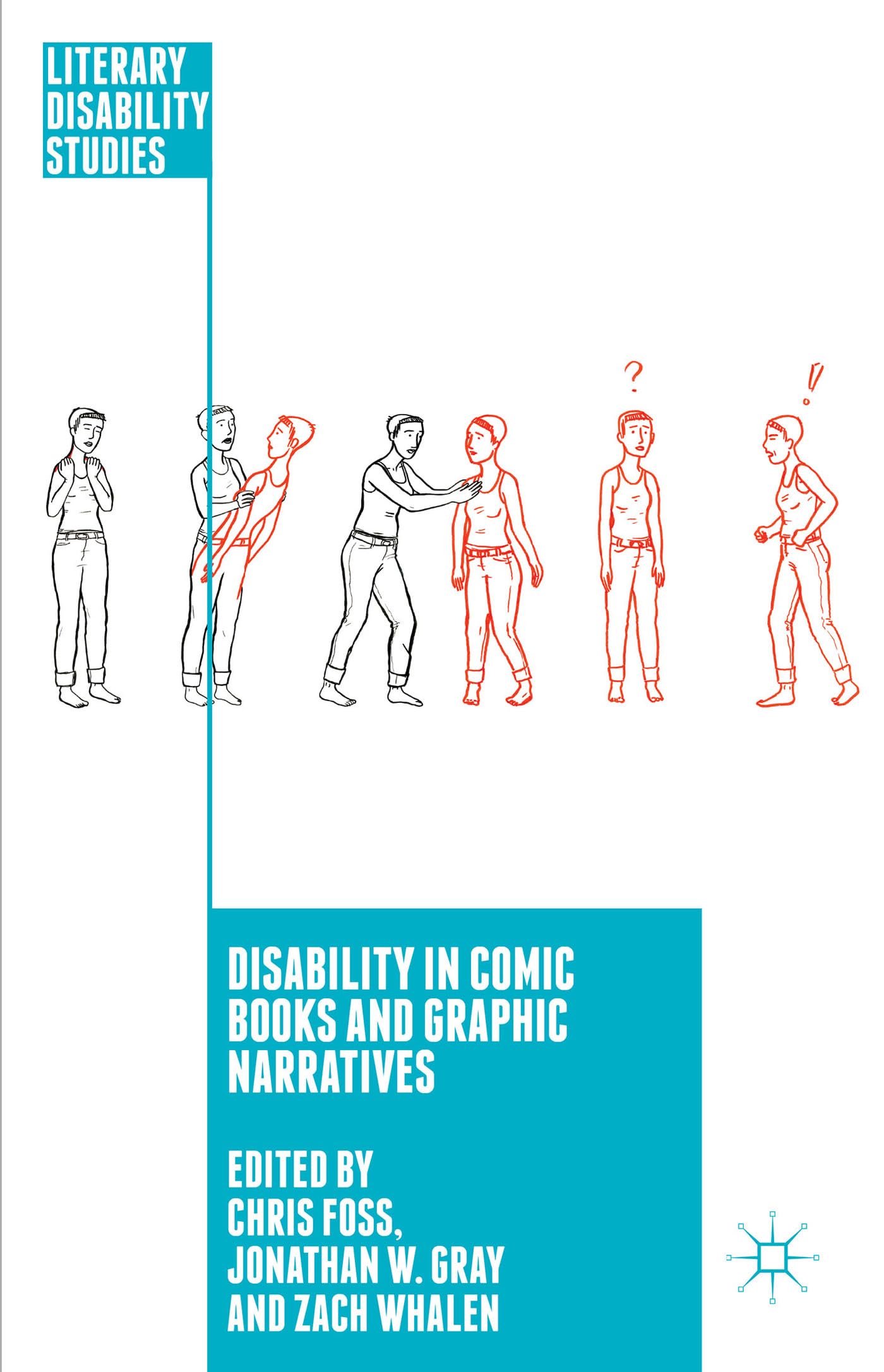



Disability in Comic Books and Graphic Narratives invites readers to consider both canonical and alternative graphic representations of disability. Some chapters focus on comic superheroes, from lesser-known protagonists like Cyborg and Helen Killer to classics such as Batgirl and Batman; many more explore the amazing range of graphic narratives revolving around disability, covering famous names such as Alison Bechdel and Chris Ware, as well as less familiar artists like Keiko Tobe and Georgia Webber. The volume also offers a broad spectrum of represented disabilities: amputation, autism, blindness, deafness, depression, Huntington's, multiple sclerosis, obsessive-compulsive disorder, speech impairment, and spinal injury. A number of the essays collected here show how comics continue to implicate themselves in the objectification and marginalization of persons with disabilities, perpetuating stale stereotypes and stigmas. At the same time, others stress how this medium simultaneously offers unique potential for transforming our understanding of disability in truly profound ways. “This collection of essays can undoubtedly serve as a useful entry into both the fields of disability studies in general and disability in comic books in particular. … the essays manage to provide a variety of insights into genres ranging from personal memoir to superhero comics. … the collection shows the wide applicability of disability studies that could be useful not only to scholars of comics books, but also to experts of children’s literature and visual arts.” (Nikola Novaković, Libri & Liberi, Vol. 10 (1), 2021) “Foss (Mary Washington), Gray (CUNY), and Whalen (Mary Washington) offer an ambitious cross-disciplinary collection bringing disability studies theories to bear on the burgeoning genre of graphic literature. … The work is useful for several disciplines including disability studies, graphic literature, psychology, and popular culture. Summing Up: Recommended. Upper-division Undergraduates through faculty.” (M. F. McClure, Choice, Vol. 54 (6), February, 2017) “Foss, Gray, and Whalen provide comics scholars, as well as those located in such related fields as children’s literature and visual rhetoric, the opportunity to think critically about key issues in disability studies and their particular representation in hybrid visual-verbal texts. … This collection captures the urgency of the intersection of comics and disability, and the absence of non-American comics texts suggests an opportunity for the discussion to continue developing further through various national and cultural perspectives.” (Charles Acheson, The Lion and the Unicorn, Vol. 41 (1), January, 2017) Contents Acknowledgements ix Notes on Contributors x Foreword xv Rosemarie Garland-Thomson 1 Introduction: From Feats of Clay toNarrative Prose/thesis 1 ZachWhalen, Chris Foss, and Jonathan W. Gray 2 Mutable Articulations: Disability Rhetoricsand the Comics Medium 18 JayDolmage and Dale Jacobs 3 "when you have no voice, you don't exist"? Envisioning Disability in David Small's Stitches 40 Christina Maria Koch 4 The Hidden Architecture of Disability: ChrisWare's Building Stories 59 Todd A. Comer 5 Standing Orders: Oracle, Disability, andRetconning 81 José Alaniz 6 DrawingDisability: Superman, Huntington's, and the Comic Form in It's a Bird... 109 Mariah Crilley 7 Reading in Pictures: Re-Visioning Autismand Literature through the Medium of Manga ChrisFoss 131 8 Graphic Violence in Word and Image:Re-Imagining Closure in The Ride Together 152 ShannonWalters 9 Why Couldn't You Let Me Die?: Cyborg,Social Death, and Narratives of Disability 172 JonathanW. Gray 10 "You Only Need Three Senses for This": TheDisruptive Potentiality of Cyborg Helen Keller 193 LaurieAnn Carlson 11 Cripping the Bat: Troubling Images of Batman 213 DanielPreston 12 Breaking Up [at/with] Illness Narratives 234 KristenGay 13 T