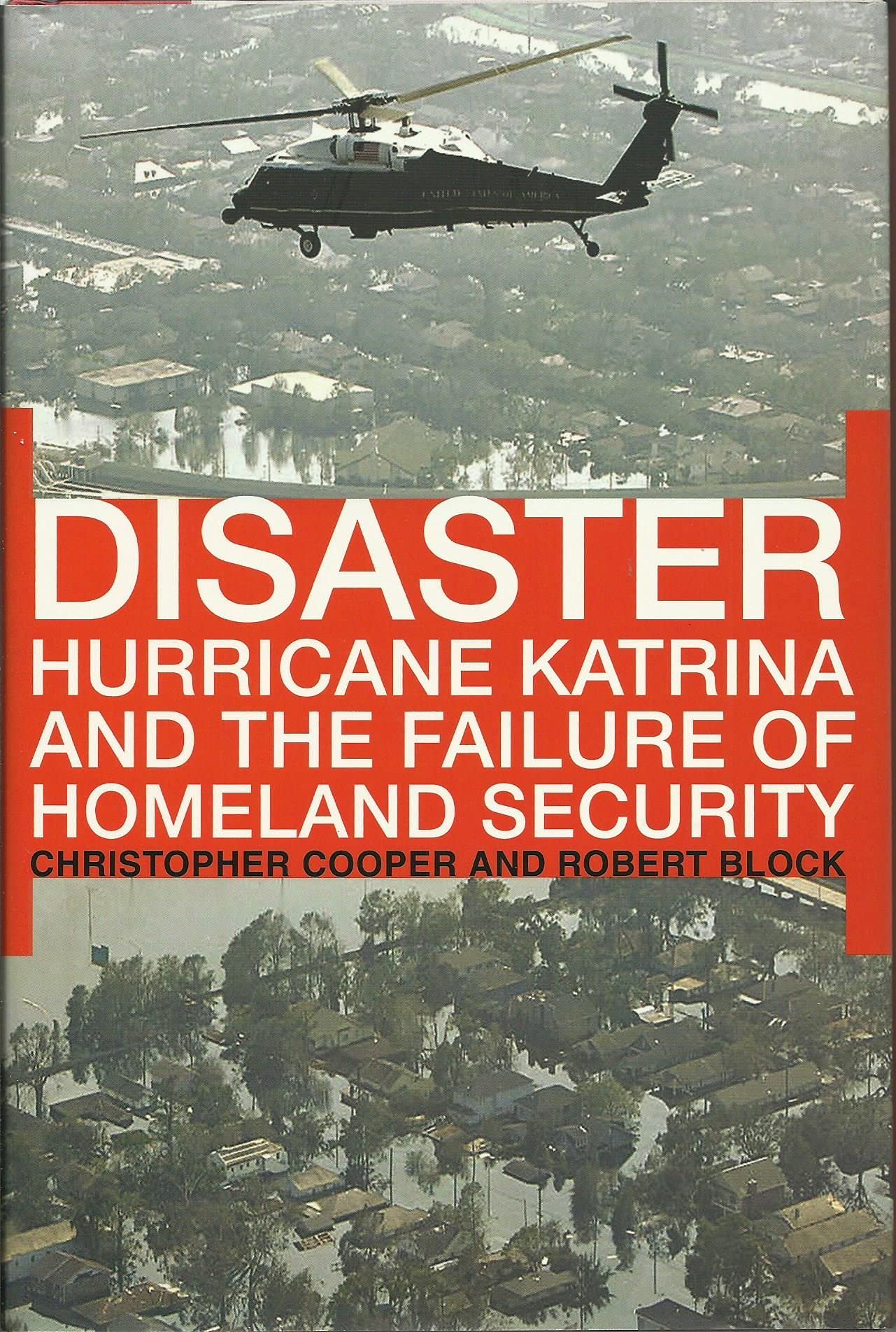



Based on exclusive interviews, the inside story of how America's emergency response system failed and how it remains dangerously broken When Hurricane Katrina roared ashore on the morning of August 29, 2005, federal and state officials were not prepared for the devastation it would bring--despite all the drills, exercises, and warnings. In this troubling exposé of what went wrong, Christopher Cooper and Robert Block of The Wall Street Journal show that the flaws go much deeper than out-of-touch federal bureaucrats or overwhelmed local politicians. Drawing on exclusive interviews with federal, state, and local officials, Cooper and Block take readers inside the Federal Emergency Management Agency and the Department of Homeland Security to reveal the inexcusable mismanagement during Hurricane Katrina--the bad decisions that were made, the facts that were ignored, the individuals who saw that the system was broken but were unable to fix it. America's top emergency response officials had long known that a calamitous hurricane was likely to hit New Orleans, but that seems to have had little effect on planning or execution. Disaster demonstrates that the incompetent response to Hurricane Katrina is a wake-up call to all Americans, wherever they live, about how distressingly vulnerable we remain. Washington is ill equipped to handle large-scale emergencies, be they floods or fires, natural events or terrorist attacks, and Cooper and Block make a strong case for overhauling of the nation's emergency response system. This is a book that no American can afford to ignore. "Tightly crafted, very readable . . . the best in-depth contemporary analysis we are going to get . . . Given that future catastrophes are inevitable, this book is a call to arms to demand a far more competent federal emergency response than Washington has been willing to provide." --Stephen Flynn, The Washington Post "Tightly crafted, very readable . . . the best in-depth contemporary analysis we are going to get . . . Given that future catastrophes are inevitable, this book is a call to arms to demand a far more competent federal emergency response than Washington has been willing to provide." --Stephen Flynn, The Washington Post Christopher Cooper is a White House correspondent for The Wall Street Journal and a former political reporter at The Times-Picayune . Robert Block covers the Department of Homeland Security for The Wall Street Journal and is a former foreign correspondent who has reported on terrorism and war from Europe, Africa, and the Middle East. Both authors live in Washington, D.C. Chapter One The Perfect Storm The perfect storm is as predictable as it is inexorable. Born in the Atlantic Ocean, it hits Puerto Rico and Hispaniola and Cuba, and it grows bigger as it moves through the warm waters of the Gulf of Mexico. Though there is plenty of time to flee, many residents along the Gulf Coast stay put. And just as predicted, this storm makes a straight track for the tiny camp town of Grand Isle, Louisiana, obliterates it, and moves north toward New Orleans. The hurricane moves upriver for nearly sixty miles, leaving catastrophe in its wake. It passes right over New Orleans, and as it does, the storm tilts nearby Lake Pontchartrain like a teacup and dumps it into the city. A quick rush of brackish water drenches New Orleans and leaves it sitting in as much as twenty feet of water. And then the hurricane is gone, and everything lies in ruins. The perfect storm is big enough to make New Orleans a certain kind of hell, but not so big that it makes first responders throw their hands up in despair. The floodwater is the worst of it--it collects in the lower parts of the city and takes weeks to pump out. As it sits, the water becomes a thick and fetid mash of household chemicals and dead things and gasoline that bubbles from the tanks of thousands of submerged automobiles and service stations. The water makes some people ill, but the worst is the complication it adds to the rescue efforts. All told, the water and wind brought by the hurricane damage some 250,000 homes and turn a million residents into vagabonds, many of whom are now utterly dependent on the government for food and shelter. The storm kills tens of thousands of people outright and leaves the city virtually uninhabitable, downing all communications systems and paralyzing the infrastructure. After the storm passes, looting breaks out. And thousands of dazed and dying survivors sit on their roofs in the semitropical sun awaiting rescue. Though the tales of heroic rescue are numerous and inspiring, many people perish, waiting for help that doesn't come. Some call Hurricane Katrina the perfect storm. It wasn't. The perfect storm, which the Federal Emergency Management Agency (FEMA) calls Hurricane Pam, exists only on a computer screen, the creation of a small federal contractor located in a nondescript office park on the outskirts of Baton Rouge. Developed i