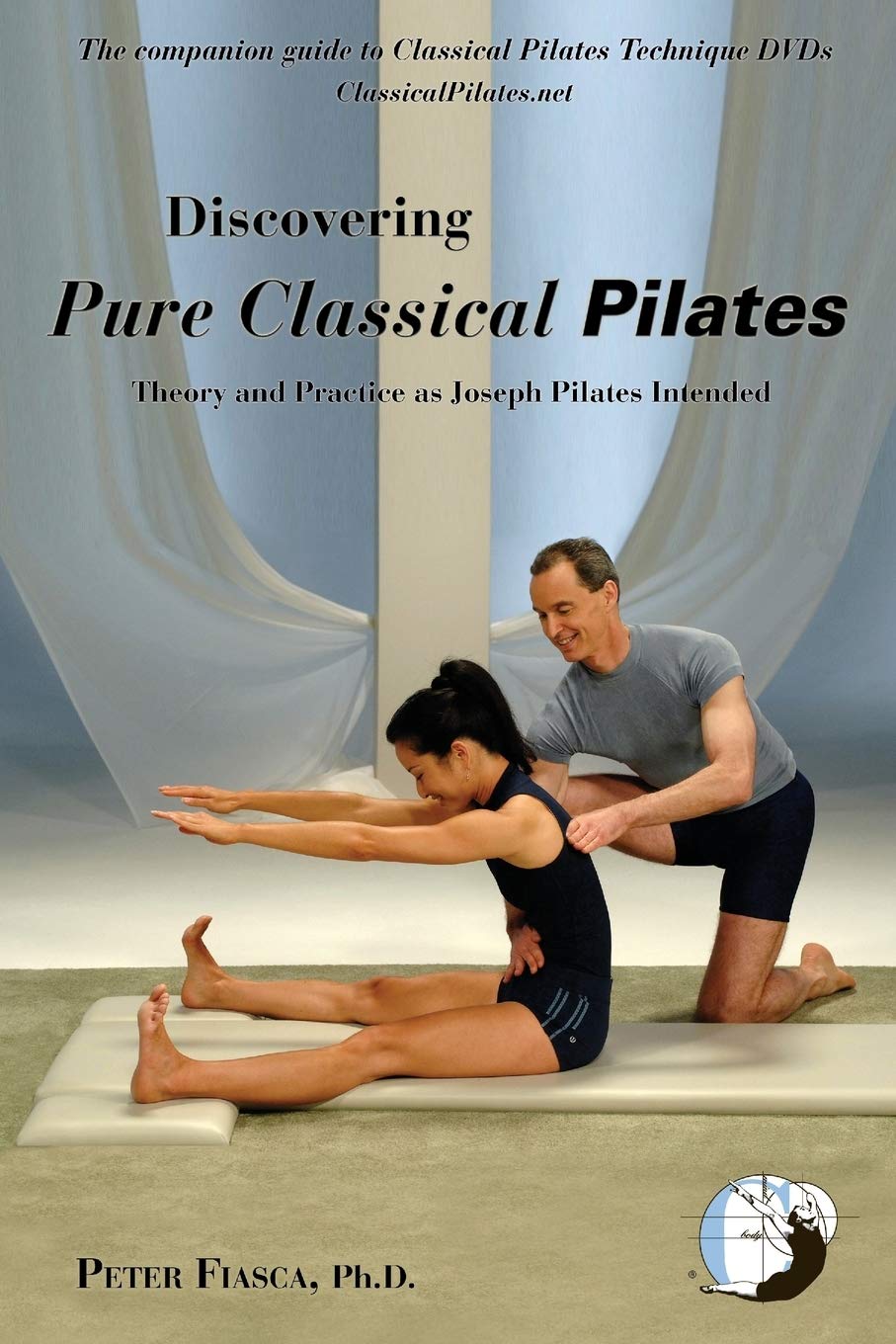
Discovering Pure Classical Pilates: Theory and Practice as Joseph Pilates Intended
$17.11
by Peter Fiasca PhD



Discovering Pure Classical Pilates looks deeply into Joseph Pilates' traditional method of mental and physical conditioning by describing its foundations, goals, movement qualities and benefits. Specific attention is given to the ways in which market forces, individual creativity or ambition lead to deterioration and commercialization of the traditional Pilates method. This book harkens back in time to Joseph Pilates' own two books-Your Health (1934) and Return to Life Through Contrology (1945)-by exploring social, economic, psychological and spiritual issues associated with his traditional work. There is so much more to Discovering Pure Classical Pilates! Within this book, you will uncover the passionate and priceless treasures found only in the historically accurate technique as taught by traditionalists throughout the world. Peter Fiasca does the most beautiful Roll Up I've ever seen! And his first book, Discovering Pure Classical Pilates is equally as impressive. Despite the awkward, lengthy subtitle, Theory and Practice as Joseph Pilates Intended, there is nothing inept about his discussions of the foundations, key elements, and transmutations of the system. Unlike the many "how-to" manuals on the market, this is a love story - one that makes the reader fall in love with Classical Pilates. It is a must-read for all Pilates teachers and practitioners, particularly those with non-traditional training. Fiasca sets the tone early on, establishing his sincerity, legitimacy, and passion for the Method as he relates his journey into Contrology. He leaves the reader with no doubt as to what makes Pilates unique, emphasizing the athletic, corrective, and organic nature of the system. Recounting the universally accepted principles of Pilates, he adds a seventh principle - cardiovascular conditioning. If this isn't enough to clearly define the Method, Fiasca goes on to explain the differences and similarities between Classical Pilates and physical therapy, dance, and yoga. His skillful writing and solid research make these comparisons striking. Although informative, his discussion of the factors influencing Joseph Pilates and his work is less engaging. Since we know so little about Pilates' early life, much of this is educated speculation. Fiasca traces the roots of Pilates' mind/body connection to Greek influences on German culture and civilization. The origin of the third component of the system, the spirit, proves more elusive, leading to a lengthy examination of various religious concepts of spirit. Chapter 4 is a joy to read! The highlight of the book is a discussion of the four necessary conditions of Classical Pilates. Fiasca delights the reader with well-turned phrases and powerful analogies, referring to the symphonic arrangement of all of our movements as The Art of Flow. When flow is viewed through the eyes of a classical practitioner, it takes on greater clarity: we not only practice creating shapes, but we articulate these shapes and refine these shapes Transitions, then, become an exercise in weight transference between movements. Equally as illuminating are his clarifications of flat-back position, breathing, and external rotation. In the world of Pilates manifestos, it doesn't get any better than this! In contrast to the powerful prose are the graphics, which are often a distraction. Posed and sometimes even hokey, they do not reflect the organic nature of the work. One photograph shows Fiasca and Jamie Trout simultaneously performing front splits and Russian splits respectively on the same reformer. While this may be Pilates art, it does not enhance the concept of flow and the idea of creating shapes that the author emphasizes. Thankfully, he corrects this flaw in the second edition, utilizing classic photographs of the traditional method to more accurately reflect his intention. Psychology AND Pilates mesh in the form of Metaphors for Living, a self-reflective tool Fiasca developed to increase one's insight as discovered through the traditional Pilates method. An exploration of the parallels, as well as the differences, between psychology and Classical Pilates is instructive in helping students to determine appropriate boundaries when working with clients: a single comment can have a lasting effect upon a student's life. The physical journey is inextricably linked to the emotional voyage. As a psychologist, Fiasca is well-equipped to offer guidance in this area, recognizing the symbiotic relationship between teacher and student. And his advice is invaluable. --Suzanne Diffine Ever the consummate gentleman, he acknowledges those who provide him with material for the book or who contribute to the preservation of Classical Pilates. Equally as gracious, he declines to identify those who have bastardized Classical Pilates, seeking profit, power, or prestige. Citing the many reasons for the proliferation of these hybrid forms of Pilates, he reminds the reader that "Joseph Pilates communicated his ent