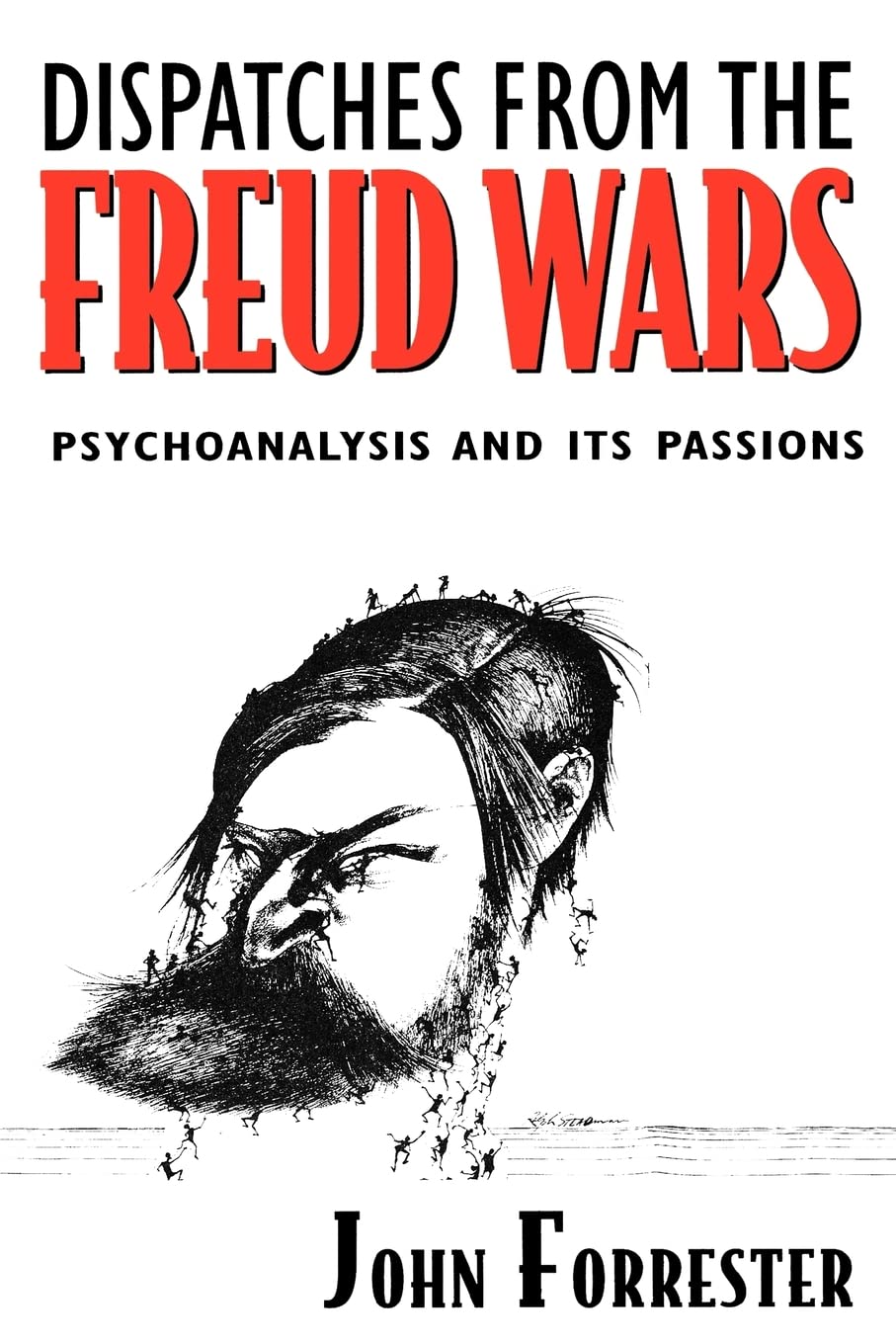



In this challenging collection of essays, the noted historian and philosopher of science John Forrester delves into the disputes over Freud's dead body. With wit and erudition, he tackles questions central to our psychoanalytic century's ways of thinking and living, including the following: Can one speak of a morality of the psychoanalytic life? Are the lives of both analysts and patients doomed to repeat the incestuous patterns they uncover? What and why did Freud collect? Is a history of psychoanalysis possible? By taking nothing for granted and leaving no cliché of psychobabble--theoretical or popular--unturned, Forrester gives us a sense of the ethical surprises and epistemological riddles that a century of tumultuous psychoanalytical debate has often obscured. In these pages, we explore dreams, history, ethics, political theory, and the motor of psychoanalysis as a scientific movement. Forrester makes us feel that the Freud Wars are not merely a vicious quarrel or a fashionable journalistic talking point for the late twentieth century. This hundred years' war is an index of the cultural and scientific climate of modern times. Freud is indeed a barometer for understanding how we conduct our different lives. Dispatches from the Freud Wars consists of six of John Forrester's recent essays on Freudian psychoanalysis and its cultural implications, as well as an amusing epilogue in which the ghost of Freud is allowed to comment on current reactions to his thoughts. In the introduction, Forrester states the underlying rationale of the essays: "The more one knows about Freud--the more one has unlearned what one was culturally hard-wired to know about him--the more interesting and surprising and thought-provoking he becomes." Forrester is at his best in the essays that are primarily historical. His discussions of the bizarre love triangle involving Freud's disciple Sandor Ferenczi; Freud's penchant for collection (of objets d'art as well as dreams, jokes, and parapraxes); and the historiography of the psychoanalytic movement are lucid, insightful, and eminently worthwhile. His critical essays are not as good. While "Justice, Envy, and Psychoanalysis" interestingly criticizes John Rawls's arguments against the idea--found in Mandeville, Nietzsche, and Freud--that justice is ultimately based on envy, it is regrettably also somewhat silly on the topic of penis envy. The title essay, moreover, is captious in argument and peevish in tone, as Forrester reacts to the anti-Freudian animadversions of Frederick Crews and Stanley Fish by focusing on rhetorical weaknesses in their arguments rather than on the arguments themselves. Read Dispatches from the Freud Wars for the historical background to the struggle, but not for the latest news from the front. --Glenn Branch “Where Forrester hits the mark is his insight on the passionate intensity of the battles between Freud and his critics, and the analogy he makes between this struggle and the one between analyst and his or her patient. It may be possible, in fact, to read the entire commentary on Freud as that between analysand and analyst, all projecting part of their shadow onto Freud and struggling in the trenches of transference and countertransference. It is to Forrester's credit that he sees this and shows it to us in this provocative book.” ― Claire Douglas , Washington Post Book World “[This book, along with Truth Games ]…present[s] a series of eight wide-ranging but interconnected essays. Taken as an ensemble, they deal with the history of psychoanalysis, redefinitions of psychoanalysis and what it means to be a Freudian, psychoanalytic readings of contemporary cultural issues, discussions of the scientific status of psychoanalysis and an impassioned defence of psychoanalysis…The essays are elegantly written, and open up a number of new perspectives on these issues, as well as putting forward new formulations of more familiar ones…Anyone interested in the history of psychoanalysis and the cultural location of psychoanalysis today is likely to find these essays stimulating, engaging and inviting of dialogue.” ― Sonu Shamdasani , Medical History “ Dispatches from the Freud Wars is compulsively readable, a revision of Freud's life and thought, brilliantly written, full of enticing detail.” ― A.S. Byatt , The Sunday Times “An expert at the shifting sands of philosophical argument, Forrester continually undercuts the grounds of the varieties of criticisms aimed at psychoanalytic theory, technique and cultural significance. Love him or hate him, Forrester rightly insists, we cannot pretend that Freud did not exist, and that his extensive writings have not permanently influenced the 20th century's received views on human nature, hermeneutics and the nature of scientific inquiry...To a large extent then, this a book about reading Freud, rhetorically structured so that the final charges of misreading leveled against such critics of psychoanalysis as Frede