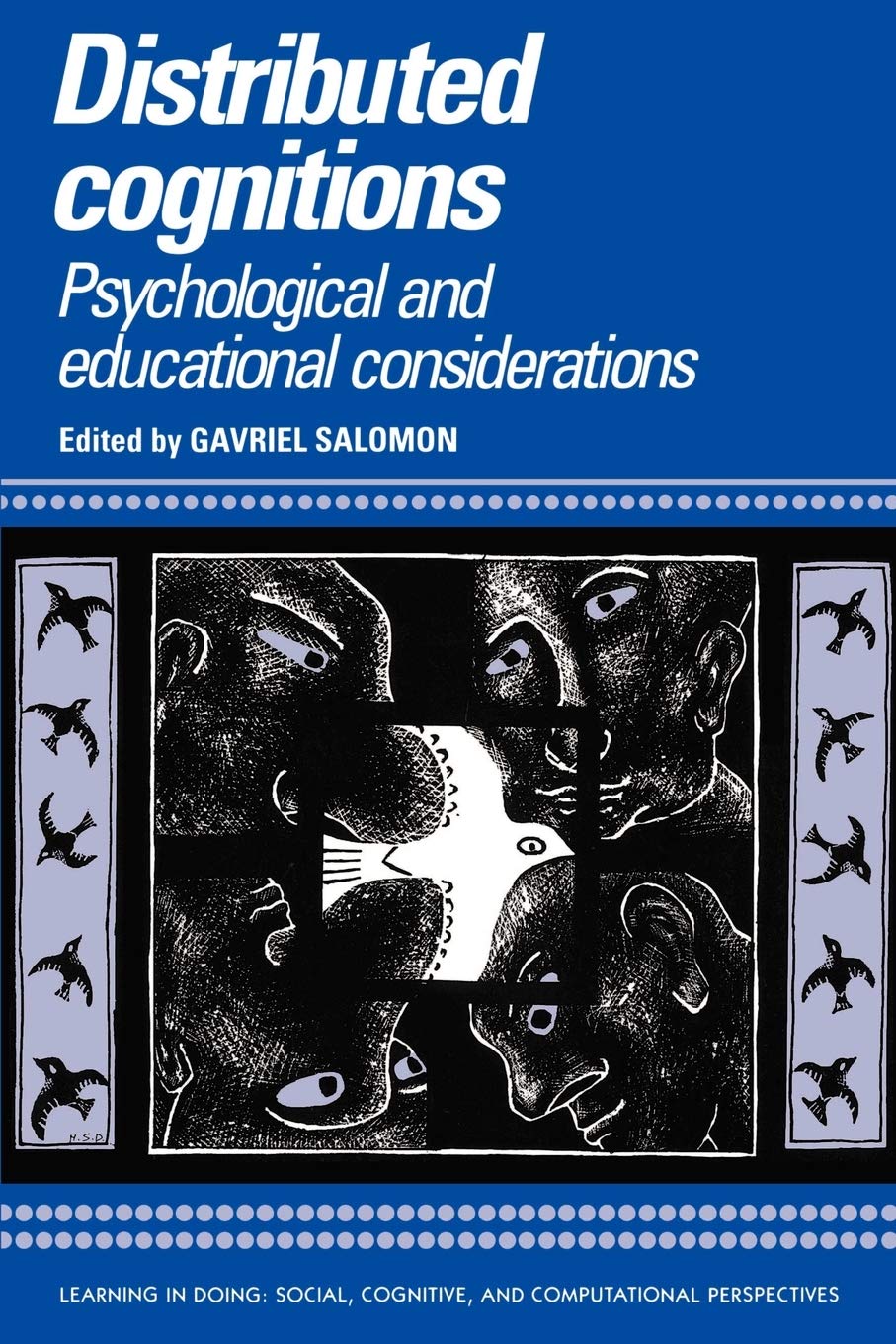
Distributed Cognitions: Psychological and Educational Considerations (Learning in Doing: Social, Cognitive and Computational Perspectives)
$41.34
by Gavriel Salomon



Traditionally, human cognition has been seen and studied as existing solely "inside" a person, irrelevant to the social, physical, and artifactual context in which cognition takes place. This book reexamines the nature of cognition and proposes that a clearer understanding of human cognition would be achieved if it were conceptualized and studied as distributed among individuals; knowledge is socially constructed through collaborative efforts toward shared objectives within cultural surroundings, and that information is processed among individuals and the tools and artifacts provided by culture. The contributors to this thought-provoking text enhance their arguments by offering examples from daily life and educational activities. Researchers in a number of social and scientific fields will welcome this book. "...an interesting and exciting volume that is a good companion piece to recently released titles with a similar theme...this volume is unique because the contributors thoroughly examine theories of 'distributed cognition' within the traditions of psychology and educational research...this excellent book should be read not only by people interested in psychology and education, but by cognitive psychologists, anthropologists, sociologists, and interdisciplinarians. It will evoke reflection upon reasoning, practice, and the use of artifacts." Henrik Artman, Mind, Culture & Activity This book re-examines the 'distributed' social and cultural contextual factors that affect human cognition. Used Book in Good Condition