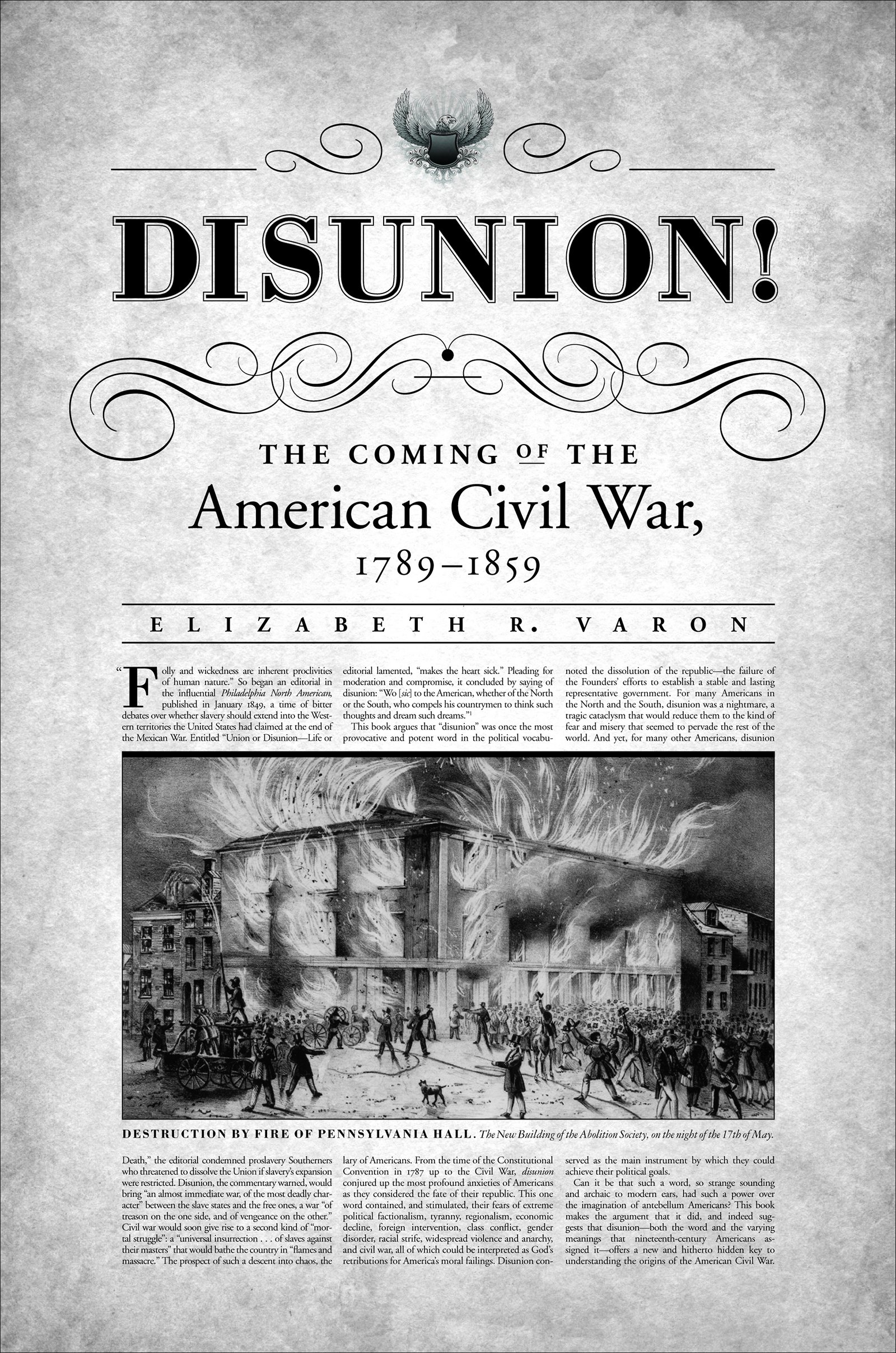



In the decades before the Civil War, Americans debating the fate of slavery often invoked the specter of disunion to frighten or discredit their opponents. According to Elizabeth Varon, "disunion" was a startling and provocative keyword in Americans' political vocabulary: it connoted the failure of the founders' singular effort to establish a lasting representative government. For many Americans in both the North and the South, disunion was a nightmare, the image of a cataclysm that would reduce them to misery and fratricidal war. For many others, however, threats, accusations, and intimations of disunion were instruments they could wield to achieve their partisan and sectional goals.In this bracing reinterpretation of the origins of the Civil War, Varon blends political history with intellectual and cultural history to show how Americans, as far back as the earliest days of the republic, agonized and strategized over disunion. She focuses not only on politicians but also on a wide “Varon fulfills her goal of distinguishing disunion from secession and exploring the multifaceted meanings of the term. . . . She eminently succeeds in showing how disunion evolved from a 'prophecy' that no one wanted fulfilled to the fire-eaters' 'program.'”— American Historical Review “A compelling argument about the political significance of language. . . Speaks to specialists and remains approachable for undergraduates, scholars in other fields, and general readers.”―Common-Place “A cogently reasoned intellectual history of a frequently misunderstood historical term. . . . Varon successfully weaves together political debates, contemporary journalism, literary fiction and nonfiction, sermons from pulpits of the nation’s leading churches and other sources of popular culture.”— Civil War Times “Varon’s success in setting her analysis of disunion rhetoric against a comprehensive historiographical backdrop is exceptional. Meticulously researched and beautifully assembled, Disunion will become a standard text for students and scholars interested in this tumultuous chapter in American history.”— North & South “[A] very important book. . . . Well-written and carefully documented and will be imminently useful to undergraduate and graduate classrooms alike.”— Pennsylvania Magazine of History and Biography “Installs [the premise of disunion] by weaving the country’s beginnings with the immediate, and profound, philosophical differences that existed between the agrarian, slaveholding South and the industrialized North.”— Anniston Star “Highly readable political, social, and intellectual history at its best. . . . Highly recommended.”— CHOICE “In scope, authority, and lucidity, this book . . . deserves to be ranked alongside some of the landmark studies of Civil War causation. . . . As good an account of the worldview of antebellum Americans as one can read.”―H-Civil War “A broad study. . . . Strong both in illuminating operative gender and racial perspectives and in presenting in some detail the views and methods of presentation and activism of many figures who will be unfamiliar even to most American historians, but who, as this book demonstrates, should not be ignored.”— Reviews in American History “Highly engaging. . . . Makes good use of recent historical literature to produce a synthetic and balanced account of the politics of disunion in the American republic.”— Civil War Book Review The most provocative word in the political vocabulary of antebellum America Elizabeth R. Varon is professor of history at Temple University. Used Book in Good Condition