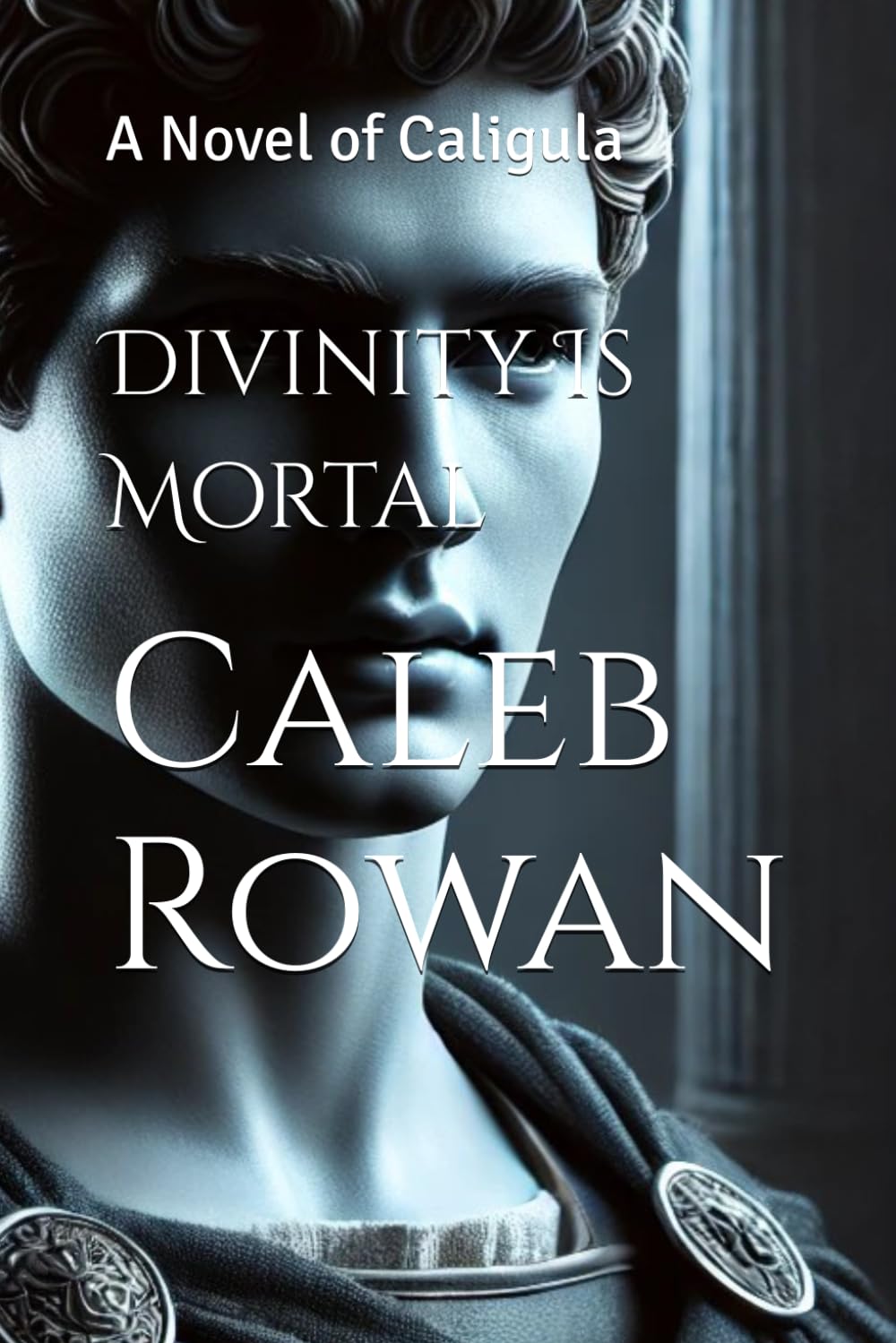
Divinity Is Mortal: A Novel of Caligula (The Stone of Rome Series by Caleb Rowan)
$15.99
by Caleb Rowan



Divinity Is Mortal A Novel of Caligula Rome does not forget. It removes. Born into the most watched family in the empire, Gaius Julius Caesar—later called Caligula—enters a world where love is political currency and survival depends on silence. His father, Germanicus, is the most admired man in Rome. His mother, Agrippina, understands that admiration is a form of danger. Around them, loyalty is measured, alliances are temporary, and power moves quietly long before it declares itself. When Germanicus dies under suspicious circumstances and the imperial household begins to fracture, a child is taken from the margins of history and erased from record. Far from Rome, he is raised under another name, taught endurance instead of legacy. In the capital, Caligula grows up beneath constant scrutiny, learning that visibility can be fatal and that mercy, in Rome, is often another method of control. As the years pass, exile, starvation, and political calculation dismantle the family of Germanicus piece by piece. Caligula survives not through strength alone, but through adaptation—studying the mechanics of power while appearing harmless to those who hold it. On the island of Capri, under the aging Emperor Tiberius, he witnesses a system where loyalty is performance and cruelty is education. By the time the imperial throne opens, Caligula has learned what Rome rewards, what it fears, and what it quietly destroys. When he finally returns to Rome and is raised to power amid public adoration, he inherits more than a crown. He inherits the memory of what was done to his family—and the knowledge that the empire prefers its violence unseen. As he begins to rule, the question is no longer whether Rome will change him, but whether he will change Rome’s understanding of mercy, justice, and erasure. Divinity Is Mortal is a psychological and political portrait of one of history’s most infamous emperors, tracing the transformation of a boy shaped by loss into a ruler determined that nothing done in shadow will remain there. Set against the shifting machinery of imperial Rome, this novel explores power, survival, and the cost of being watched in a world where even gods can be removed. A sweeping historical drama and the opening volume in The Stone of Rome series, these interconnected novels can be read in any order, each revealing another life shaped by the empire’s reach.